


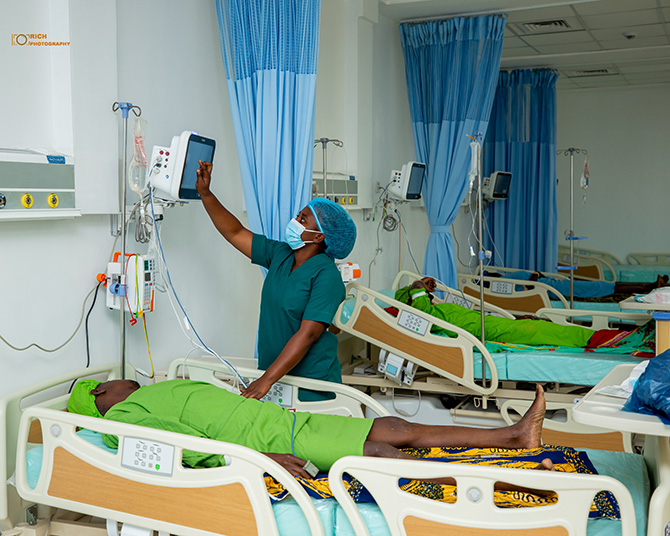
President John Dramani Mahama has taken a firm stance against Ghana’s long-standing “no bed syndrome,” directing that no patient seeking emergency care should be turned away from any health facility.

Delivering the 2026 State of the Nation Address on Friday, 27 February, the President announced that the Ministry of Health will issue new guidelines compelling hospitals to receive and stabilise emergency cases — even under temporary or makeshift conditions where necessary.
“You don’t need to have a comfortable bed to save a patient,” he said. “No patient must be turned away from any health facility they report to.”
Expanding Hospital Capacity
Alongside the emergency directive, President Mahama outlined key infrastructure projects aimed at easing pressure on health facilities nationwide.
In the Greater Accra Region, government will implement Phase Two of the Ridge Hospital project to increase bed capacity at the Greater Accra Regional Hospital.
Nationally, work will continue toward completing the Police Hospital and La General Hospital projects.
In the Ashanti Region, the government plans to finalise the Serwaa Regional Hospital, the Afari Military Hospital, and the maternity and children’s block at the Komfo Anokye Teaching Hospital.
The President said combining stricter emergency care protocols with expanded hospital infrastructure will ensure that no Ghanaian is denied treatment due to capacity constraints.
Background to the Directive
The announcement follows a widely reported incident on 6 February 2026 involving a hit-and-run victim at the Nkrumah Circle Overpass in Accra. Emergency Medical Technicians from the National Ambulance Service responded within minutes but reportedly struggled for over two hours to secure admission at three major hospitals due to a lack of available beds.
The victim, later identified as 29-year-old Charles Amissah, an engineer with Promasidor Ghana Limited, was eventually pronounced dead.
President Mahama reiterated that his administration remains committed to guaranteeing timely access to healthcare and ending the systemic gaps that have cost lives.


