


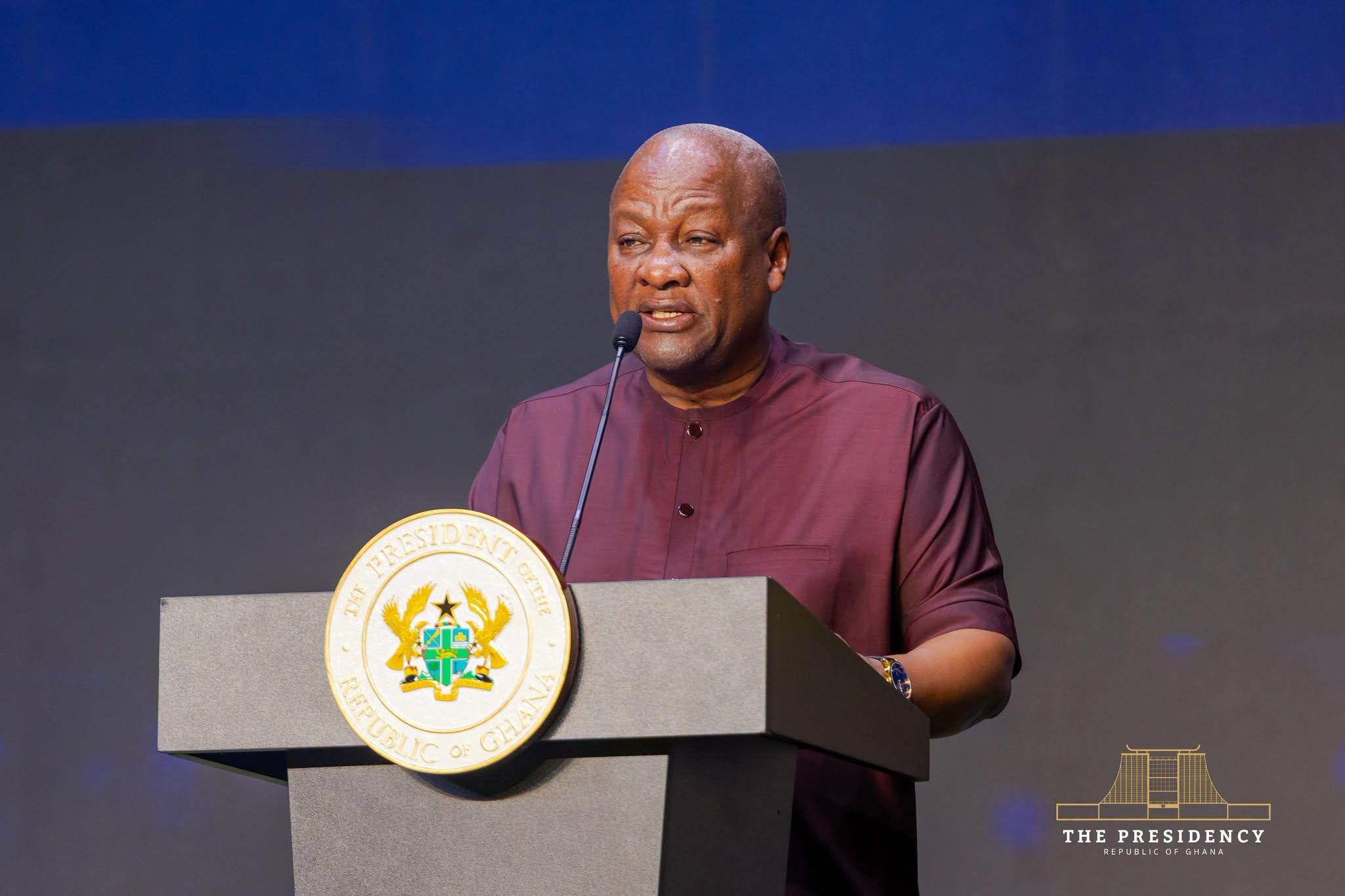
President John Dramani Mahama has announced plans to expand the National Apprenticeship Programme to benefit at least 50,000 young Ghanaians in 2027, following the graduation of more than 13,000 participants from its maiden cohort.

The expansion will move the initiative beyond its pilot phase into a larger-scale skills development programme aimed at equipping young people with practical vocational skills, improving their employment prospects and promoting entrepreneurship.
President Mahama made the announcement at the maiden National Graduation Ceremony of the programme, where he reaffirmed his government’s commitment to technical and vocational education as a key strategy for tackling youth unemployment and strengthening Ghana’s workforce.
The first cohort received training in various fields, including fashion and textiles, beauty and personal care, craftsmanship and artisanal trades, hospitality and tourism, agriculture and agro-processing.
The President disclosed that the initial phase had engaged approximately 14,000 young people, describing it as a pilot ahead of the planned expansion.
“Next year, we are going to train at least 50,000 apprentices,” he announced.
GH¢1bn expected from CST to fund youth programmes
As part of efforts to finance the expansion, President Mahama revealed that he had instructed the Minister of Finance to uncap the Communication Service Tax (CST), a move he expects to generate an additional GH¢1 billion in revenue.
“I asked the Minister of Finance to uncap the Communication Service Tax. And by uncapping the Communication Service Tax, it releases an extra GH¢1 billion,” he said.
He explained that the additional revenue would support several youth-focused interventions, including the National Apprenticeship Programme, the Adwumawura Programme and initiatives under the Youth Employment Agency (YEA).
According to the President, the funding would enable the government to extend vocational training opportunities to more young people while supporting those interested in establishing their own businesses.
Apprenticeship graduates encouraged to pursue entrepreneurship
President Mahama also urged graduates who intend to establish their own businesses to consider the Adwumawura Programme, which provides support for young entrepreneurs seeking to develop and grow their enterprises.
He described the initiative as a natural progression for apprenticeship graduates who wish to transform their newly acquired skills into sustainable businesses.
“For those of you who have graduated from the National Apprenticeship, for those who want to set up their own businesses, the next module you should be looking at is the Adwumawura Programme,” he told the graduates.
“You’ll get the start-up capital to establish your business and become an entrepreneur,” he added.
The proposed link between the two programmes is intended to create a pathway from vocational training to business ownership, giving graduates opportunities to become self-employed and contribute to economic activity.
Mahama calls for increased participation of women in technical trades
Beyond the expansion of apprenticeship opportunities, the President called for greater participation of women in technical and traditionally male-dominated professions.
He challenged perceptions that certain occupations should be reserved for men, arguing that women should have equal opportunities to pursue careers in every field.
“Let us not say some professions are reserved for males. Every profession, what a male can do, a female can do even better,” he stressed.
He encouraged young women entering the labour market to explore opportunities in technical, industrial and artisanal trades rather than allow traditional gender stereotypes to limit their career choices.
He said increasing women’s participation in these sectors would broaden Ghana’s skilled workforce and create additional opportunities for economic empowerment.
The planned expansion to at least 50,000 apprentices in 2027 is expected to significantly increase access to vocational training across the country.
However, the success of the next phase will depend on adequate and sustained funding, effective training arrangements and the availability of employment and business opportunities for graduates.
The government’s broader objective is to connect skills acquisition with entrepreneurship and job creation, ensuring that young people can translate their vocational training into sustainable livelihoods.


