


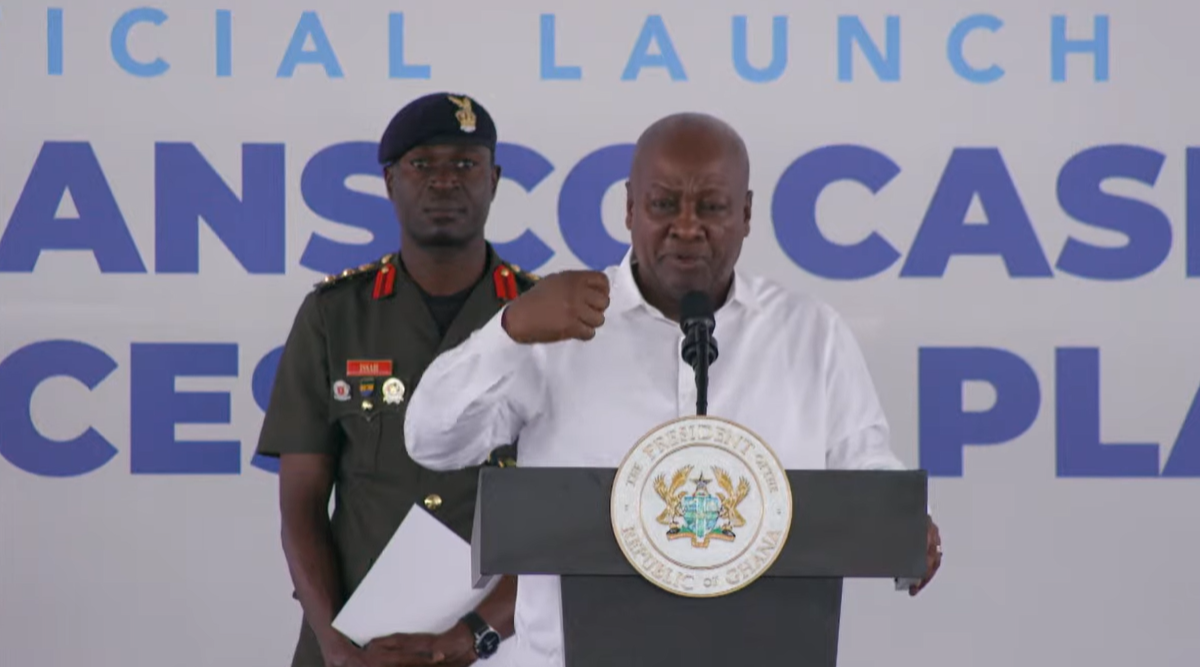
Businesses that run multiple shifts under the 24-hour economy will be allowed to write off their plants and equipment in two years, President John Dramani Mahama has announced.

He also said companies importing machinery to expand or set up new factories will not pay duties and levies upfront. Payment will be deferred for one year, then spread over the following two years.
President Mahama announced the incentives at the commissioning of the Ghana EXIM Bank-funded Nadkansco Processing Limited cashew factory in Techiman on Monday, November 16, 2026. He said the measures had already been approved and were meant to encourage manufacturers and other businesses to expand production, invest in additional equipment and create more jobs.
Under the 24-hour economy policy, businesses operating multiple shifts qualify for accelerated depreciation. “That’s multiple shifts. And so Nadkansco can apply under the 24-hour economy policy. And what happens is that you’ll be allowed to depreciate your plants and equipment, accelerated depreciation of your plants and equipment over two years,” President Mahama said. He explained that the arrangement will allow businesses to recover the value of their investments more quickly for tax purposes, giving them additional financial flexibility to expand.
On imported equipment, he said companies that decide to expand or build another plant will benefit from deferred duties and levies. “And then aside from that, if Nadkansco decides that he wants to expand or build another cashew plant, all the equipment you import will have deferred duties and levies for one year. For one year, you can bring the equipment in; you will not pay the duties and levies,” he said. “You start paying only in the second year. And in the second year, we’ll spread it over two years. So you pay bit by bit until you finish paying,” he added.
President Mahama said manufacturers he had spoken to had welcomed the policy. “I’ve spoken to several of the manufacturers, and they have welcomed this policy very highly. I think that it will allow more investors to put money into building factories and employing our young people,” he said.
He urged Ghanaian investors to take advantage of opportunities in manufacturing and agro-processing, rather than concentrating largely in trading activities. Ghana, he argued, needs more factories capable of processing its agricultural produce into finished and semi-finished products for local consumption and export.


