


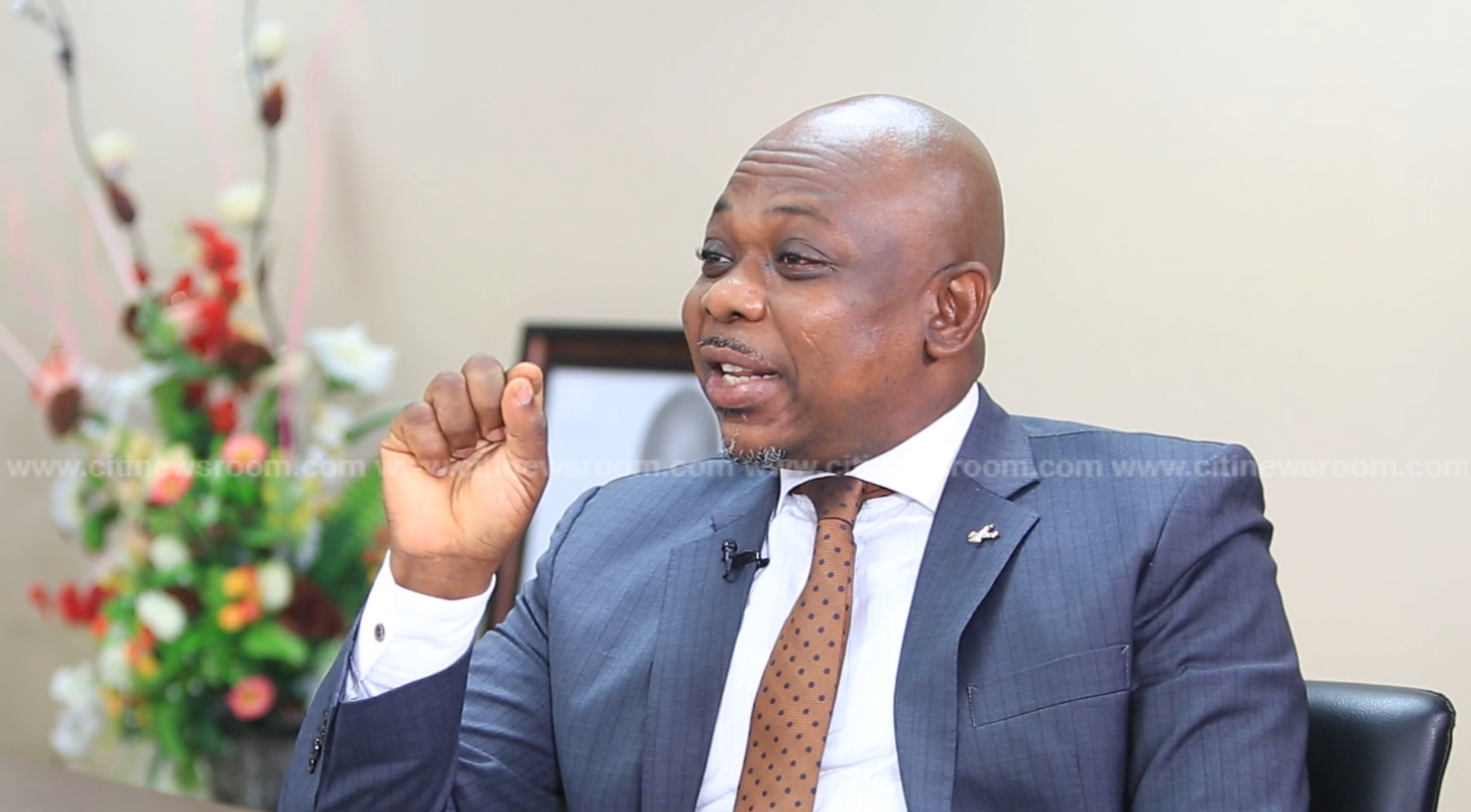
The Majority in Parliament has attributed Ghana’s current challenges in tackling narcotics trafficking to years of inadequate resourcing and institutional weaknesses at the Narcotics Control Commission (NACOC).

Majority Leader and Chairman of Parliament’s Defence and Interior Committee, James Agalga, accused the previous Akufo-Addo administration of failing to adequately equip and staff NACOC to respond effectively to an increasingly sophisticated narcotics trade.
Speaking to journalists in Parliament, Mr Agalga said the public needed to understand the state of NACOC before 2025 in order to properly assess measures being implemented by the current administration.
“The public must be informed of the extent of institutional neglect that preceded 2025 to fully value the transformation that is now taking place and hold this government to the standard it has set itself. The state of the situation prior to 2025 — an institution left to fail,” he said.
According to Mr Agalga, NACOC had been under-resourced, understaffed and insufficiently institutionalised to effectively protect Ghana against narcotics trafficking.
“This was not a commandment which was not carried out. This was a need that was not met and resources were not available to do so,” he said.
Dispute over 2018 port reforms
Mr Agalga also criticised a 2018 policy decision that changed NACOC’s role in routine joint physical inspections of containers at the Tema Port.
He argued that the decision created a gap in Ghana’s port security system.
“This country made a decision in 2018 whose impact we are still facing. NACOB was no longer to be subject to mandatory joint inspection at the Tema port,” he said.
The 2018 reforms reduced the number of agencies involved in routine physical inspections of containers at Ghana’s ports.
However, former Defence Minister Dominic Nitiwul has disputed claims that NACOC was removed from the ports.
Mr Nitiwul said NACOC officers remained at the port but were no longer required to participate in routine physical inspections. He explained that the reforms were intended to reduce delays and bureaucracy arising from multiple agencies inspecting the same containers.
The differing accounts have become part of a broader debate over whether the 2018 changes affected Ghana’s ability to detect narcotics concealed in export consignments.
There is also disagreement over whether the reforms can be directly linked to the recent increase in major narcotics seizures.
Former government official Kofi Brako-Powers has argued that there is currently no data establishing a causal link between the 2018 policy and the recent increase in drug trafficking cases.
Pressure following major cocaine seizures
The Majority’s comments come amid heightened scrutiny of Ghana’s narcotics-control regime following several major seizures involving Ghana-linked consignments.
The latest case involves nearly 3.9 tonnes of cocaine intercepted by French authorities at the Port of Dunkirk in a container that had departed Ghana.
The seizure has triggered investigations in Ghana, with President John Dramani Mahama directing security agencies to develop a roadmap aimed at preventing narcotics trafficking through the country’s borders.
As part of measures announced by the government, NACOC is being restored to the joint container inspection process at Ghana’s ports, while relevant security and regulatory agencies have been directed to harmonise their operations.
The developments come ahead of Parliament’s scheduled sitting on September 29, following a petition by 48 MPs seeking an extraordinary sitting to scrutinise major narcotics seizures linked to Ghana.
The Speaker’s notice recalling Parliament, however, does not specify the business to be considered at the sitting.
The Majority’s position on NACOC’s resourcing and the 2018 port reforms is therefore expected to feature in the broader parliamentary and political debate over the factors contributing to Ghana’s current narcotics-control challenges.


