


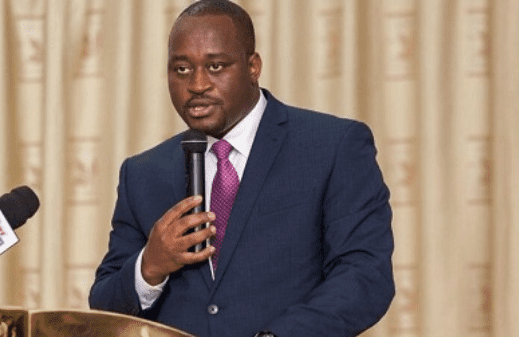
Technical Advisor at the Ministry of Finance, Dr Theophilius Acheampong, has said the government’s 2026 Mid-Year Budget Review will provide Parliament with updates on major infrastructure projects while outlining reforms aimed at improving value for money in public spending.

Speaking on Joy FM’s Super Morning Show on Thursday, July 23, ahead of the Finance Minister’s presentation to Parliament, Dr Acheampong said the review would focus not only on the implementation of key government initiatives but also on measures to strengthen monitoring, compliance and accountability in the use of public funds.
He acknowledged concerns about the quality of public infrastructure, particularly roads, describing the condition of many roads as evidence of broader challenges in public expenditure management.
“You could barely drive one or two kilometres without seeing some major pothole in the middle of the road. So that is not in doubt, that we have major issues with the quality of public expenditure overall, including going into, for example, the roads and all of that, and the issue of what I’ll call broader value for money on what we spend on,” he said.
According to Dr Acheampong, the Mid-Year Budget Review will provide progress updates on several flagship infrastructure projects announced by the government.
“Specifically within the mid-year budget, you’re going to get an update on a lot of the key policy initiatives that the government had mentioned and signalled,” he stated.
He said Parliament would receive updates on projects including the Accra–Kumasi Expressway, regional road networks and agricultural enclave roads.
“So you will get an update on what we’re doing on the Accra-Kumasi Expressway; you will get an update on what we’re doing on some of the regional roads; you’ll get an update on what we’re doing when it comes to the other agricultural enclave roads,” he explained.
Dr Acheampong also highlighted the World Bank-supported agricultural roads programme, noting that improved transport infrastructure would facilitate the movement of food from farming communities to markets and help reduce inflationary pressures.
“So you get an update on all these key major projects and interventions,” he added.
Beyond infrastructure delivery, Dr Acheampong said the government was introducing reforms to ensure that contractors deliver projects that meet the required standards and provide value for public funds.
“But above all, I think there’s also a question really about monitoring and compliance and then making sure that those monies that we’re giving out for contractors are actually delivering on the quality and the standards that are required,” he said.
He questioned the durability of some recently constructed roads, arguing that many projects were failing to meet expected engineering standards.
“When I was growing up, I was told that they’re meant to be built for at least 25 to 30 years. These days, the roads are built, and within five years, you go and you wonder what quantities were put into them,” he said.
Dr Acheampong said the government was strengthening enforcement and compliance mechanisms to ensure that public investment delivers measurable results.
“We’re doing quite a lot of work now on the enforcement and compliance side. We’re saying that it’s not enough just to give the money. You have to follow up and make sure that for every cedi that is being committed to a project, the value is delivered,” he stated.
He added that one of the key public financial management reforms introduced this year is the establishment of the Office for Value for Money, which will scrutinise major government expenditure to ensure the efficient use of public resources.
“As part of the reforms that have happened this year, you have the Office for Value for Money that has been established. It is going to place a lot of emphasis on major expenditure items, including IT and infrastructure projects, to ensure that public money delivers the greatest benefit for Ghanaians at the best possible cost,” he said.


