


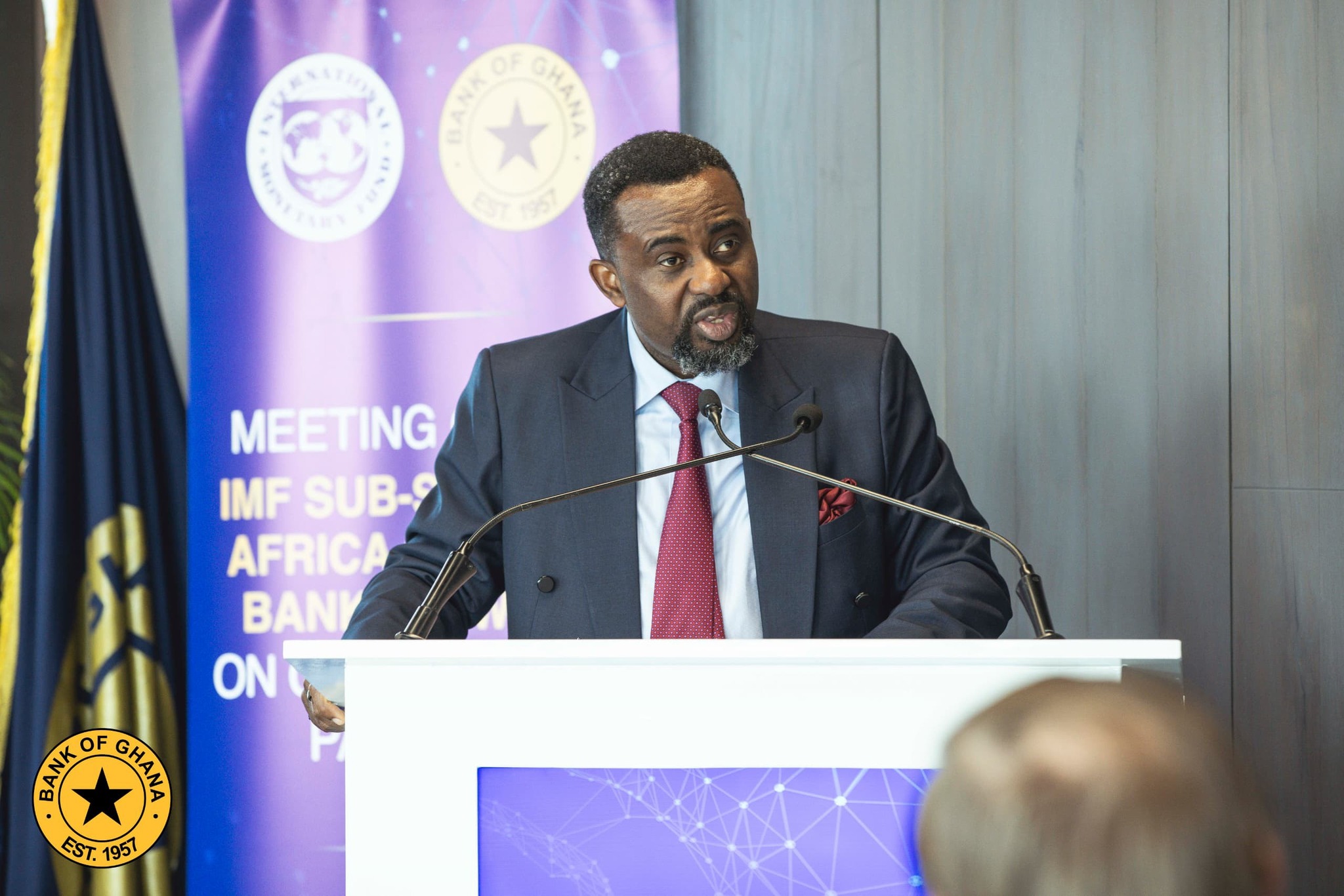
Bank of Ghana (BoG) Governor Dr Johnson Asiama has attributed part of the recent decline in Ghana’s international reserves to heightened tensions in the Middle East and the resulting pressures on the global economy.

Dr Asiama said the central bank had faced a difficult period over the past three to four months as external developments increased pressure on the country’s reserves and required the Bank of Ghana to intervene to support critical areas of the economy.
“The past three to four months have been quite challenging for us when it comes to the country’s international reserves,” he said.
He disclosed that Ghana’s reserves had declined by about US$1.2 billion during the period.
According to the Bank of Ghana’s July Economic and Financial Data, the country’s international reserves fell from approximately US$14.1 billion to US$12.9 billion.
Dr Asiama made the disclosure during the second edition of Time with the Governor, an engagement with economics students from the University of Ghana and the University of Ghana Business School (UGBS).
The students participated in the 131st Monetary Policy Committee meeting as part of the MPC Educational Observership Programme.
Reserves provide protection against external shocks
The BoG Governor used the engagement to emphasise the importance of maintaining a strong reserve position, particularly during periods of heightened global uncertainty.
He said Ghana’s decision to build up its reserves in the previous year had provided an important buffer against the recent external pressures.
“One of the good things we did last year was to build some high reserves for interesting times like this,” he said.
Dr Asiama acknowledged that managing the impact of global shocks often requires difficult policy decisions, particularly when a country must deploy its reserves to stabilise critical sectors while also protecting its external position.
Strategy to rebuild reserves
On measures to restore the reserves, the Governor identified stronger export earnings as a key priority.
He said Ghana must increase revenue from cocoa and other non-traditional exports to strengthen the country’s foreign exchange position.
Dr Asiama noted that non-traditional exports currently account for roughly 10 per cent of Ghana’s total exports but argued that the figure should be raised to at least 15 per cent.
He also identified remittances as another important source of foreign exchange that could contribute to rebuilding Ghana’s reserves.
The Governor said the country receives more than US$8 billion in remittances annually and called for a greater share of these inflows to be channelled into productive investments rather than predominantly used for consumption.
According to him, leveraging remittances and expanding export capacity would help Ghana strengthen its external position and build greater resilience against future global economic shocks.


