


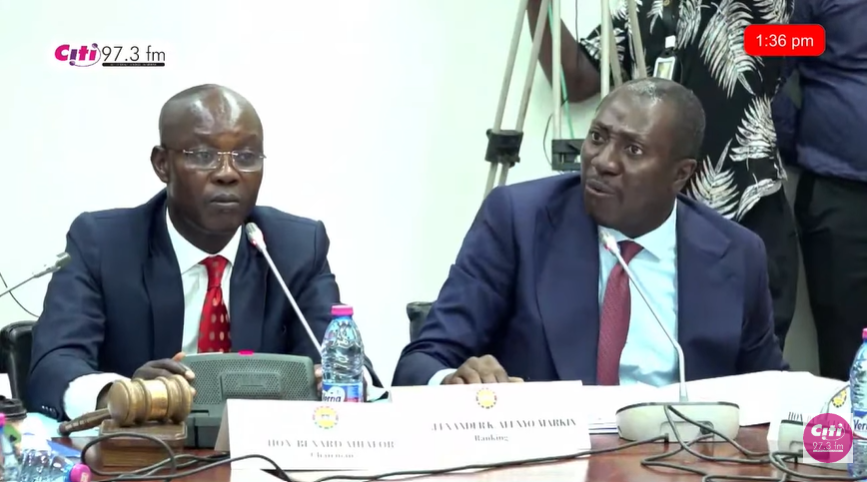
The Minority in Parliament has staged a boycott of the vetting of three Supreme Court nominees, protesting what it calls a rushed schedule for the exercise.

The caucus contended that there was presently no vacancy on the Supreme Court bench to justify the urgency being attached to the appointments, arguing that the nominees were being vetted to increase the current number of Justices rather than to fill vacant slots.
Speaking before Parliament’s Appointments Committee on Thursday, August 27, the Minority Leader, Alexander Afenyo-Markin, said the Minority’s concern was not about the vetting itself or the personalities involved, but the way and speed with which the process was being carried out.
He dared the Majority to show what damage would be done to the state, the Judiciary or litigants if the nominees were taken through the same thorough scrutiny usually applied to Supreme Court appointments. “These nominations came to the House on Monday. Let us reason together and let us be seen as being consistent with our political views. If you want to follow the precedent, please suspend today’s sitting, properly put out the advert as you requested when you were in opposition, and let us wait for the 14 days,” Mr Afenyo-Markin said.
The Minority insisted its action was not meant to frustrate the work of the Appointments Committee or embarrass the nominees, but to ensure the process adhered to parliamentary procedure and constitutional demands.
But the Chairman of the Appointments Committee, Bernard Ahiafor, brushed aside the objection, describing the reasons advanced by the Minority as “flimsy”, “hollow” and “baseless”. He said any member unhappy with a decision of the House must resort to the avenues provided in Parliament’s Standing Orders to have it overturned.
“If you are aggrieved by the decision of the House, the method available for you to reverse that decision is contained in our own Standing Orders,” Mr Ahiafor said.
“I will not preside over this committee and purport to vary the orders or directions or decision taken at the plenary by the entire House,” he added.
“It is not done in any democracy, and I will not be the first to introduce it in Ghana’s democracy.”
Mr Ahiafor also dismissed suggestions that the committee should handle the Supreme Court nominees differently from other nominees before it.
Following the chairman’s ruling, the Minority, led by Mr Afenyo-Markin, walked out of the vetting. The three nominees are Justice Sophia Bernasko-Essah, a Justice of the Court of Appeal; Justice Edward Amoako Asante, a Court of Appeal Justice and former President of the ECOWAS Court of Justice; and private legal practitioner Anthony Forson Jr., a former President of the Ghana Bar Association.


