


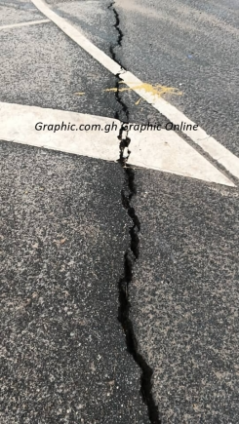
Motorists and commuters using the Tema Motorway Interchange have expressed concern following the appearance of cracks on sections of the recently asphalted road surface, raising questions about the durability and condition of the infrastructure.

The cracks, which have emerged on portions of the interchange along the Tema-Afienya-Akosombo route, have attracted the attention of road users who fear the damage could worsen if prompt remedial action is not taken.
A noticeable diagonal crack has developed on part of the asphalted surface, prompting concerns about potential deterioration on one of the country’s busiest transportation corridors.
Some motorists described the development as troubling, particularly given the strategic importance of the interchange, which serves as a major link connecting Tema, Accra and other parts of the country.
“We use this road every day, and it is concerning to see cracks developing on the surface. We hope the authorities will assess the situation and address it before it worsens,” a commercial driver told Graphic Online.
Road users have consequently called on the relevant authorities to investigate the cause of the cracks and implement corrective measures to prevent further deterioration.
Strategic National Infrastructure
The Tema Motorway Interchange remains one of Ghana’s most significant road infrastructure projects, designed to improve traffic flow and facilitate the movement of people and goods along the eastern corridor of the N1 Highway.
The first phase of the project was officially opened to traffic on May 16, 2020, after the former roundabout was transformed into a modern interchange to improve traffic management and reduce congestion.
The second phase, which features a high-quality steel girder bridge linking Tema to the Akosombo stretch, was commissioned and opened to motorists in December 2024.
Given the volume of traffic that passes through the interchange daily, commuters say any deterioration of the road surface could eventually affect traffic flow and road safety if left unattended.
They have therefore urged authorities to intensify routine inspections and maintenance of major road infrastructure to safeguard public safety, extend the lifespan of national road assets and protect the substantial investments made in Ghana’s transportation network.
The development has renewed calls for proactive monitoring of critical road infrastructure to ensure emerging defects are addressed before they develop into more serious structural challenges.


