


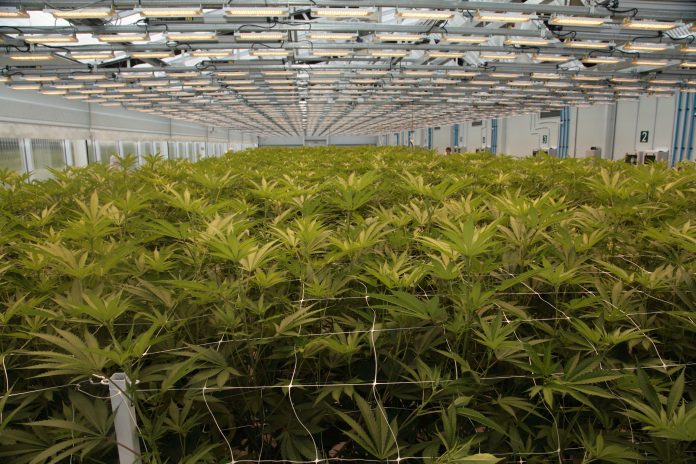
The Narcotics Control Commission (NACOC) has announced that applications are now open for licences to cultivate and manage cannabis for industrial and medicinal purposes in Ghana.

The development follows the official launch of the national licensing regime on February 26, 2026, by the Minister for the Interior, Muntaka Mohammed-Mubarak, marking a new phase in the country’s regulation of cannabis-related activities.
In a statement, the Commission said the move implements Section 43 of the Narcotics Control Commission Act, 2020 (Act 1019), as amended, together with Legislative Instrument 2475, which provides the legal framework for the licensing of cannabis for strictly regulated purposes.
According to the NCC, licences will only be issued for cannabis with a tetrahydrocannabinol (THC) content not exceeding 0.3 per cent on a dry weight basis, in line with Ghana’s laws governing the substance.
The Commission explained that the licensing regime focuses on two key areas — industrial use and medicinal development. Industrial production will support the cultivation of cannabis for fibre and seeds used in manufacturing, while medicinal use will facilitate the development of pharmaceutical and health-related products.
Interested individuals and corporate entities can apply under 11 licensing categories, including cultivation, processing, breeding, research and development, laboratory testing, storage, transportation, import, export, sales and distribution, and advertising and promotion.
To simplify the process, the Commission said applications can be submitted through its online portal, where applicants must complete a digital form and upload the required documentation.
Payments of the non-refundable application fee can be made through Visa card, Mobile Money, or by obtaining a payment voucher from any branch of the National Investment Bank nationwide.
The Commission said the initiative forms part of efforts to build a transparent and accountable cannabis industry that promotes lawful innovation while safeguarding public health and safety.
It added that the regulatory framework is expected to support the growth of new industries and contribute to Ghana’s broader industrial development agenda.


