


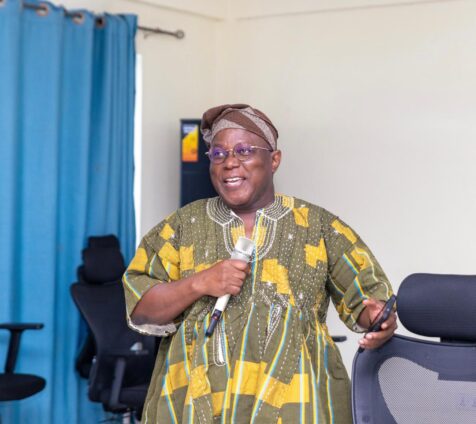
The Chairman of the National Development Planning Commission, Nii Moi Thompson, has called for a fundamental shift in Ghana’s development approach, urging policymakers to prioritise spatial planning as a critical tool for achieving inclusive and balanced growth.

Speaking at a regional stakeholder engagement in the Ahafo Region on Thursday, March 26, Dr Thompson emphasised that national development must go beyond policy formulation to deliberately organising how land use, infrastructure and economic activities are distributed across the country.
“Planning must reflect the needs of all segments of society and ensure equitable access to opportunities,” he stated.
He identified a key weakness in Ghana’s development framework as the disconnect between sector-based planning and spatial realities, explaining that while economic growth is often planned across sectors such as agriculture and industry, little attention is paid to where that growth should be concentrated.
According to him, integrating spatial considerations into economic strategies is essential to tackling urban congestion and addressing regional disparities in development.
Reinforcing this position, the Director-General of the Commission, Audrey Smock Amoah, highlighted the importance of strict adherence to planning guidelines and discipline in implementation.
“Whenever you request funds, the first document that will be demanded is your development plan,” she said, noting that although monitoring and evaluation systems have been strengthened to improve accountability, delays in submitting Annual Progress Reports remain a concern.
On behalf of the Ahafo Regional Minister, Acting Coordinating Director Joseph Frimpong Nayo called for more data-driven decision-making and a transition from subsistence agriculture to value-added industrialisation, supported by strong infrastructure.
The engagement concluded with the presentation of certificates to all six districts in the region following the approval of their Medium-Term Development Plans for the 2026–2029 period, marking a step forward in strengthening local planning processes.


