


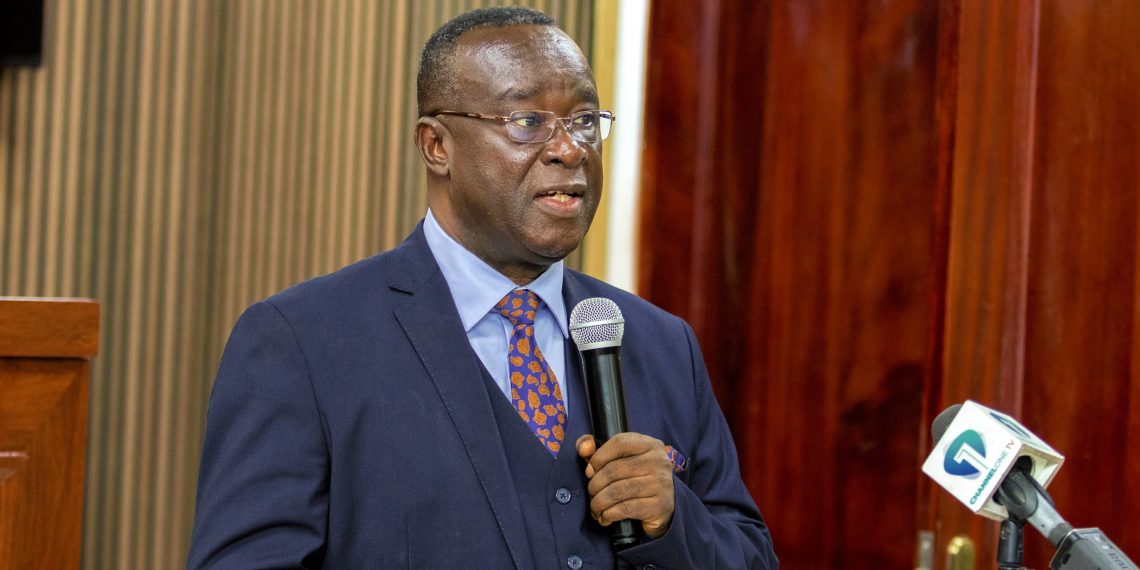
The Chief Justice, Paul Baffoe-Bonnie, has asserted that trust rooted in a robust and efficient judicial system is essential for business growth and investor confidence in Ghana.

Speaking on the second day of the Kwahu Business Forum on Saturday, April 4, 2026, he argued that no enterprise can succeed without faith in the legal system to uphold contracts, safeguard property, and settle disputes impartially. “No matter how creative or well-funded a business may be, it cannot truly thrive without one fundamental ingredient: trust,” he said.
“And trust in any economy rests on three quiet but powerful assurances: that contracts will be honored, that property will be protected, and that disputes will be resolved fairly, predictably, and without endless delay.”
He emphasised that these assurances are not abstract legal ideals but the daily expectations of investors and entrepreneurs, forming the judiciary’s core responsibility.
“These are not just legal principles written in books. They are the everyday expectations of every investor, every entrepreneur, and every business owner, no matter how small. And these assurances are quite simply the daily work of the judiciary,” he added. Justice Baffoe-Bonnie said the judiciary is repositioning itself to take a more active role in Ghana’s economic development by fostering a business-friendly environment grounded in the rule of law.
“When I assumed office, I made a conscious decision that the judiciary should no longer be a distant institution sitting in the background of our national life,” he said. “Instead, we have chosen to become an active partner in creating a genuinely business-friendly environment, one firmly anchored in the rule of law.”
He warned that inefficiencies in the justice system carry real economic costs, discouraging investment and slowing growth.
“We recognise that when justice is delayed, it’s not just a legal problem; it becomes an economic cost. When enforcement is uncertain, it does not merely frustrate parties; it discourages investment and holds back growth,” he s


