


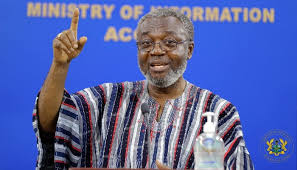
Former Director-General of the Ghana Health Service and former Presidential Advisor on Health, Anthony Nsiah-Asare, has defended the Akufo-Addo administration’s Agenda 111 initiative, insisting the nationwide hospital project was adequately funded and designed to address major deficiencies in Ghana’s healthcare system.

Speaking on the Super Morning Show on May 19, Dr Nsiah-Asare expressed surprise over claims that the programme lacked committed funding.
“I’m very much surprised because what people say when they are looking for power is different from what they do when they find it,” he stated.
According to him, Agenda 111 was conceived in response to weaknesses exposed during the COVID-19 pandemic in 2020, particularly the country’s inadequate healthcare infrastructure and uneven distribution of hospitals.
“Government realised that we did not have enough hospitals across the country, and even as we speak now, we still do not have enough hospitals,” he said.
His comments follow criticism by President John Dramani Mahama, who questioned the execution and financial sustainability of the Agenda 111 initiative introduced under former President Nana Addo Dankwa Akufo-Addo.
President Mahama reportedly argued that the simultaneous construction of hospitals across the country was poorly planned and financially burdensome.
Responding to the criticism, Dr Nsiah-Asare cited cases in which patients reportedly died after being transferred between multiple hospitals due to the absence of nearby healthcare facilities.
“That is the reason why some years ago, we had a 70-year-old man taken to about seven different hospitals before he lost his life. Recently, we also had a similar case,” he noted.
He explained that the Agenda 111 initiative was intended to improve equitable access to quality healthcare by constructing district and regional hospitals in underserved areas.
“If we have hospitals serving as referral centres across the country, people will not have to travel long distances to access quality healthcare,” he stated.
Dr Nsiah-Asare added that the project formed part of a broader national healthcare strategy aimed at strengthening the continuum of care from community-level facilities to higher referral centres.
“With health insurance and accessible primary healthcare systems supporting health centres, clinics, maternity homes and CHPS compounds, then we are moving forward as a country,” he said.
He further disclosed that the initiative also sought to address longstanding challenges within Ghana’s mental healthcare system by including plans for additional psychiatric hospitals.
“We realised that all the psychiatric hospitals were facing challenges, so plans were made to build another psychiatric hospital in the middle belt and another in the northern sector,” he revealed.
On the issue of financing, Dr Nsiah-Asare maintained that Agenda 111 received funding support from multiple sources, including COVID-19 funds, oil revenues and direct government budgetary allocations.
“Today, I want to tell everybody that yes, we started Agenda 111 with the equivalent of 100 million dollars from COVID money, the Oil Proceeds (Above Budget Formula Allocation),” he stressed.
He questioned claims that the project lacked committed funding, asking: “What has happened to it? Where is that money?”


