


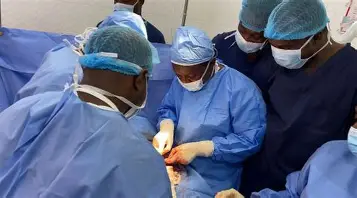
Fewer than one in three women diagnosed with obstetric fistula in Ghana over the past decade have received corrective surgery, according to new health data that has raised concerns about persistent gaps in maternal healthcare services.

Between 2016 and 2025, health facilities across the country recorded 3,688 cases of obstetric fistula, yet only 1,096 women underwent surgical repair, leaving thousands without access to treatment.
Obstetric fistula is a severe childbirth-related injury that causes continuous leakage of urine or stool, often leading to social stigma, isolation, and long-term physical and psychological suffering.
The treatment shortfall has prompted renewed collaboration between Ghana’s Ministry of Health, Parliament, and the United Nations Population Fund, all of whom have described the condition as a preventable tragedy largely linked to inadequate access to emergency obstetric care.
Speaking on the issue, Wilfred Ochan said recent findings indicate that obstetric fistula remains a significant public health challenge despite ongoing interventions.
According to him, a study conducted between January and February 2025 estimated that between 700 and 1,300 women develop the condition annually in Ghana, with an average of approximately 845 new cases each year.
While acknowledging improvements in treatment capacity, Dr Ochan noted that a large backlog of untreated cases continues to place pressure on the healthcare system.
He stressed that UNFPA’s support extends beyond surgery to strengthening healthcare systems and supporting professionals who provide rehabilitation and reintegration services for survivors.
“For UNFPA, we came for two reasons: to empathise with the survivors and to encourage the caregivers for the important role they play in restoring dignity, giving hope and opening new opportunities for these women who have been neglected,” he said.
To address the challenge, Deputy Minister of Health Grace Ayensu-Danquah announced plans to establish dedicated obstetric fistula treatment centres across the country.
She explained that the current system often requires patients to move between multiple facilities and departments, creating barriers to accessing care.
“So I realised that the walkthrough is not very smooth. Imagine healthy people moving through all these spaces to access treatment, and now think about someone who is already unwell. It becomes extremely difficult,” she said.
Dr Ayensu-Danquah revealed that discussions are underway with UNFPA to replicate the model established in Yendi, where a standalone fistula treatment centre provides pre-operative care, post-operative recovery services and accommodation for patients under one roof.
According to her, the Ministry intends to establish similar facilities nationwide to improve access to specialised treatment and enhance patient outcomes.
She further disclosed that efforts are ongoing to train more healthcare professionals, upgrade medical equipment and expand specialist capacity to strengthen fistula repair services throughout the country.
The Deputy Minister expressed confidence that, through collaboration with UNFPA and Komfo Anokye Teaching Hospital, Ghana could develop a centre of excellence for fistula treatment in the near future.
Meanwhile, the Parliamentary Caucus on Population and Development and the Parliamentary Select Committee on Health have pledged legislative support for intensified efforts to eliminate the condition.
Patricia Appiagyei stressed the urgency of accelerating interventions to meet the global target of eliminating obstetric fistula by 2030.
“The timelines are very short. We are talking about 2030. I believe that with accelerated policies and interventions, we can make significant progress,” she said.
Lawmakers, including Mark Kurt Nawaane, also called for the establishment of a dedicated national coordinating unit to oversee efforts aimed at preventing and treating obstetric fistula.
They argued that a more centralised approach would improve coordination, increase efficiency and accelerate Ghana’s progress towards eliminating the condition.
The renewed commitment by government, Parliament and development partners reflects growing recognition that while obstetric fistula is preventable and treatable, thousands of women continue to suffer due to limited access to timely maternal healthcare and specialised treatment services.


