


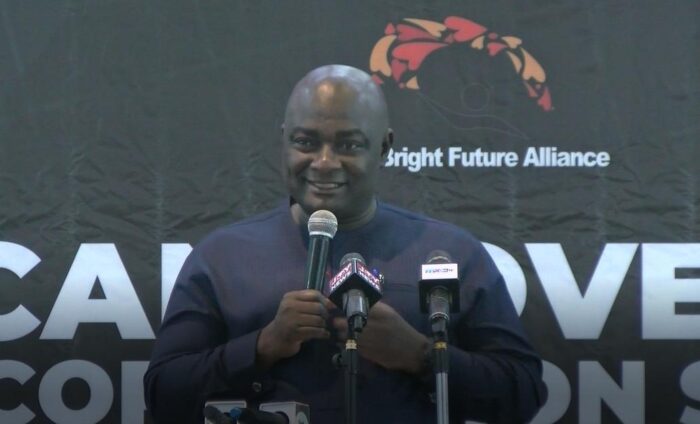
Vice Chairman of Parliament’s Public Accounts Committee (PAC), Davis Ansah Opoku, has expressed concern over what he describes as the poor enforcement of corruption-related recommendations made by Parliament, revealing that none of the committee’s referrals to the Attorney General’s Department over the past six years has led to a prosecution.

Speaking at the 2026 African Governance and Anti-Corruption Summit in Accra, Mr Opoku said the failure to act on findings from parliamentary oversight processes is weakening accountability and undermining efforts to safeguard public resources.
“I’ve been on this committee for about six years. We’ve made a lot of recommendations to the Attorney General’s Department. None has been prosecuted,” he stated.
According to him, although the Public Accounts Committee regularly uncovers financial irregularities through its public hearings and reports, enforcement institutions have not taken sufficient action against individuals implicated in such cases.

Mr Opoku proposed that corruption-related reports and referrals be channelled through the Office of the Special Prosecutor (OSP), arguing that the institution has demonstrated a willingness to investigate and pursue such matters.
“And we have an OSP that is ready and is always inviting work to be done. The OSP wants to work. And I think that it’s about time we rechannel all these reports,” he said.
The lawmaker also highlighted concerns over the recovery of public funds, citing figures from Auditor-General reports which indicate that only GH¢12.7 billion has been recovered out of an estimated GH¢39 billion in disallowed expenditures and recoverable funds identified between 2020 and 2023.
“That is just about a third of the money that ought to have been recovered,” he noted.
He warned that the inability to enforce sanctions and recover public funds could encourage a culture of impunity within the public sector, where financial infractions are committed without fear of consequences.
Mr Opoku therefore called for stronger collaboration among state institutions, civil society organisations, and citizens to reinforce Ghana’s anti-corruption efforts and improve accountability mechanisms.
Also speaking at the summit, Executive Director of the Bright Future Alliance, Bright Ofori, urged stakeholders to intensify the fight against corruption, arguing that the country cannot continue to lose substantial public resources while relying on external financial support.
“We are going to the IMF for $3 billion, and we are losing $10 billion. Then it means we have a lot of work to do,” he said.
Mr Ofori encouraged young people to become more involved in civic engagement and advocacy efforts aimed at promoting transparency and accountability in governance.
While acknowledging that corruption may never be completely eradicated, he stressed the need to reduce it to the barest minimum to protect national development and public confidence in state institutions.
The comments come amid growing public scrutiny of Ghana’s anti-corruption architecture, with increasing calls for audit findings, parliamentary recommendations, and corruption investigations to result in concrete prosecutions and the recovery of misappropriated public funds.


