


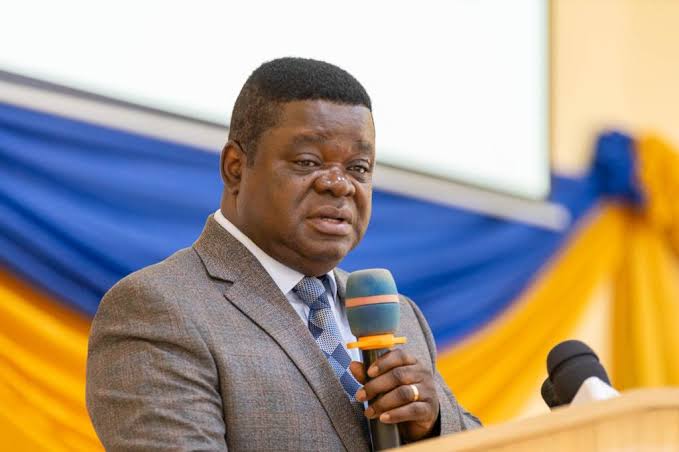
Economist and educationist Professor Peter Quartey has criticised the Ghana Education Service’s (GES) decision to ban graduation ceremonies and related activities in pre-tertiary schools, describing the directive as a “knee-jerk reaction” that fails to address the underlying excesses associated with such events.

Speaking on Joy FM‘s Super Morning Show on Tuesday, Prof. Quartey said the GES did not consult private school operators or their representative associations before announcing the policy, despite its implications for schools, parents and pupils.
“A big no, not at all, and none of the private associations that we belong to were consulted,” he said when asked whether stakeholders had been engaged.
The GES on Monday announced an immediate ban on graduation ceremonies and related activities, citing increasing excesses surrounding such events.
Prof. Quartey, however, argued that the directive was too broad, particularly the reference to “related activities,” which he said could affect long-established educational events such as speech and prize-giving ceremonies.
“It’s also vague to me, very vague. We grew up in this country with graduation ceremonies, speech and prize-giving ceremonies and all other related activities. These occasions provide opportunities to reward hardworking students, recognise dedicated teachers and celebrate achievement,” he said.
He noted that many schools had already committed significant resources towards organising end-of-term ceremonies before the directive was issued.
According to him, cancelling the events at this stage would result in financial losses for schools while disappointing students, teachers and parents who had spent months preparing for them.
“It says ‘planned graduation ceremonies’, so you know people have planned, invested money, and then you ask them to stop. All the investments, all the money and all the hopes and aspirations of these young ones and teachers have been dashed,” he said.
While acknowledging that some schools had introduced extravagant practices that needed to be addressed, Prof. Quartey argued that the appropriate response was stronger regulation rather than an outright ban.
“Inasmuch as I agree that there are excesses which need to be curbed, if you want to curb excesses, you provide guidelines and directions. You don’t ban. I think this is a knee-jerk reaction,” he stated.
He disclosed that he and other stakeholders had sought clarification from GES officials following the announcement but were yet to receive a clear explanation on whether the directive was temporary or permanent.
“We’ve tried reaching out to the authorities, but so far I’ve not had any feedback as to what the intentions are and what they hope to do. Whether it’s a permanent ban or just a temporary one, we don’t know yet,” he said.
According to Prof. Quartey, graduation ceremonies serve purposes beyond marking pupils’ progression through school. He said they provide opportunities to reward academic excellence, recognise teachers, engage parents and update them on schools’ achievements, challenges and future plans.
He added that many schools also use such events to invite experts to educate parents and students on issues including career development, digital technology, the future of work and responsible use of technology.
“We use the opportunity to reward students, motivate them and engage parents. If you see your colleague receiving a prize, it motivates you. Parents also get a report about the school’s progress and challenges. We also bring in resource persons to speak on important issues that benefit both parents and students,” he said.
Prof. Quartey maintained that concerns over lavish celebrations, expensive ceremonies and other excesses should be addressed through clear policy guidelines rather than a blanket prohibition.
He also questioned what he described as inconsistencies within the education system, pointing to displays of wealth at some school events despite the existence of the Free Senior High School programme.
“The same people we say cannot pay school fees and therefore government pays their fees, provides uniforms and textbooks are the same people displaying expensive cars and money bouquets during school ceremonies,” he said, adding that the Free SHS policy itself required review to better target beneficiaries.
He further questioned whether the rationale behind the directive could eventually extend to tertiary institutions.
“If we ban them at the pre-tertiary level, what happens when they get to the universities? Are we also going to ban university graduation ceremonies? What are we doing? We need guidelines, we need direction, we need directives,” he argued.
Responding to concerns about frequent ceremonies and excessive charges imposed on parents, Prof. Quartey agreed that such practices should be addressed but said existing structures, including Parent-Teacher Associations, could help resolve those issues.
“If somebody is taking advantage by charging excessive or exorbitant fees, then we need to deal with those issues, not ban the ceremonies altogether,” he said.
Drawing on international examples, he noted that graduation ceremonies for young children are common in countries such as the United States, recounting his experience attending a kindergarten graduation ceremony in Houston, Texas.
However, he distanced himself from what he described as excessive prom-night culture and extravagant displays on social media.
“Yes, these excesses have to be curbed; the prom nights and whatever. For me, it’s nauseating when I see these things being advertised and flaunted on social media. I frown on those things,” he said.
Despite his concerns about such practices, Prof. Quartey maintained that educational ceremonies contribute to children’s holistic development by building confidence, nurturing talent and providing valuable learning experiences outside the classroom.
“We don’t only get knowledge from the classroom. Children learn through these events too—reciting poems, performing and participating in activities that shape their mindset and future,” he said.
He urged the GES to reconsider the directive and replace the blanket ban with comprehensive guidelines that preserve the educational value of graduation ceremonies while eliminating unnecessary extravagance.
“We need to rethink this. We need guidelines, we need policies—not a total ban. It’s a knee-jerk reaction, in my view,” he said.


