


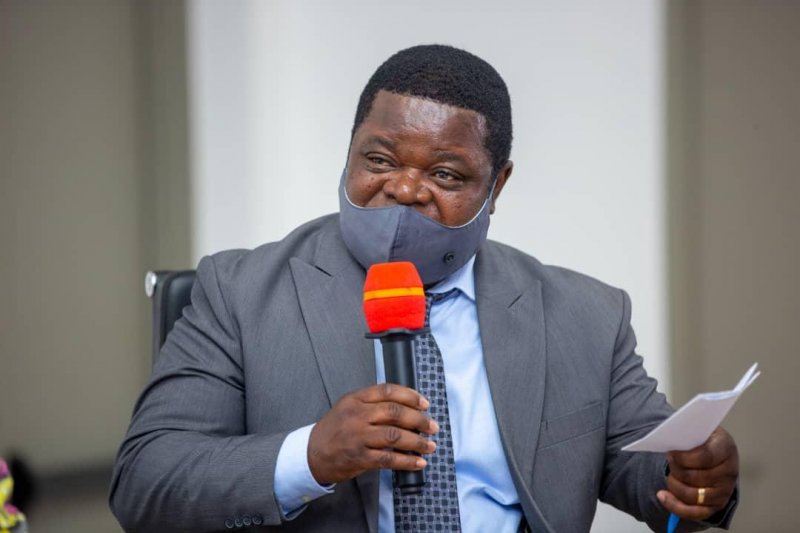
Former Director of the Institute of Statistical, Social and Economic Research (ISSER), Professor Peter Quartey, has called on Finance Minister Dr Cassiel Ato Forson to use the 2026 Mid-Year Budget Review to outline concrete measures to strengthen domestic revenue mobilisation following weaker-than-expected tax collections in the first quarter of the year.

Speaking on JoyNews’ AM Show ahead of the budget presentation in Parliament today, Thursday, July 23, Prof. Quartey acknowledged Ghana’s recent macroeconomic gains but stressed that sustained economic growth would depend on stronger revenue generation to finance government programmes and create jobs.
He noted that the economy had recorded encouraging improvements in inflation, exchange rate stability and fiscal performance.
“Our economy remains relatively stable in terms of its fiscal performance. We’ve seen inflation at a reasonable level. We’ve seen depreciation at a very reasonable level and fiscal deficits also at a reasonable level,” he said.
Despite the progress, Prof. Quartey cautioned that macroeconomic stability alone would not solve the country’s economic challenges, particularly rising unemployment.
“It’s good we have some stability. But when you stabilise up to some point, you need to take off. Just like an aircraft, you taxi on the runway and you take off,” he said.
“There are a lot of people who don’t have jobs. We have jobless growth. We are growing, but we are not creating the needed jobs.”
Prof. Quartey said first-quarter 2026 fiscal data released by the Ministry of Finance reflected prudent expenditure management but also highlighted weaknesses in revenue mobilisation.
According to him, government expenditure fell below its budget target, while both total revenue and tax revenue underperformed.
“Our target for revenue and expenditure—our expenditure target was 4.9% of GDP, but we hit 3.5%. We were quite steep with our stabilisation. We spent less than what was required,” he explained.
He added that total revenue recorded a 4.5 per cent shortfall, while tax revenue declined by five per cent during the period.
“So what do I expect in the mid-year review? I would like to see how we’re able to shore up our revenue numbers because there has been a dip in tax revenue as well as in total revenue,” he said.
The economist also warned that prolonged expenditure restraint, although beneficial for fiscal consolidation, could undermine the work of ministries, departments and agencies if not supported by stronger revenue mobilisation.
He argued that reduced public spending was already affecting service delivery in critical sectors.
“We’ve also seen a steep decline in our expenditure. If you are not spending, it means ministries, departments and agencies don’t have the resources to fund their activities. That is what we’ve seen with flood control measures, waste collection and many other areas that require attention,” he said.
Finance Minister Dr Cassiel Ato Forson is expected to present the 2026 Mid-Year Budget Review to Parliament later today. The statement will provide an update on the economy’s performance during the first half of the fiscal year, revised fiscal projections and the government’s strategy for maintaining macroeconomic stability while promoting growth, employment and sustainable public finances.


