


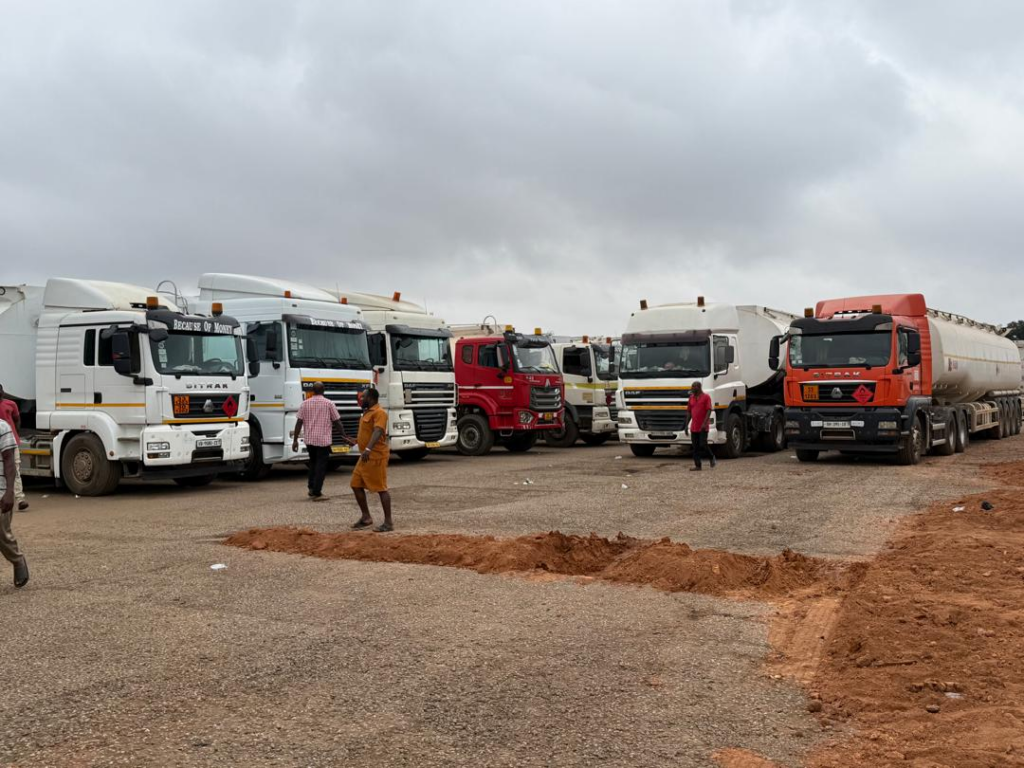
Tanker drivers in the Ashanti, Bono, Ahafo and Western North Regions have embarked on a three-day sit-down strike over alleged inaccuracies in the measurement and monitoring of metres installed at the Bulk Oil Storage and Transport Company (BOST) Kumasi Depot.

The drivers claim the depot’s measuring meters have repeatedly failed internal tests conducted by drivers and other stakeholders, resulting in fuel shortages for which they are ultimately held financially responsible.
Vice Chairman of the Association, Dominic Brenya, said joint exercises involving transporters, the National Petroleum Authority (NPA) and tanker unions had established that drivers were not siphoning fuel, despite shortages being recorded by the depot’s measuring systems.
According to Mr Brenya, the situation has placed a significant financial burden on drivers. He questioned the accuracy of the technology used at the offloading point, suggesting that the equipment could either be faulty or improperly calibrated.
The drivers are therefore calling on BOST, the NPA and the government to urgently investigate the matter and take corrective action.

The association has also raised concerns about inefficiencies in the loading system at the Kumasi Depot, saying drivers routinely experience lengthy delays because of inadequate loading facilities.
They further complained about insufficient parking space, which forces tanker drivers to park their vehicles along road shoulders while waiting to load. The drivers say this creates a serious safety risk to other road users because the trucks transport highly flammable petroleum products.
Those who manage to secure parking spaces at the depot have also complained about the poor condition of the facility, describing the untarred area as unsuitable for long waiting periods.
The drivers are consequently demanding improved parking and proper sleeping facilities to ensure their safety and welfare while waiting to load.
They have warned that the sit-down strike will continue until BOST, the NPA and the government address their concerns, particularly the alleged inaccuracies in fuel measurement, delays in loading, inadequate parking and the lack of suitable facilities for drivers.


