


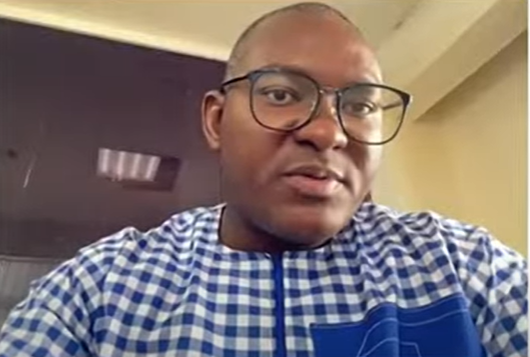
A Lecturer at the Kofi Annan International Peacekeeping Training Centre (KAIPTC), Victor Doke, has urged urgent intervention by regional and continental institutions to prevent a wider security breakdown in West Africa, warning that recent developments in Mali could accelerate instability across the sub-region.

Speaking on JoyNews’ AM Show on Monday, April 27, he described the evolving security environment as highly unstable, particularly given the proximity of states already affected by armed group activity.
“We are in an uncertain situation… especially bordered by countries that have experienced activities of armed elements. So, the situation is very, very dire,” he said.
Dr Doke called on the Economic Community of West African States (ECOWAS) and the African Union (AU) to intervene swiftly to contain the threat, stressing that delays could worsen the situation.
“The ECOWAS needs to come in. AU needs to come in,” he stated, adding that regional action was urgently required.
“Regional bodies need to come in ASAP… even before ASAP, because then the situation will get dire,” he said.
He further warned that insecurity in the Sahel is likely to escalate beyond the control of national authorities. “We are looking at how the insecurity is going to build up and then the momentum in which it’s going to build up; nobody can control it. Not even the Malian government can control it,” he noted.
His comments follow recent coordinated attacks in Mali that reportedly resulted in the death of the country’s Defence Minister, General Sadio Camara, intensifying concerns about the state’s capacity to respond to insurgent threats.
Dr Doke also highlighted the increasing sophistication of armed groups in the Sahel, noting their improved organisation, financing structures, and coordination.
“Armed groups have become very much structured, very well organised, have a financing mechanism with regard to their operations and activities and have sponsors,” he said.
He warned that growing collaboration among such groups could embolden similar movements in neighbouring states, including Nigeria, Burkina Faso, Togo, and Benin.
“This would also send a signal to other armed groups in Nigeria, in Burkina Faso, in northern Togo and Benin… to collaborate… to try and attack or cause havoc,” he cautioned.
Despite Mali’s exit from ECOWAS, Dr Doke emphasised that regional cooperation remains essential for collective security.
“The fact that they are out… does not mean we should leave them for them to go on this fight alone,” he said, adding that instability in Mali would inevitably have spillover effects on neighbouring countries.
He also noted that the reported killing of Mali’s Defence Minister could further weaken military morale and operational capacity.
“If this man has been taken out, it means that you would expect morale will be down,” he said, describing the incident as a significant strategic gain for armed groups operating in the region.


