


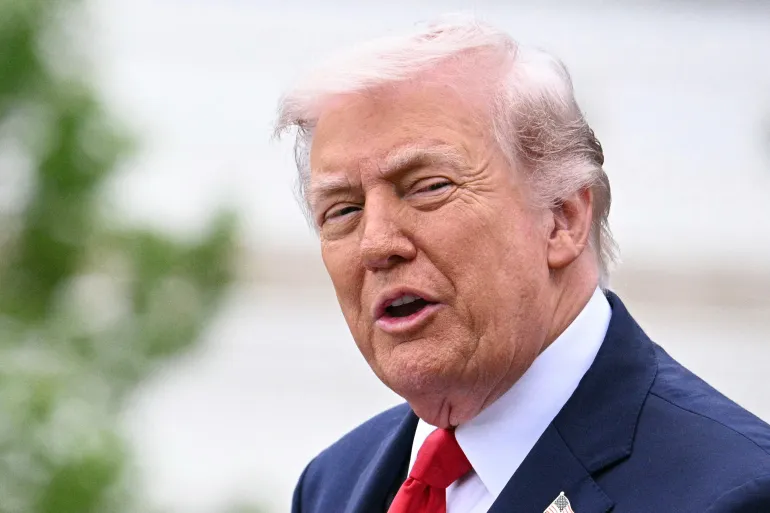
United States President Donald Trump has warned Iran must “get smart soon” following a proposal from Iran that would postpone a deal on Iran’s nuclear programme.

“Iran can’t get their act together,” Trump wrote on his Truth Social platform on Wednesday. “They don’t know how to sign a nonnuclear deal. They better get smart soon!”
The president included an AI-generated photo of himself carrying an assault rifle, with bombs exploding on a mountainside behind him. A banner over the image read: “NO MORE MR. NICE GUY!”
The latest threats came as uncertainty surrounding the fragile US-Iran ceasefire grows, days after the president called off the latest round of talks with Tehran.
Although Washington said it was reviewing Tehran’s proposal, it reportedly received a lukewarm response, with the White House emphasising Trump would “not be rushed into making a bad deal” and that “Iran can never possess a nuclear weapon”.
Rob Geist Pinfold, a lecturer in international security at King’s College London, told Al Jazeera that “we’ve gone past the stage … for a physical war”, but that both Tehran and Trump were in a stage of “intense competition”.
“Both sides are basically trying to signal to the other that they have more resilience, that time is on their side,” Pinfold said.
Tehran’s proposal is “deferring all of the difficult issues until later” by prioritising the end of the war and reopening the Strait of Hormuz.
“[But the tactic] simply doesn’t work for the Americans because they feel like if they give up on basically the leverage they have – the physical force leverage – the war could resume,” Pinfold added.
Meanwhile, Washington has claimed to have imposed additional financial pressure on Tehran.
In a post on X late on Tuesday, US Treasury Secretary Scott Bessent said his department has “targeted Iran’s international shadow banking infrastructure, access to crypto, shadow fleet, and weapons procurement networks”.
Last week, the Treasury sanctioned an independent Chinese oil refinery for buying hundreds of millions of dollars worth of Iranian oil, along with 40 shipping firms and vessels alleged to be operating as part of Iran’s shadow fleet.
Bessent claimed such actions “have disrupted tens of billions of dollars in revenue” and had helped to “rapidly” depreciate Iranian currency.
On Wednesday, the Iranian rial dropped to a new record low against the US dollar, losing about 6 percent of its value since the war began.
According to currency-tracking websites Bonbast and AlanChand, the rial was trading at about 1.8 million rials against the dollar on the black market.
When the war began at the end of February, the dollar traded at about 1.7 million rials.—AL Jazeera


