


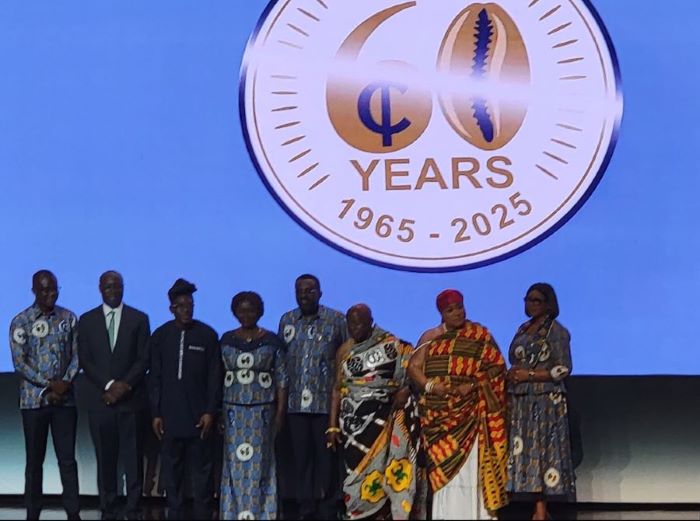
Story By: Juliet Akosua Danquah

Vice President Prof. Naana Jana Opoku Agyemang has urged Ghanaians to eschew foreign currencies in business transactions, opting instead for the local cedi. She made the call at the launch of Cedi@60 in Accra, themed “Cedi@60: A Symbol of Sovereignty, Stability, and Economic Resilience”. The Vice President praised the cedi’s remarkable performance, noting it’s now the best-performing currency in Sub-Saharan Africa.
She emphasized the need for fiscal discipline and sound policies to maintain confidence in the cedi. “The cedi has not only recovered from excessive borrowing, it has soared,” she stressed. The Vice President commended the Bank of Ghana for its achievement and encouraged them to continue promoting cedi usage through education in schools and media campaigns.
She also advised governments against reckless borrowing, promoting responsible financial management to protect the cedi’s value. By doing so, Ghanaians can build trust in their local currency and further strengthen the economy.
For his part, the Bank of Ghana (BoG) Governor, Dr. Johnson Asiama, reaffirmed the central bank’s commitment to implementing sound policies to maintain exchange rate stability and consolidate recent gains.
His assurance comes as the Ghana cedi continues its strong rally, appreciating by 37 per cent against the US dollar as of October 17, 2025, amid improved market confidence and tighter monetary management.
He said the BoG remained focused on sustaining confidence in the local currency and strengthening the foundation for long-term economic stability.
“The Cedi has appreciated by 37 per cent as at October 17, and according to the World Bank, it is the world’s best currency in Sub-Saharan Africa. This gain is not by accident; they are the result of hard and sometimes unpopular policies.
Fiscal consolidation by government, tight monetary policy stance by the Bank of Ghana, and renewed confidence in the investor community and the public.” Already, the World Bank has ranked the cedi as the best-performing currency in Sub-Saharan Africa, highlighting the impact of sustained fiscal discipline and foreign exchange reforms.


