


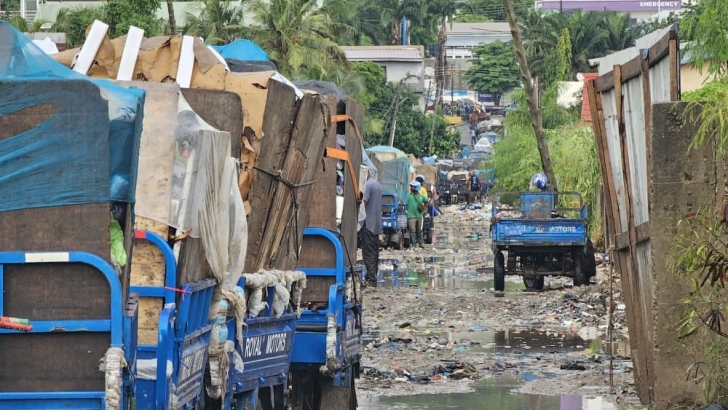
Residents of Mangoline, a community near McCarthy Hills in the Weija-Gbawe Municipality of Greater Accra, are sounding warnings over what they call a rising public health threat after a nearby wetland was converted into an unlawful refuse dump.

Locals say more than 500 tricycles, popularly called “aboboyaa,” offload waste at the location daily. They claim operators at the site collect roughly GH¢50 per tricycle load and push the garbage into the wetland, fuelling suspicions of a coordinated illegal dumping scheme.
Some residents further allege the practice happens with the awareness of municipal authorities, including Weija-Gbawe MCE, Felix Odartey Lamptey. But the MCE has firmly denied the claims.
MCE Refutes Sanctioning Illegal Dumping Charges
Speaking with journalists, Mr. Odartey Lamptey dismissed assertions that he permitted anyone to take money from waste operators at the site. He emphasised that his office has not approved any such operation and has reported the matter to National Security for urgent action.
The MCE revealed that National Security officers have already deployed to the area to stop further dumping and restore order. He added that he, alongside a municipal task force and National Security personnel, will soon move to the location to secure it and end the illegal dumping. Locals say the relentless dumping has turned the wetland into a serious environmental hazard, with swarms of flies, foul odour and stagnant water creating breeding sites for disease-carrying insects.
“At dawn you cannot eat outside. The flies cover everything. Our children are falling sick with stomach problems and skin rashes,” said Ama Serwaa, a trader who has lived in Mangoline for 12 years. Others note the wetland, once a lush ecological buffer, has been totally destroyed in months.
“It used to be green. Now it is a mountain of plastic, food waste, and diapers,” said resident Kofi Mensah. “When it rains, the water carries the rubbish into our drains.”
Residents estimate over 500 tricycles dump refuse at the site each day. At about GH¢50 per trip, the site allegedly pulls in more than GH¢25,000 daily through the suspected illegal fee system.
The volume of dumping, they say, has swiftly altered the wetland, heightening fears of a deepening environmental crisis.
Public Health Worries Rise
Public health specialists caution that destroying wetlands through reckless dumping raises risks of cholera, typhoid, malaria, and other waterborne and vector-borne illnesses. They explain that wetlands naturally purify water, and their pollution can contaminate groundwater and nearby communities. The Ghana Health Service has not issued specific data on disease trends in Mangoline, but Accra still records periodic outbreaks of sanitation-linked diseases, especially during the rainy season.


