


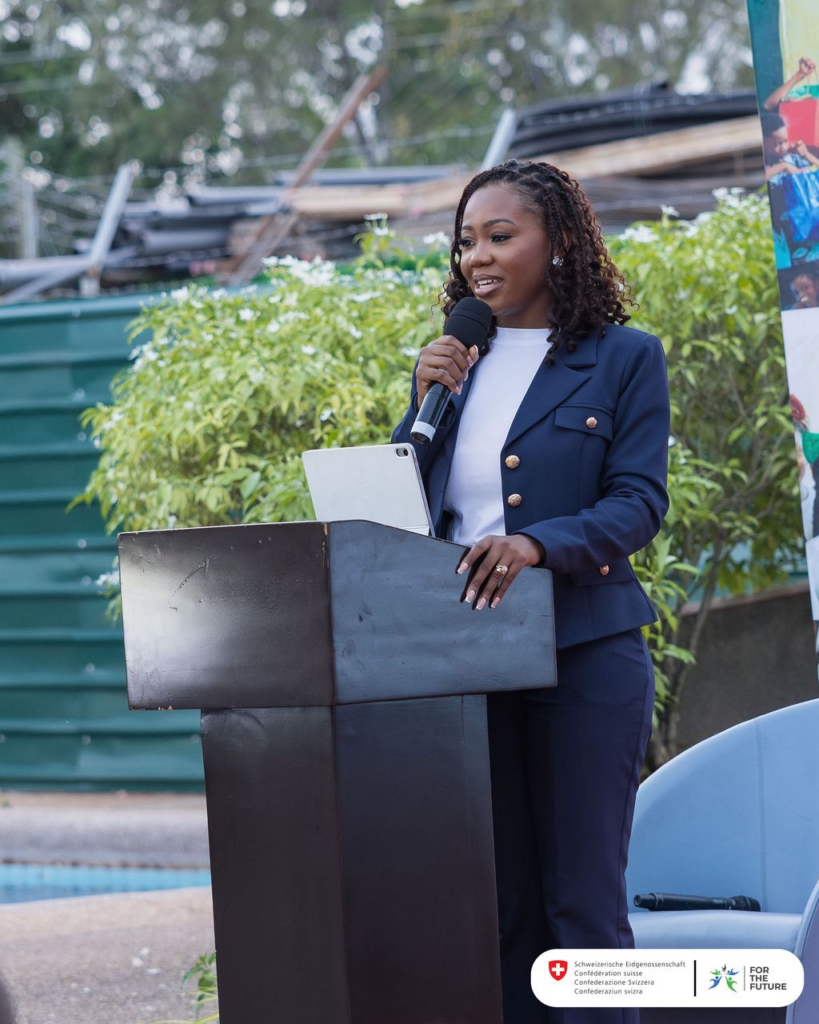
Young professionals working in Ghana’s social impact ecosystem have been encouraged to deepen collaboration and build stronger networks to accelerate national development and achieve sustainable change.

The call was made by lawyer and President of the For The Future Organisation, Kezia Asiedua Sanie, during the maiden edition of the FTF Impact Summit – Changemakers Dialogues held at the Embassy of Switzerland in Accra.
Addressing more than 200 participants, she emphasised that Ghana’s development challenges require collective action rather than isolated efforts by individuals or institutions.
“No individual, no organisation, and no sector can achieve transformational change in isolation,” she stated.
She added that meaningful impact emerges through collaboration, shared learning, and accountability across sectors.
“Real impact is born at the intersection of collaboration, shared learning, and mutual accountability,” she said.
The summit convened policymakers, entrepreneurs, diplomats, development practitioners, and youth leaders to explore themes including leadership, innovation, and social impact.
According to Ms. Sanie, the organisation is transitioning from a conventional NGO model to a broader movement aimed at empowering young people to drive change within their communities.
She further stressed the need for adequate mentorship, opportunity structures, and institutional support to enable young people to contribute effectively to national development.
The event highlighted a growing shift within Ghana’s youth-led civil society space toward stronger institutional frameworks, policy engagement, and measurable outcomes. Discussions covered governance, technology, climate sustainability, social innovation, gender inclusion, and regulatory compliance within the non-profit sector.

The summit received support from the Embassy of Switzerland in Ghana, with Swiss Ambassador Simone Giger emphasising the importance of investing in youth leadership and resilient civic institutions.
The presence of the Minister for Youth Development and Empowerment, George Opare Addo, underscored growing government interest in the role of civil society in job creation and development.
A key session focused on governance and regulatory compliance for non-profit organisations, with officials from the Office of the Registrar of Companies and the Non-Profit Organisation Secretariat providing guidance on legal and operational requirements for credible institutions.
For many young founders and entrepreneurs, the session offered practical insights into fundraising, accountability, and public trust-building.
A cross-generational panel discussion featured figures such as Sangu Delle, Daniel Dotse, Yawa Hansen-Quao, and Penelope Thompson, who examined leadership, innovation, and accountability in a changing socio-economic context.
Participants were encouraged to move beyond conventional career pathways and focus on building institutions capable of shaping communities and policy outcomes.
The summit also introduced “Impact Circles,” thematic breakout sessions covering education, health, climate, technology, governance, disability inclusion, media, and women’s empowerment, designed to foster collaboration and idea exchange.
The event concluded with remarks from lawyer and business executive Femi Asante, who described entrepreneurship as a collective endeavour and urged participants to prioritise partnerships and ecosystem building.
Analysts note that initiatives such as the FTF Impact Summit could contribute to addressing youth unemployment, strengthening entrepreneurship, and enhancing civic participation.
Founded in 2016, the For The Future Organisation focuses on supporting underserved communities through education, mentorship, and development programmes across Ghana, Nigeria, and other regions.
The summit formed part of the organisation’s 10th anniversary celebrations under the theme: “Bridging Leaders and Changemakers for Social Impact.”


