


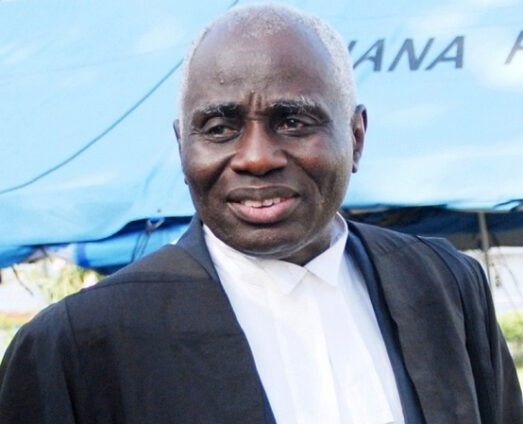
Renowned legal practitioner Tsatsu Tsikata has stated that he consciously avoids drawing attention to the fact that many judges before whom he appears were once his students, emphasising that professional roles in court must take precedence over past academic relationships.

Speaking on PM Express with Evans Mensah, the former lecturer reflected on the experience of appearing before benches that include individuals he previously taught and assessed.
“When I’ve appeared before the Supreme Court, even if all of them are my students, I have recognised the importance of not always reminding them that, because, in fact, some of them don’t want to be reminded,” he said.
He underscored the need for a clear separation of roles within the courtroom, noting that judicial responsibility and advocacy must remain distinct regardless of personal history.
“On a more serious note, I recognise in the moment that I’m before them that they have their responsibility as judges and I have my responsibility as an advocate before them, and I must show respect for their position, regardless of what they were in the past. So frankly, I don’t dwell on the past,” he explained.
While acknowledging that some judges occasionally refer to his role in their training, Mr Tsikata indicated that he does not encourage such recognition.
“Sometimes they themselves like to acknowledge that, ‘Mr Tsikata, you taught us and so on.’ But I really don’t like to play that tune too loudly when I’m before them,” he added.
Despite this restraint, he admitted to a sense of pride in observing the work of former students on the bench, even in instances where decisions have gone against him, including during the 2013 Ghana Election Petition.
“There were occasions when, as you listen to the ruling, even though it didn’t go in your favour, you respected the reasoning that had gone into it and even the conclusions that had been reached,” he noted.
Mr Tsikata said such experiences reinforce his confidence in the judiciary, particularly when judgments demonstrate rigorous legal reasoning and clarity.
He also recounted a recent experience outside Accra, where he was impressed by a judge’s meticulous delivery of a ruling in a case he was not involved in.
“For me, it wasn’t about whether the decision was right or wrong, but the way she articulated her reasons and arrived at her conclusion was just remarkable,” he said, adding that such moments highlight the enduring value of disciplined judicial reasoning.


