


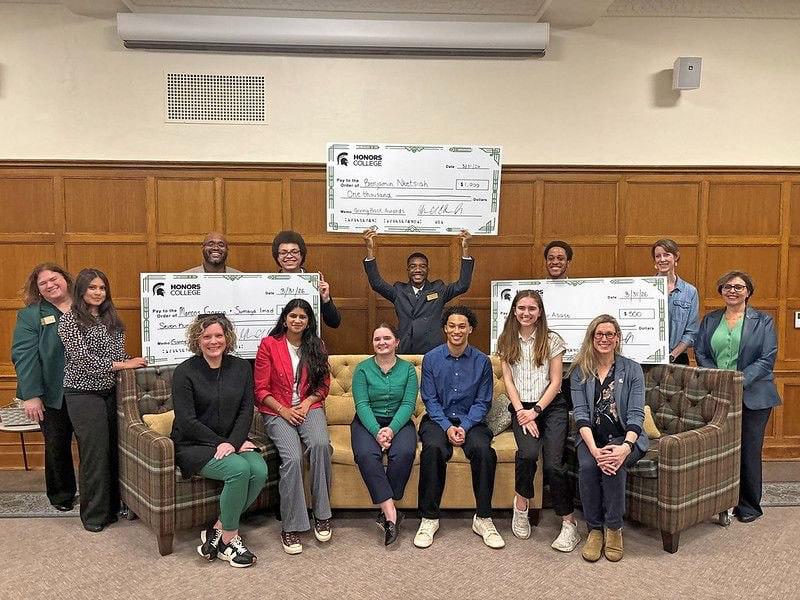
Odadeɛ Benjamin Nketsiah, a 2020 champion of the National Science and Mathematics Quiz (NSMQ), has earned international recognition for his groundbreaking project aimed at detecting triple-negative breast cancer. His AI-powered innovation, “She’s Strong,” was honoured at Michigan State University in the United States after participants submitted three-minute video presentations explaining their work to a panel of judges.

As part of the award, Nketsiah received $1,000 credited toward his tuition, marking a significant milestone in his academic and professional journey.
The “She’s Strong” project builds on ongoing efforts to improve healthcare delivery by promoting early detection and timely treatment of breast cancer. Nketsiah explained that his inspiration stemmed from the high prevalence of triple-negative breast cancer in West Africa, particularly in Ghana.
“I realised that it is one of the most prevalent forms of breast cancer in the region. In Ghana, for every 10 breast cancer patients, about eight are diagnosed with triple-negative. It is an especially aggressive disease,” he noted.
Motivated by this reality, Nketsiah co-founded a non-profit organisation also named She’s Strong, dedicated to supporting communities across West Africa in addressing this critical health challenge.

Central to the initiative is a software application that assesses users’ risk levels using the clinically validated Tyrer-Cuzick model. By analysing user responses, the system categorises individuals into low, medium, or high risk for developing triple-negative breast cancer.
Beyond risk assessment, the application allows users to log symptoms and facilitates connections with local healthcare professionals for further evaluation and treatment. Nketsiah further revealed that the platform incorporates an AI-powered patient navigator, designed to deliver clinically reliable guidance.
Despite its advanced capabilities, he emphasised that the tool is not a substitute for medical professionals. “It is not meant to replace a doctor,” he stressed, underscoring the importance of in-person medical consultation.
Triple-negative breast cancer is particularly challenging to treat because it does not respond to hormone therapies targeting estrogen, progesterone, or the HER2 protein. Its aggressive nature makes early detection crucial in improving patient outcomes.
Nketsiah described the project as a personal commitment to giving back to West Africa, expressing humility in receiving international recognition for work rooted in addressing local healthcare needs.


