


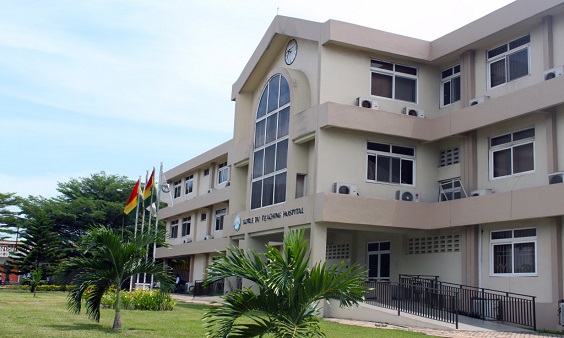
The Accident and Emergency Department of the Korle Bu Teaching Hospital is grappling with a significant increase in patient admissions, with daily attendance now exceeding 100 cases despite the unit’s 50-bed capacity.

Head of the department, Dr Henry Bulley, said the facility, which previously managed between 50 and 70 patients a day, is now routinely treating more than 100 emergency cases, placing considerable pressure on staff and available resources.
In an interview with the Ghana News Agency, Dr Bulley attributed the sharp rise to an increase in both trauma and medical emergencies, including stroke, severe diabetic complications, kidney disease, loss of consciousness, domestic injuries and road traffic crashes.
He explained that the department serves as the primary referral centre for most adult emergency cases, with the exception of women in labour and children suffering non-traumatic medical conditions, who are treated at specialised units within the hospital.
While trauma-related admissions continue to rise, Dr Bulley said the growing number of critically ill medical patients has become an even greater concern.
He noted that illnesses previously regarded as manageable at outpatient clinics are now presenting in life-threatening forms.
“Patients who would normally seek treatment for malaria are increasingly arriving unconscious, while many are also presenting with acute kidney injuries,” he said.
Dr Bulley indicated that the reasons behind the changing pattern of severe illnesses remain unclear and called for comprehensive scientific research to determine the underlying causes.
He suggested that environmental factors, including the possible impact of illegal mining activities, should be investigated but cautioned against drawing conclusions without evidence.
“We need proper research because the patients are coming from across the country, and the food and water we consume are sourced from many different regions,” he said.
The department is also recording a steady increase in road traffic accident victims.
Hospital data show that by the end of June 2026, the Accident and Emergency Department had treated 7,781 patients, up from 7,108 during the same period in 2025. The department recorded 7,910 attendances in 2024 and 7,362 in 2023.
Road traffic crashes accounted for 553 emergency cases this year, representing 7.11 per cent of all attendances. This marks a significant increase from 379 cases in 2025, 368 in 2024 and 384 in 2023.
Despite the higher number of crash victims, Dr Bulley said improvements in emergency medical care have contributed to better survival outcomes.
The department recorded 10 road traffic-related deaths by the end of June 2026, translating into a mortality rate of 1.81 per cent. This compares with seven deaths in 2025, 12 in 2024 and seven in 2023.
According to him, the improved outcomes are largely due to the growing availability of emergency medicine specialists and specially trained emergency nurses, whose expertise has enhanced the hospital’s ability to stabilise critically injured patients.
Dr Bulley also identified festive seasons, extended public holidays and school vacations as periods when emergency admissions typically surge.
He said increased travel, alcohol consumption, substance abuse and reckless driving during holidays contribute significantly to the rise in road traffic crashes, while school vacations often coincide with higher numbers of injuries involving children.
He called for stronger public education on road safety and preventive health measures, stressing that reducing avoidable injuries and accidents would help ease the growing burden on emergency departments nationwide.


