


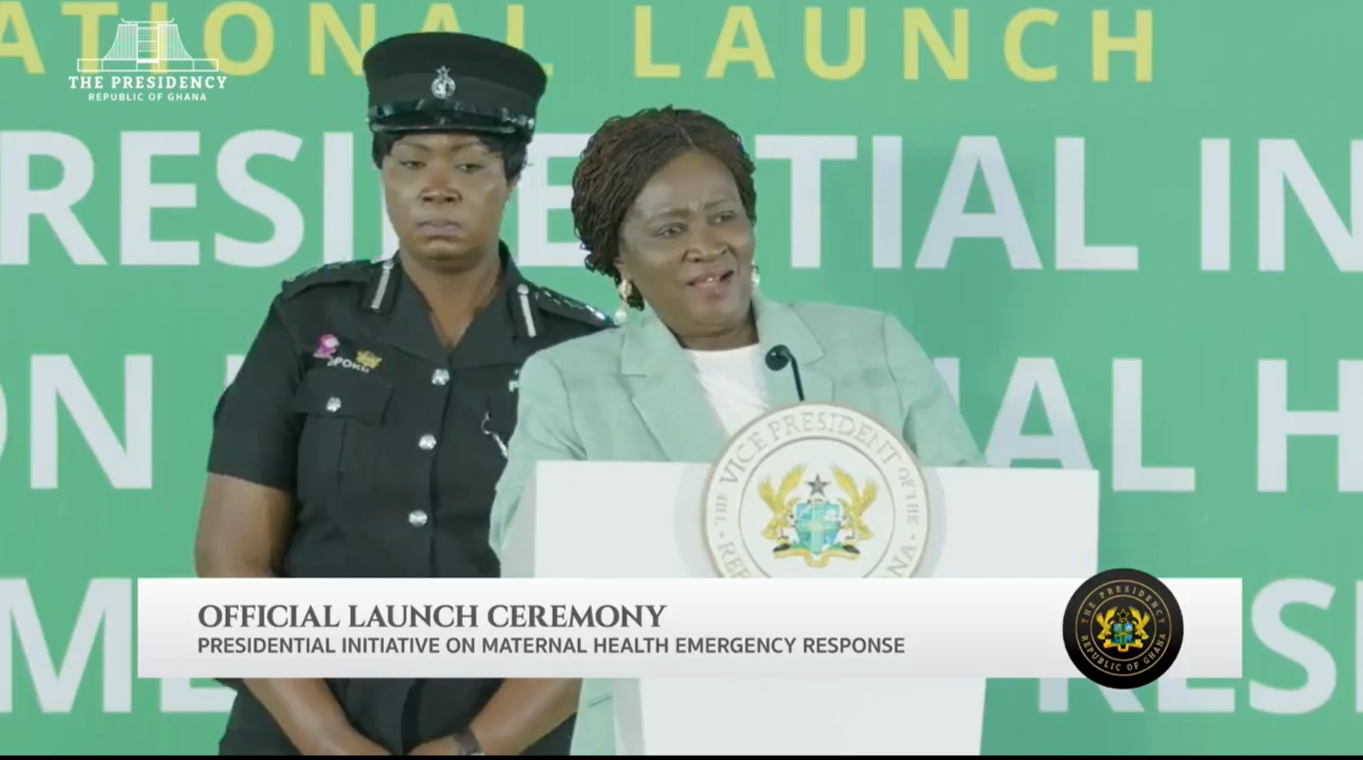
Government has rolled out a five-year joint initiative aimed at closing long-standing gaps in maternal and newborn health care, including emergency referrals, transport, personnel, blood supply, medicines, equipment and health data.

Vice President Professor Jane Naana Opoku-Agyemang said the Presidential Initiative on Maternal Health Emergency Response (PRIMER) is designed to tackle problems that individual health facilities cannot fix alone.
Speaking at the national launch of PRIMER on Monday, September 14, 2026, she explained that the initiative will unite ministries, state agencies, local authorities, traditional and religious leaders, civil society, private sector players and communities to improve maternal health outcomes.
“PRIMER is to help address obstacles that no single health institution can remove, whether in financing, infrastructure, staffing, procurement, data or community mobilisation,” she stated.
According to the Vice President, the programme will enhance coordination within the health system while building on existing government and partner interventions.
PRIMER is anchored on three key pillars: political leadership and social mobilisation; institutionalised accountability and evidence-driven action; and sustainable domestic financing backed by responsible external support.
It will focus on maternity and newborn services, referral and transport systems, access to blood, drugs and critical equipment, community involvement and the use of data to guide decision-making.
Prof. Opoku-Agyemang noted that PRIMER will strengthen maternal and perinatal death surveillance and response, improve data quality and timeliness, define institutional roles clearly, and allow for regular high-level assessment of progress.
She emphasised that the initiative must have well-defined targets, clear responsibilities and proper reporting systems, with regular progress reviews and replication of lessons from high-performing regions and facilities.
“PRIMER cannot succeed as a stand-alone programme nor duplicate the work already underway across government,” she said.
The Vice President added that factors influencing maternal survival go beyond the health sector to include communication, transport, water and energy, making cross-sector collaboration critical.
She also appealed to families and communities to support early care-seeking among pregnant women, recognise danger signs and ensure timely assistance during pregnancy and delivery.
Prof. Opoku-Agyemang stressed that the true measure of PRIMER’s success will not be just the number of women visiting health facilities, but whether they and their babies survive childbirth.
“It is not enough for many more women to enter our health facilities. They must return home safely with their babies to their families,” she said.
PRIMER is expected to deliver a coordinated national response to Ghana’s persistent maternal health challenges as the country pushes to cut preventable maternal deaths and achieve the Sustainable Development Goal target of less than 70 maternal deaths per 100,000 live births by 2030.


