


Asantehene Otumfuo Osei Tutu II has warned that illegal mining driven by unemployment could have devastating consequences for communities if vital water bodies, including the Jimi River, are destroyed.

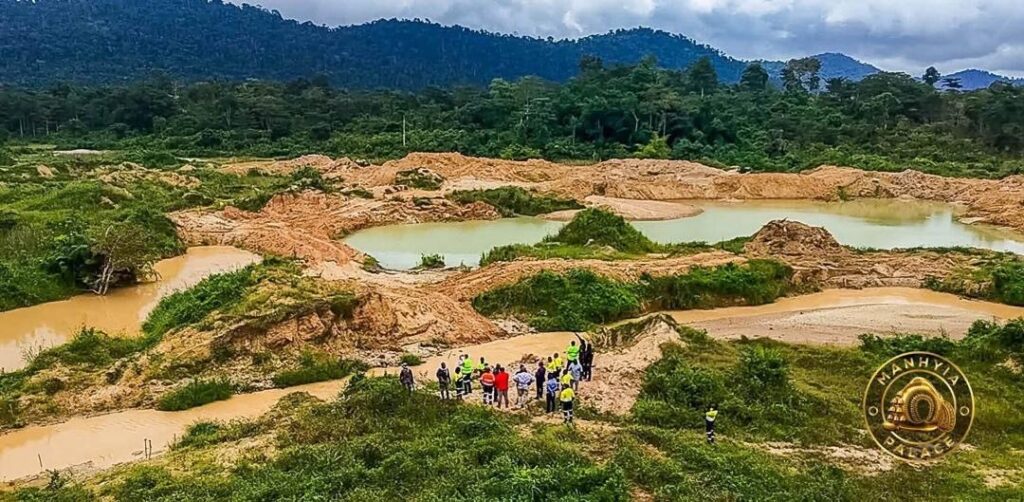
The King issued the warning after inspecting the heavily degraded Jimi River and the Jimi Dam near Obuasi, where illegal mining activities have altered the river’s course, increased siltation and threatened a key source of treated water for more than 200,000 people in Obuasi and Adansi.
Otumfuo acknowledged that unemployment has pushed many young people into galamsey, but cautioned that the economic benefits of mining would mean little if environmental destruction ultimately endangered human life.
“I understand illegal mining has become an option because many young people have no jobs. But we cannot continue to do that because the river is also relevant to our lives. If we destroy the river, what happens to us then? We will give birth to deformed babies,” he said.
The Asantehene appeared visibly distressed by the extent of the degradation, particularly at Tasliman, where illegal miners had reportedly diverted the Jimi River’s course using heaps of sand.
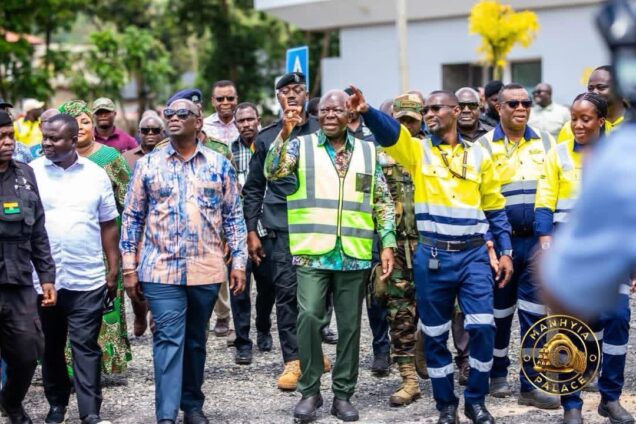
Asantehene calls for responsible mining
Otumfuo urged communities to consider the long-term consequences of environmental destruction, stressing that addressing unemployment must go hand in hand with protecting natural resources.
“I understand unemployment is a challenge, but we must also think about the damage we are doing to the river. We may get the money, but we will die after the environment is destroyed,” he said.
He acknowledged that young people would continue to turn to mining in the absence of employment opportunities, but insisted that economic hardship should not justify practices that destroy rivers and surrounding ecosystems.
The King also expressed concern that the pursuit of gold was encouraging some people to cut down their cocoa farms, warning that the combined effects of mining and the destruction of agricultural land could undermine livelihoods and environmental sustainability.
“We can find ways of mining responsibly. Because of gold, many are also felling their cocoa farms. We may end up destroying ourselves and the environment,” he said.
“I will plead with you, if you turn to galamsey due to unemployment, it must be done responsibly, without destroying the environment.”
Otumfuo said he would take the matter before his chiefs for deliberations on sustainable and lasting solutions to the problem.
Jimi reclamation project seeks to restore degraded land
The inspection formed part of the 153-hectare Jimi Land Reclamation and River Watercourse Rehabilitation Project, a pilot initiative under the Green Ashanti Initiative.
The project is being led by Oheneba Nana Kwaku Dua with support from AngloGold Ashanti and is intended to rehabilitate degraded land and restore the river’s watercourse.
It is expected to be implemented in six steps, while also creating alternative livelihood opportunities through the cultivation of kenaf and other tree crops.
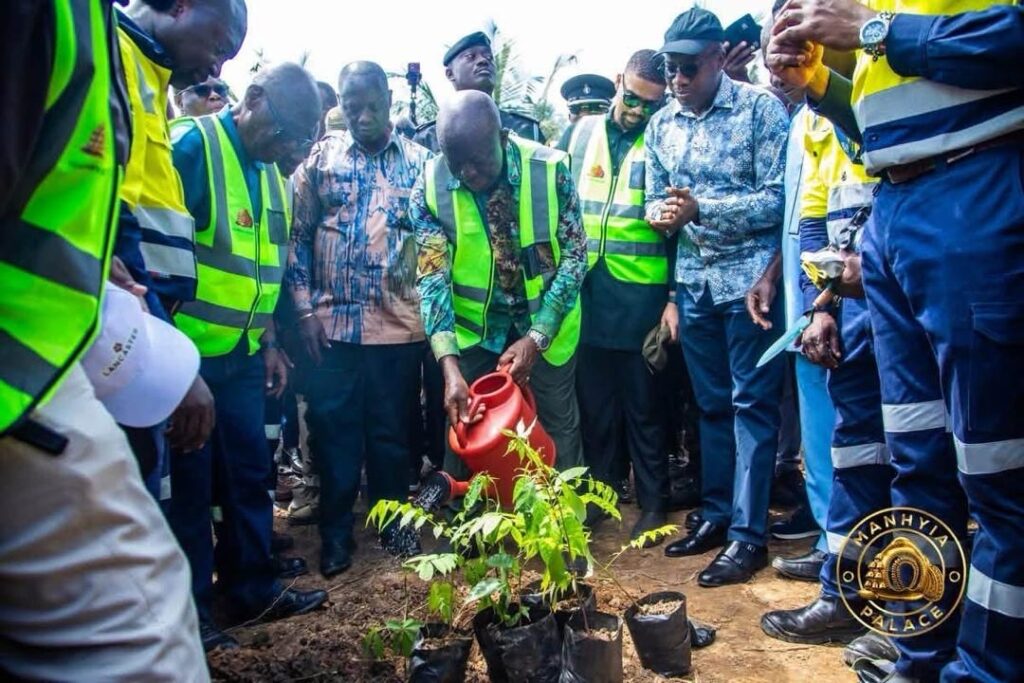
Ministers join inspection tour
The Lands and Natural Resources Minister, Emmanuel Armah-Kofi Buah, and the Minister for Local Government, Chieftaincy and Religious Affairs, Mahama Ayariga, accompanied the Asantehene on the tour.
The visit began with briefings at AngloGold Ashanti before the delegation proceeded to Lot 1 of the reclamation project for a tree-planting exercise.
The inspection highlighted the urgent challenge of reconciling employment needs with environmental protection, particularly in communities where illegal mining has become a source of income despite the risks it poses to water bodies, agriculture and public health.


