


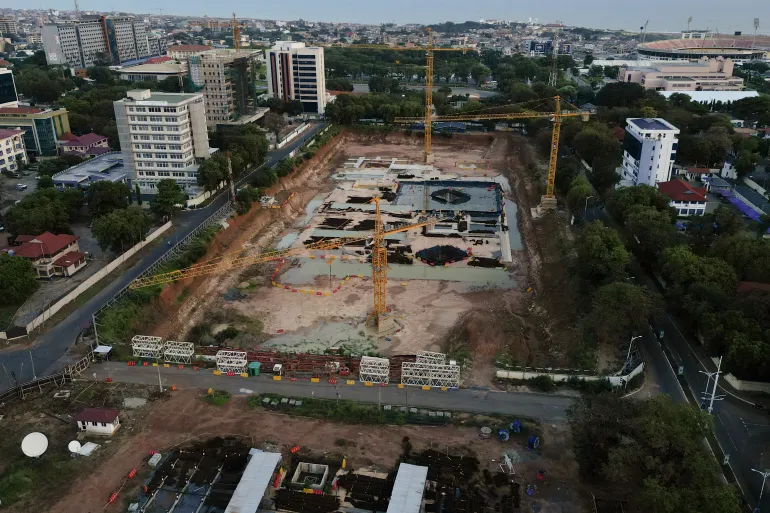
Minister for Local Government, Chieftaincy and Religious Affairs, Mahama Ayariga, has urged Christian organisations in Ghana to unite and develop a common position on the future of the National Cathedral project.

He said a coordinated effort by churches and Christian organisations in Ghana and the diaspora could generate the financial and institutional support needed to advance the project.
Mr Ayariga made the remarks when the Christian Council of Ghana paid a courtesy call on him. He reiterated his personal support for the establishment of a National Cathedral but said concerns about its location and financing needed to be addressed.
The Minister explained that his earlier objection to the project was primarily related to the proposed location, particularly plans that involved the demolition of residences occupied by senior judges. He stressed that his opposition to the location should not be interpreted as opposition to the broader concept of a National Cathedral.
He said he would engage the Christian Council and other ecumenical and religious bodies to explore a way forward, including discussions on the project’s cost, location and financing structure.
Mr Ayariga cited the National Mosque as an example of what could be achieved when a religious community rallies behind a major project and mobilises support from both Ghana and abroad.
He said a similar level of unity among Christian groups could create the necessary foundation for raising funds and securing broader support for the National Cathedral.
Ayariga prioritises sanitation
The Minister also identified environmental sanitation as a major priority of his tenure and called for closer cooperation between government and religious institutions to tackle the country’s sanitation challenges.
He said the church’s extensive presence in communities and its influence could help promote responsible sanitation practices and encourage citizens to take greater responsibility for keeping their surroundings clean.
According to Mr Ayariga, improving sanitation does not necessarily require complex interventions but depends largely on discipline, effective waste management systems and responsible individual behaviour.
He also called for stronger regulation of private companies involved in waste management and said the Ministry would continue consulting religious organisations on ways to improve environmental cleanliness.
He expressed confidence that sustained cooperation between government, religious institutions and citizens could significantly improve sanitation across the country.
Christian Council pledges support
General Secretary of the Christian Council of Ghana, Rev. Dr Cyril Fayose, said the Council was ready to collaborate with the Ministry on initiatives aimed at improving sanitation and environmental cleanliness.
He disclosed that the Council had prepared a Memorandum of Understanding (MoU) with the Ministry for an environmental care and cleanliness programme, although the agreement was yet to be signed.
Rev. Dr Fayose said churches had historically contributed to Ghana’s development through education, healthcare, peacebuilding, advocacy and governance, and could bring the same commitment to addressing sanitation challenges.
He said the Council would also build on its previous collaboration with the Ministry during National Sanitation Day by mobilising churches and communities to maintain clean environments.
On the National Cathedral, Rev. Dr Fayose welcomed Mr Ayariga’s support and said Christians in Ghana were willing to contribute towards financing the project.
He argued that greater state support and the removal of partisan considerations could give potential investors and donors the confidence to participate.
According to him, the Council, which was established in 1929, was also preparing for its centenary celebrations and would require the support and cooperation of the Ministry as part of those preparations.


