


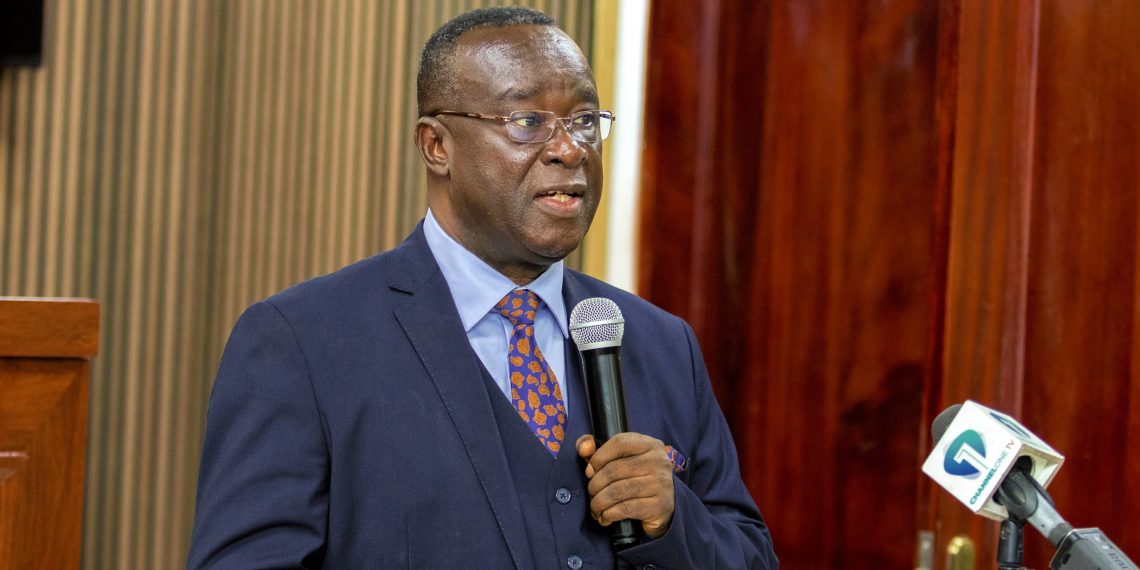
Ghanaian legal scholar Prof Kwaku Asare has cautioned Chief Justice Paul Baffoe-Bonnie against making public comments that could be interpreted as partisan political assessments.

His comments follow remarks by the Chief Justice praising the performance of the Minerals Income Investment Fund (MIIF) and other state institutions under the current administration.
During a visit to MIIF on Wednesday, September 2, 2026, Justice Baffoe-Bonnie said some of the developments he had witnessed had made him question what Ghana had been doing over the previous eight years.
He also expressed surprise at reports concerning the performance of the Social Security and National Insurance Trust (SSNIT), particularly in comparison with previous plans to dispose of some of its assets.
Prof Asare said he was concerned not necessarily about the substance of the Chief Justice’s observations, but about the political interpretation that could arise from his choice of words.
He argued that the reference to “the past eight years” carries a strong partisan meaning in Ghana’s political discourse and could be understood as a comparison between the current administration and the previous government.
According to Prof Asare, such comments are particularly sensitive when they come from the head of the Judiciary because the Chief Justice’s public statements carry institutional significance.
He said judges remain citizens with personal opinions, but occupying judicial office requires a higher degree of restraint in public commentary, especially for the Chief Justice.
Prof Asare further warned that perceptions of political alignment could undermine confidence in the Judiciary, particularly when cases involving decisions or actions of both the previous and current governments come before the courts.
He stressed that litigants should not have reason to question whether the head of the Judiciary has already formed favourable or unfavourable views about a particular administration.
Prof Asare therefore called for restraint from both politicians and members of the Judiciary, arguing that political actors must respect judicial independence while judges must avoid becoming involved in partisan political discourse.
“The higher the judicial office, the heavier the burden of restraint,” he said.


