


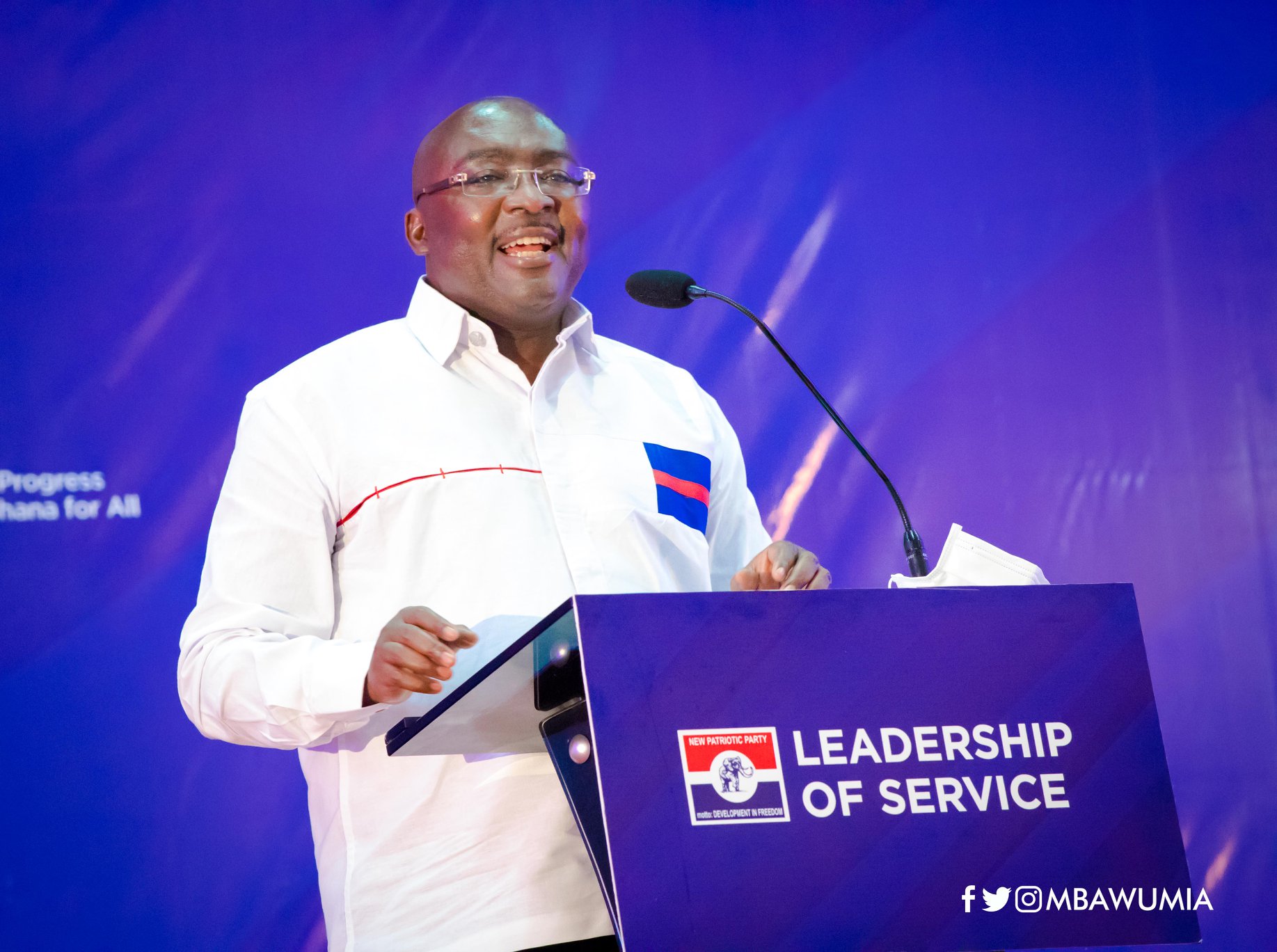
Former Vice President and NPP 2028 presidential candidate Dr Mahamudu Bawumia has attributed part of the cedi’s sharp depreciation between 2022 and 2024 to what he described as an IMF-imposed limit on the Bank of Ghana’s foreign exchange interventions.

Speaking to members of the Ghana Small-Scale Miners Association in Accra on Thursday, Dr Bawumia said the IMF programme restricted the central bank to using a maximum of $80 million a month to support the foreign exchange market.
He argued that the ceiling significantly limited the Bank of Ghana’s ability to respond to strong demand for foreign currency, particularly for essential imports such as fuel, machinery and medicines.
“we were really constricted in terms of availability of foreign exchange. And at the same time, the cedi was depreciating almost on a daily basis,” he said.
Dr Bawumia said the restriction formed part of the IMF’s reserve accumulation strategy but contributed to shortages in the foreign exchange market.
He linked the subsequent easing of the constraint to the Gold for Reserves programme, which he said he proposed during the economic crisis to help strengthen Ghana’s reserves.
According to him, the restriction was removed in January 2025 after reserves had improved, enabling the Bank of Ghana to significantly increase its interventions in the foreign exchange market.
“From $80 million maximum per month ($960 million per year) to $1 billion a month!” he said.
Dr Bawumia maintained that the increased supply of foreign exchange has contributed to the relative stability of the cedi in recent times.


