


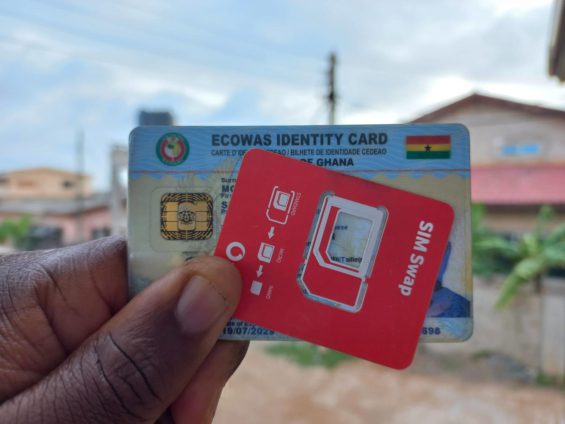
The government is set to introduce biometric verification as part of Ghana’s SIM registration process before the end of 2026, Communications, Digital Technology and Innovations Minister Samuel Nartey George has announced.

According to the Minister, Parliament has passed the Legislative Instrument (LI) on SIM registration, clearing the way for the implementation of the next phase of the exercise.
The biometric verification system is expected to strengthen subscriber identification, improve the integrity of SIM registration data and make it more difficult for individuals to register SIM cards using fraudulent identities.
Mr George made the announcement at the Government Accountability Series held at the Jubilee House in Accra on Monday, September 7, 2026.
He said the move formed part of broader efforts to strengthen Ghana’s digital identity and telecommunications systems while creating a more secure environment for users of digital services.
Mr George also assured that the government would continue to update the country’s regulatory framework to keep pace with developments in the digital space.
“The work is far from finished, and I will not pretend otherwise. But the direction is unmistakable, the results are measurable, and the resolve of this Ministry is unshaken,” he said.
New phase follows challenges with SIM registration
The latest development comes after several challenges encountered during Ghana’s SIM registration exercise, which began on October 1, 2021.
The initial process was conducted in two stages. Subscribers were first required to link their SIM cards to their Ghana Cards and subsequently complete biometric capture at the customer care centres or authorised agents of their respective mobile network operators.
By October 2022, about 28.96 million SIM cards had been linked to Ghana Cards, representing 67.28% of all SIM cards issued at the time.
However, only approximately 18.93 million SIM cards, representing 44.28%, had completed both stages of the registration process.
This left nearly 10 million subscribers who had linked their SIM cards to their Ghana Cards but had not completed the biometric stage.
The exercise officially ended on May 31, 2023, following several extensions to the deadline. More than 10 million subscribers had, however, only partially completed the registration process, leaving their SIM cards liable to deactivation.
At the end of the exercise, MTN Ghana alone blocked about 5.4 million unregistered SIM cards.
Biometric data to strengthen subscriber verification
The National Communications Authority (NCA) and the Ministry of Communications, Digital Technology and Innovations have previously acknowledged challenges with the earlier registration exercise and the need to further strengthen the system.
The new biometric verification requirement is intended to close some of the remaining gaps by ensuring that SIM cards are linked to verified identities through biometric information.
Subscribers are expected to provide biometric data, such as fingerprints, as part of the registration process.
The measure is expected to make it more difficult for individuals to use false identities to register SIM cards, potentially helping to reduce SIM-related fraud and improve the ability of authorities to trace subscribers.
NCA begins preparations for new system
In preparation for the new phase, the NCA held stakeholder consultations on March 13, 2026, to review draft regulations governing SIM registration.
The consultations considered several issues, including registration requirements for Ghanaian residents and foreigners, financial and operational implications, limits on the number of SIM cards that can be registered to a single identification card, as well as registration arrangements for minors and diplomats.
With Parliament having passed the new LI, the Ministry is expected to work with the NCA and telecommunications companies to implement the biometric verification system before the end of 2026.
The regulations are expected to provide specific guidelines on the collection, storage and use of biometric data, as well as the responsibilities of telecommunications operators and subscribers.
Subscribers are also expected to be given a specified period to complete the new verification process, with possible sanctions for those who fail to comply.


