


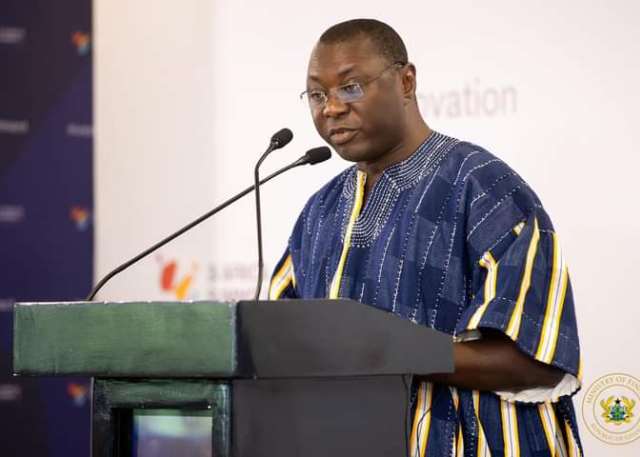
Ghana may face fresh budget strain as the Bank of Ghana’s (BoG) losses grow, with recapitalisation set to push up public debt and squeeze state finances, former Finance Minister, Dr Mohammed Amin Adam, has cautioned.

His remarks follow the central bank’s GH¢15.63 billion deficit for the 2025 fiscal year. This shows a steep decline from the GH¢9.49 billion loss logged in 2024.
The roughly 65% year-on-year jump comes even as key macro metrics, especially inflation and currency swings, have shown signs of leveling off. In a letter to the IMF dated 2 May, 2026, Dr Amin Adam said the central bank’s deteriorating financial state poses a clear threat to the nation’s fiscal picture, particularly as Ghana wraps up its Extended Credit Facility programme.
“The Bank of Ghana’s (BoG) negative equity is effectively a deferred fiscal cost,” he said. He flagged a major weakening in the Bank’s books, with negative equity expanding sharply in 2025, warning that the job of fixing the central bank’s finances would ultimately rest with government. “If the government issues bonds to recapitalise the Bank, this could increase gross public debt, future interest obligations, or rollover pressures,” he said.
Dr Amin Adam added that the issue now exceeds earlier estimates linked to a current recapitalisation plan settled between the Finance Ministry and the central bank.
“This position is now worse at negative GH₵96.28 billion, and without an extension of the capitalization period, the fiscal cost to the government can only increase,” he said.
He further warned that climbing operating costs at the central bank, mainly from monetary policy actions, could worsen the issue and add more fiscal stress.
“If sterilisation costs continue to exceed the Bank’s recurring income, future central bank losses may require additional Government support,” he said, warning that this could “undermine fiscal consolidation gains achieved under the programme.
”The worries arrive at a crucial point as Ghana gets ready to exit its IMF-backed program, with policymakers under pressure to keep gains in debt sustainability and macro stability.
Dr Amin Adam urged the IMF to treat the central bank’s financial health as a major risk to Ghana’s economic outlook, stressing that future budget plans must fully reflect the price of recapitalizing the Bank of Ghana.


