


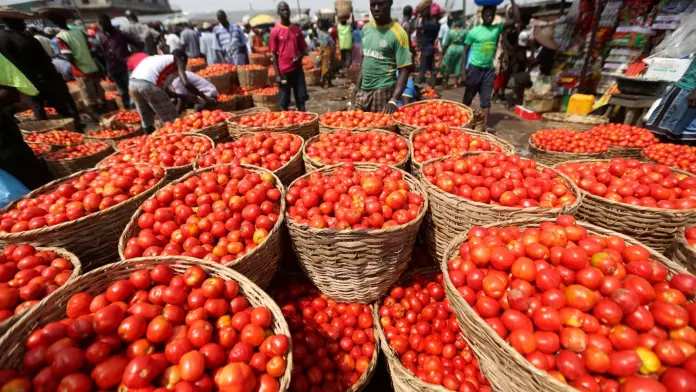
Burkina Faso has imposed an immediate suspension on all fresh tomato exports, as authorities seek to safeguard domestic processing industries from supply shortages.

The directive, announced in a joint communiqué dated March 16, 2026, was signed by the Minister of Industry, Commerce and Artisanat, Serge Gnaniodem Poda, and the Minister of State for Agriculture, Water, Animal and Fisheries Resources, Ismaël Sombie.
According to the communiqué, the ban applies nationwide and will remain in force “until further notice,” affecting all businesses involved in the export of fresh tomatoes. The move is intended to ensure sufficient supply for local processing factories.
In addition, the government has suspended the issuance of Special Export Authorisations (ASE) with immediate effect. Exporters who already hold valid permits have been granted a two-week grace period from March 16 to complete pending shipments, after which all existing authorisations will be rendered invalid.
Authorities warned that any breach of the directive will attract sanctions under existing laws. Confiscated goods will be redirected, at no cost, to industrial tomato processing facilities operating under the country’s popular shareholding scheme.
The policy aligns with Burkina Faso’s broader push to strengthen its agro-processing sector and reduce reliance on raw commodity exports—a strategy that has gained momentum under the transitional administration led by Ibrahim Traoré.
The export ban is expected to have knock-on effects across the sub-region, particularly in Ghana, which maintains strong agricultural trade ties with its northern neighbour. In northern Ghana, where markets depend heavily on cross-border produce, the restriction could lead to tighter supply and potential price increases.
The government has called on all stakeholders in the tomato value chain, as well as border officials and security agencies, to ensure strict compliance with the directive.


