


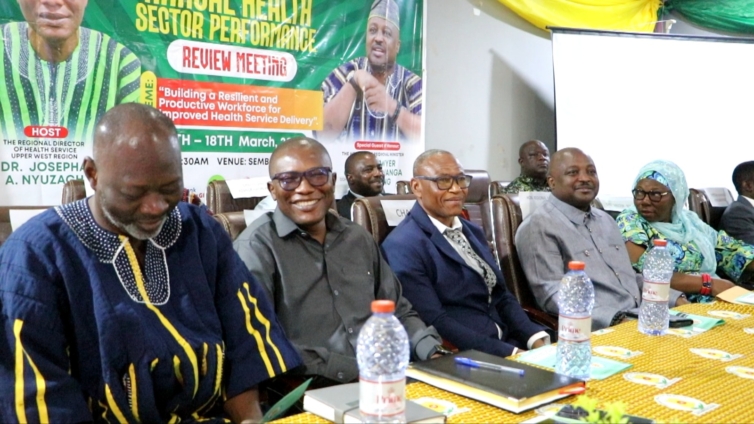
The Upper West Region is grappling with a worsening healthcare crisis after none of the 25 medical officers posted to the region in 2025 reported for duty, according to Regional Minister Charles Lwanga Puozuing.

Speaking at the 2025 Annual Health Sector Performance Review Meeting in Wa, the Minister described the situation as alarming, warning that the continued loss of health professionals is placing severe strain on an already overstretched system. He revealed that while 194 health workers left the region through reposting during the year, only 30 replacements were received.
“The high attrition of critical staff places enormous strain on the few who remain and threatens our ability to provide equitable and quality healthcare,” he said.
The staffing crisis comes despite a modest improvement in the region’s overall health performance score, which rose to 4.08 in 2025 from 4.04 in 2024. Stakeholders, however, caution that the shortage of personnel could undermine these gains if not urgently addressed.
To tackle the challenge, Mr. Puozuing urged District Assemblies to increase funding for the health sector beyond the standard 10 percent allocation. He also called for the construction of standard 15-room doctors’ bungalows to attract and retain medical professionals, while reaffirming government’s commitment to completing stalled projects under the Agenda 111 programme.
Adding to the discussion, Member of Parliament for Daffiama-Bussie-Issa, Sebastian Sandaare, clarified that funds from the National Health Insurance Authority allocated to MPs are disbursed directly to District Directors of Health Services. He encouraged closer collaboration between MPs and health directors to channel these resources into building accommodation for doctors and other essential staff.

Dr. Sandaare also announced plans to roll out the “Mahama Care” initiative, a Ghana Medical Trust Fund aimed at supporting specialist training and addressing non-communicable diseases.
From the academic front, Bernard A. A. Akanbang, Dean of the School of Graduate Studies at the Simon Diedong Dombo University of Business and Integrated Development Studies, disclosed that efforts are underway to establish a medical school in the region. He said the move could provide a long-term solution to the persistent reluctance of doctors to accept postings to the area.
The two-day meeting, themed “Building a Resilient and Productive Workforce for Improved Health Service Delivery,” was hosted by Regional Director of Health Services Josephat A. Nyuzaghl, with support from partners including Stanbic Bank, Ginapharma, Tobinco Pharmaceuticals Limited, USAID and Eskay Therapeutics.
Presenting peer review findings, Osei Kuffour Afreh commended the region’s performance improvements but raised concerns about the doctor-to-population ratio, which currently stands at one doctor to 8,969 people.
Meanwhile, Technical Director at the Ghana Health Service Council, Kofi Issah, highlighted logistical challenges, noting that some polyclinics lack vehicles, forcing increased reliance on the National Ambulance Service for routine referrals.
Despite these challenges, Dr. Nyuzaghl announced key milestones, including the completion of a Global Fund-supported medical oxygen plant, ending the region’s dependence on Kumasi for oxygen supply. He also revealed that the Upper West Regional Hospital has secured accreditation to train specialist doctors in surgery and paediatrics between 2026 and 2029.
The meeting concluded with an awards ceremony recognising high-performing districts and facilities, as stakeholders renewed calls for urgent action to address staffing gaps and strengthen healthcare delivery across the region.


