


By Dennis Ato Keelson

A fresh governance push is underway in Ghana’s Central Region as the Centre for Public Interest Law (CEPIL), Friends of the Nation (FoN) and Wacam officially roll out the Feminist Minerals Initiative (FMI), directly confronting the compensation and livelihood crises sparked by Atlantic Lithium’s Ewoyaa Project.
The Feminist Minerals Initiative steps into this gap with a three-pronged mandate: tightening legal awareness, championing Free Prior and Informed Consent (FPIC) and strengthening access to justice. CEPIL will anchor the legal front, while FoN, active in the district since 2022, brings deep local knowledge and Wacam contributes its mining sector expertise.
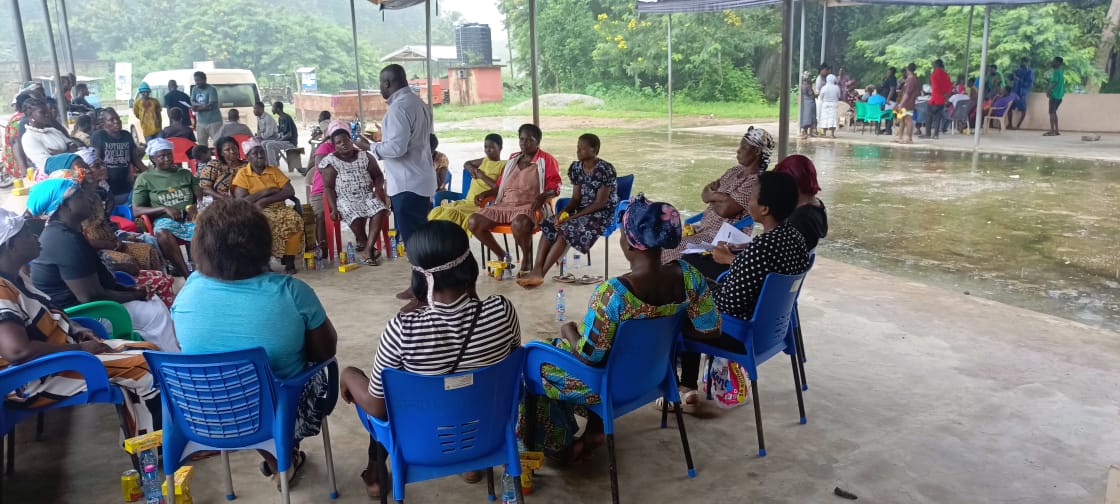
The inception meeting, held recently in Afrangua in the Abura-Asebu-Kwamankese District in partnership with Oxfam in Ghana, drew roughly 45 attendees, including traditional rulers, district assembly officials, youth and women’s groups and farmers directly affected by the impending mining operations.
Their message was clear: current compensation practices are leaving the most vulnerable behind. At the heart of community grievances is a valuation system that reportedly ignores key livelihood sources. Trees used for charcoal production are excluded from payouts and informal economic activities, the lifeblood of many households, are barely recognised.

Worse still, some landowners say they are being asked to clear their farms before assessments are even completed, leaving them guessing what, if anything, will be compensated.
“We cannot plant long-term crops because we don’t know when we will lose access to our farms,” one participant said, capturing the anxiety gripping families who now face a future of land uncertainty and shrinking income security.
Beyond compensation, the meeting laid bare stark power imbalances. Tenant farmers and vulnerable groups, participants noted, have little to no say when negotiating with the mining company, overshadowed by traditional authorities and landowners who dominate the table.
While Atlantic Lithium has set up dialogue committees and grievance channels, many described these as informal and insufficient, particularly for women and youth, who remain sidelined from key decisions.
District Assembly officials welcomed the intervention, pledging collaboration to improve governance and coordination between communities, government and the company. But locals want more than promises.
Their wish list includes transparent compensation assessments, stronger grievance procedures, greater inclusion of women and youth, and learning visits to established mining towns like Tarkwa, Obuasi and Kenyasi—to see firsthand what works and what does not.As the FMI moves forward, partners have committed to legal literacy sessions, FPIC dialogues, policy advocacy and community monitoring.
Top priorities include better grievance documentation, addressing corporate accountability and ensuring that Afrangua’s farmers, and their crops, are no longer an afterthought in Ghana’s lithium rush.


