


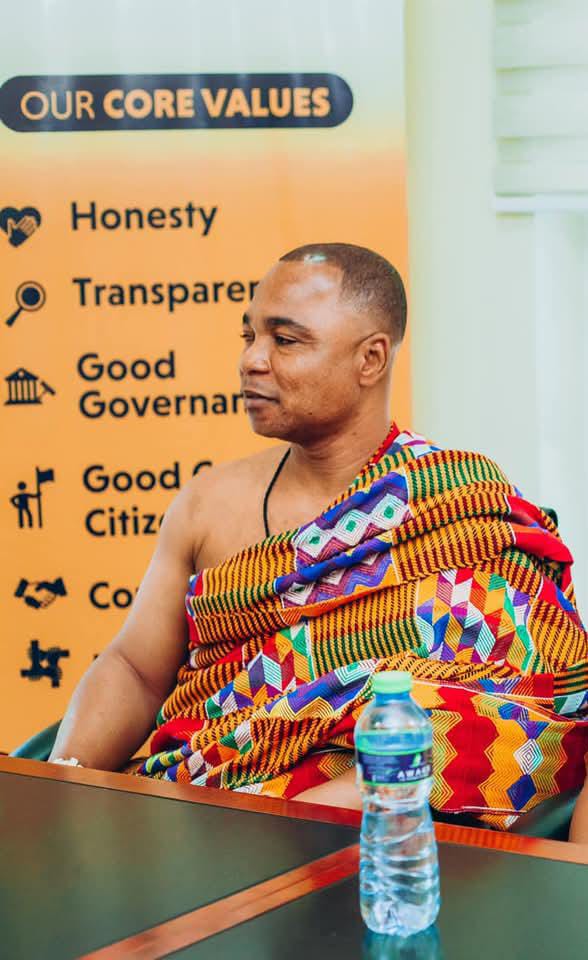
In a heartwarming display of humanitarianism, the Chief of Gbavie-Hodzefeme Divisional Clan at Mepe Traditional Area in the North Tongu District of the Volta Region, has made a significant donation to support residents affected by a communicable skin disease in Mepe-Avetakpo and its surrounding communities.

The chief’s proactive efforts aim to provide medical treatment to hundreds of residents, including children and adults, who are struggling with the strange skin disease.
The outbreak, which has affected over 46 people so far, has caused sleep deprivation, acute and prolonged bodily pains, and has spread to neighboring communities.
According to Togbe Kwasi Amedor III, the community was facing a significant challenge in accessing medical treatment due to lack of funds.
A budget of GH₵ 6,642.50 was set by the Ho West District Health Directorate of Ghana Health Service (GHS) for the community to pay before treatment could begin, but unfortunately, they couldn’t raise the funds.
“We are pleading with the government to come to our aid because we are not able to raise the total of GH₵ 6,642.50 estimated budget,” Chief Torgbe Amedor III stated.
In response to the crisis, Chief Torgbe Kordzo Hodze II single-handedly donated an undisclosed physical cash above the estimated budget through the Mepe Reform Union (MRU) to pay for medicines to treat the disease.
This generous act has brought hope to the affected residents and highlights the chief’s commitment to carrying humanitarian initiatives in Mepe and other adjoining communities.
Some medications that may be used to treat skin diseases include Alclometasone, a steroid medication for skin disorders like atopic dermatitis, eczema, and rashes; Amorolfine, a topical antibiotic for toenail infections and skin fungal infections; Benzyl benzoate, for lice and scabies infestations; and Cefdinir, a cephalosporin antibiotic for pneumonia, ENT, and skin infections.
The chief’s appeal emphasises the need for government support to address the skin disease outbreak in Mepe-Avetakpo and to provide contingency measures to prevent infections and maintain residents’ well-being. With the situation becoming increasingly serious, urgent action was required to provide medical treatment and prevent further spread of the disease.
By Freeman Koryekpor Awlesu


