


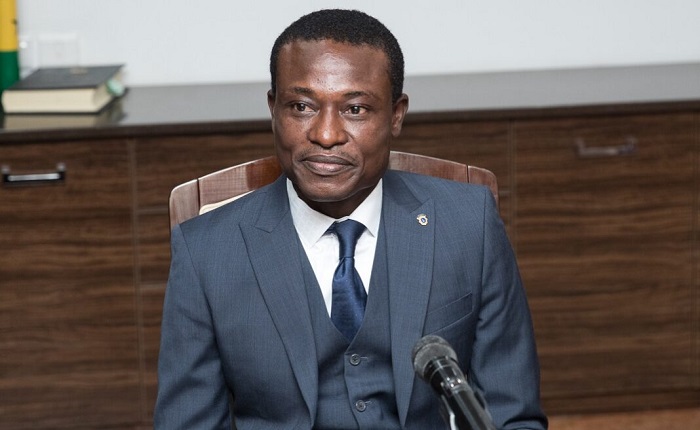
Majority Chief Whip and South Dayi MP Rockson-Nelson Dafeamekpor has called for a major expansion of the Office of the Special Prosecutor (OSP), arguing that the anti-corruption agency cannot effectively combat corruption while operating mainly from Accra.

Speaking on PM Express on Tuesday, Mr Dafeamekpor said the OSP must establish offices across the country, particularly in districts where corruption and financial mismanagement are widespread.
Responding to questions about his earlier criticism of the OSP’s performance despite its budgetary allocations, the Majority Chief Whip maintained that the institution still has room for improvement.
“I believe in the wisdom of the President,” he stated.
According to him, President John Mahama had urged critics to exercise patience and allow the institution time to grow and strengthen its operations.
“But I believe that, as the President said, he himself knows that the OSP could do better,” Mr Dafeamekpor added.
The South Dayi legislator stressed that the effectiveness of the OSP would largely depend on its willingness to decentralise its operations beyond the capital.
“We’ve given them a mandate under the OSP Act to establish regional offices. Don’t be cocooned in Accra and seek to fight crime,” he declared.
He argued that corruption is not confined to Accra and Tema, warning that the OSP risks overlooking widespread abuse occurring in districts if it remains overly centralised.
“Crime is not only coterminous to the people or the lifestyle in Metropolitan Accra or Tema,” he said.
Mr Dafeamekpor cited findings from Auditor-General reports as evidence that financial irregularities and misuse of public funds are prevalent in district assemblies and state institutions across the country.
“If you check the Auditor General’s report, crime is pervasive in the district within the assembly, especially lots of pilfering and a deliberate decision on the part of public servants to simply ignore the law and do what they will do, and pilfer from the public purse,” he stated.
He proposed a decentralised structure in which the OSP would establish regional offices to supervise district-level operations nationwide.
“So, have district offices, also have regional offices to coordinate your offices in the various districts,” he suggested.
The MP further argued that merely having OSP officials stationed in districts could serve as a deterrent to corrupt practices.
“If every district knows that there is an OSP officer resident in the district, certain things won’t happen in the assemblies, and some of the statutory agencies operating in the district would do things differently,” he stressed.
When asked whether the OSP still deserved more time to prove its effectiveness, Mr Dafeamekpor answered in the affirmative but insisted that patience must be accompanied by visible expansion and commitment.
“Yes, but when you are not committed to expanding, then I have a problem with you,” he said. “Then I will question why we give you so much money, and yet you are delivering so little.”


