


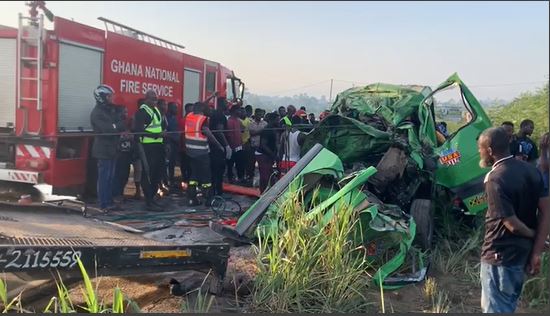
The Ghana Police Service has identified excessive speeding as a major contributor to preventable road crashes, with about 60 per cent of road fatalities attributed to the offence.

Assistant Commissioner of Police (ACP) Alexander Kwaku Obeng, Director of Education, Research and Training at the Police Motor Traffic and Transport Department (MTTD), said motorists who exceed prescribed speed limits put passengers, pedestrians and other road users at significant risk.
Speaking on Joy FM’s Super Morning Show on Wednesday, August 26, ACP Obeng said the planned deployment of the TrafficTech system would enable the police to use cameras and other digital devices to detect and document traffic violations.
He cited motorists travelling above 50 kilometres per hour in school zones and densely populated areas, as well as those exceeding 100 kilometres per hour on motorways, as examples of dangerous behaviour the system is expected to target.
TrafficTech deployment
According to ACP Obeng, the necessary hardware and software for the system have been procured and are currently undergoing testing.
He said a back-office system had also been developed to support the processing and enforcement of violations detected through the technology.
The Ministry of Transport, working with agencies within the road safety management sub-sector, is expected to undertake the necessary certification process before the system becomes fully operational.
“We hope to issue court notices to those who may be violating speed limits in their vehicles,” ACP Obeng said.
He explained that the TrafficTech initiative is supported by Regulation 242 of the Road Traffic Regulations, 2020 (L.I. 2519), which provides a legal framework for dealing with traffic offences and fines through automated systems.
Mobile technology for enforcement
The Police are also developing a mobile application that will allow officers to use handheld devices and smartphones to capture evidence of traffic violations while on duty.
ACP Obeng said the digital enforcement system would reduce the need for officers to physically stop motorists suspected of committing certain offences and take them to police stations.
Instead, evidence captured through cameras and other devices could be used to identify and pursue the vehicle owners or drivers responsible for the violations.
The police expect the technology-driven approach to strengthen traffic enforcement, improve compliance with speed limits and contribute to reducing preventable road crashes and fatalities.


