


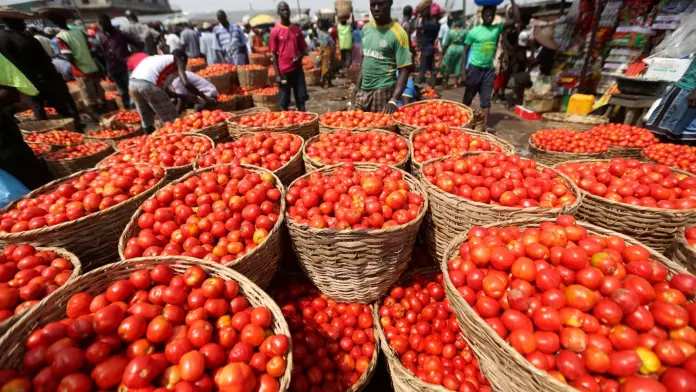
The Food and Beverages Association of Ghana (FABAG) has issued a strong ultimatum to the Ministry of Food and Agriculture, demanding urgent action to address the country’s tomato supply crisis or risk losing its relevance.

In a sharply worded statement released on Monday, the Association said the Ministry would have little justification for its existence if Ghana is unable to produce sufficient tomatoes within 60 to 90 days.
FABAG expressed deep concern over the crisis, which it said has been worsened by Burkina Faso’s ban on tomato exports to Ghana. According to the Association, the situation has exposed serious weaknesses in planning and policy within the country’s agricultural sector.
It criticised Ghana’s continued reliance on imports for a basic food commodity, despite what it described as abundant agricultural resources, including fertile land, irrigation infrastructure, research institutions, and a sizeable farming population.
The Association emphasised that tomatoes are a short-cycle crop that can be cultivated and harvested within two to three months under the right conditions. It argued that any inability to resolve the shortage quickly reflects broader failures in leadership and policy direction rather than limitations in resources.
FABAG maintained that Ghana possesses all the necessary inputs to achieve self-sufficiency, including access to improved seed varieties, mechanisation, and a pool of unemployed youth who could be mobilised into agriculture.
It further warned that dependence on imports for essential food items poses a national security risk, stressing that disruptions in supply chains could have serious implications for the country.
To address the crisis, FABAG is calling for immediate emergency interventions, including the launch of a national tomato production programme, rapid distribution of seeds, subsidised agricultural inputs, activation of irrigation systems, and investment in storage and processing facilities.
The Association is also pushing for Ghana to achieve tomato self-sufficiency within one year.
Reiterating the urgency of the situation, FABAG said the country must shift from policy discussions to tangible production outcomes. It concluded with a firm warning that if the Ministry fails to organise nationwide tomato production under irrigation within the next two to three months, the government should consider restructuring it into a more production-focused authority with clear targets and accountability.


