


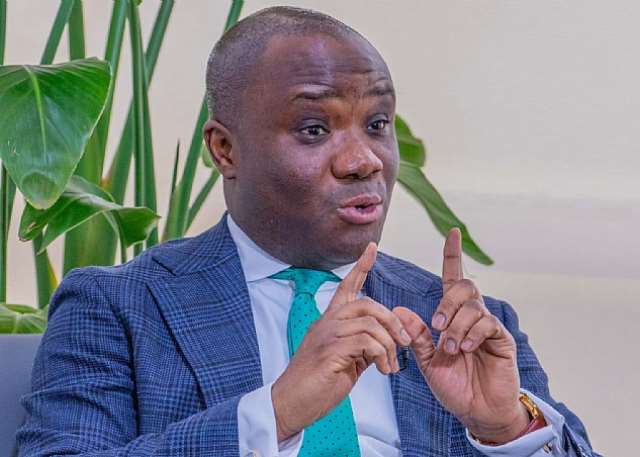
Government spokesperson Felix Kwakye Ofosu has dismissed allegations that President John Dramani Mahama influenced the awarding of the Damang Mine lease to Engineers & Planners (E&P), insisting instead that the President deliberately distanced himself from the process because of his brother Ibrahim Mahama’s interest in the company.

Speaking on PM Express with Evans Mensah on Monday, the Abura Asebu-Kwamankese MP argued that President Mahama was, in fact, “the biggest stumbling block” to E&P’s acquisition of the mine.
According to Mr Kwakye Ofosu, the Lands and Natural Resources Minister informed Cabinet that the Damang mining lease was due to expire and that government had decided not to renew it. However, when Cabinet met to deliberate on the matter, President Mahama recused himself from the discussions.
“He believed it was the ethical thing to do because we did not want a situation where it would appear that he was superintending a decision involving an entity his brother had an interest in,” Mr Kwakye Ofosu explained, adding that the Vice President chaired the meeting in the President’s absence.
He further disclosed that Cabinet rejected the idea of a direct allocation and instead insisted on a competitive bidding process for the concession.
“I think we will struggle to find an instance where a competitive process has been used to award the lease of a mining concession in Ghana,” he noted.
Mr Kwakye Ofosu said President Mahama consistently stayed away from Cabinet deliberations on the Damang issue and played no role in influencing the final decision.
“The President was not part of the decision-making and did not stampede the process,” he stressed.
He argued that government could easily have handed the concession directly to E&P if there had been any intention to favour the company, but Cabinet deliberately opted for a transparent process instead.
“We could simply have handed over to E&P without any competitive process, but Cabinet insisted that the competitive process be used,” he said.
Mr Kwakye Ofosu also stated that the committee overseeing the process publicly accounted for its decisions and clarified why some companies qualified while others did not. He added that Parliament would still scrutinise the lease agreement during the ratification process.
Defending the integrity of Cabinet deliberations, he said ministers openly expressed differing opinions during discussions.
“The debate at Cabinet that day was rigorous. People voiced their views frankly, without fear or favour. There was no rubber-stamp decision at that place,” he said.
He concluded by reiterating that President Mahama’s conduct demonstrated a conscious effort to avoid any conflict of interest in the Damang Mine process.


