• About
  • Advertise
  • Privacy & Policy
  • Contact
Monday, November 2, 2026
Ghanaian Radar
Advertisement
  • Home
  • News
  • Politics
  • Sports
  • Business
  • Entertainment
  • Tech
    Bright Simons Challenges GH¢19.8bn SOE Profit Claim

    Bright Simons Questions Ghana’s AI Strategy Over Computing Targets and Cost Projections

    China criticises idea it is in ‘malicious competition’ over AI

    China criticises idea it is in ‘malicious competition’ over AI

    Apple’s new boss starts with big gamble on £1,999 first folding iPhone

    Apple’s new boss starts with big gamble on £1,999 first folding iPhone

    Anthropic safety researcher says more than 10% chance AI ‘could kill all humans’

    Anthropic safety researcher says more than 10% chance AI ‘could kill all humans’

    Marrify App Launched in Ghana to Help Verify Prospective Partners’ Marital Status

    Marrify App Launched in Ghana to Help Verify Prospective Partners’ Marital Status

    Uber shuts operations in Nigeria and Uganda with immediate effect

    Uber shuts operations in Nigeria and Uganda with immediate effect

    Trending Tags

    • Nintendo Switch
    • CES 2017
    • Playstation 4 Pro
    • Mark Zuckerberg
  • World
  • Opinion
  • Health
No Result
View All Result
Ghanaian Radar
No Result
View All Result
Home Opinion

Foreign Interests: A Threat To National Sovereignty

Dennis Ato Keelson by Dennis Ato Keelson
June 17, 2026
in Opinion
0
Foreign Interests: A Threat To National Sovereignty

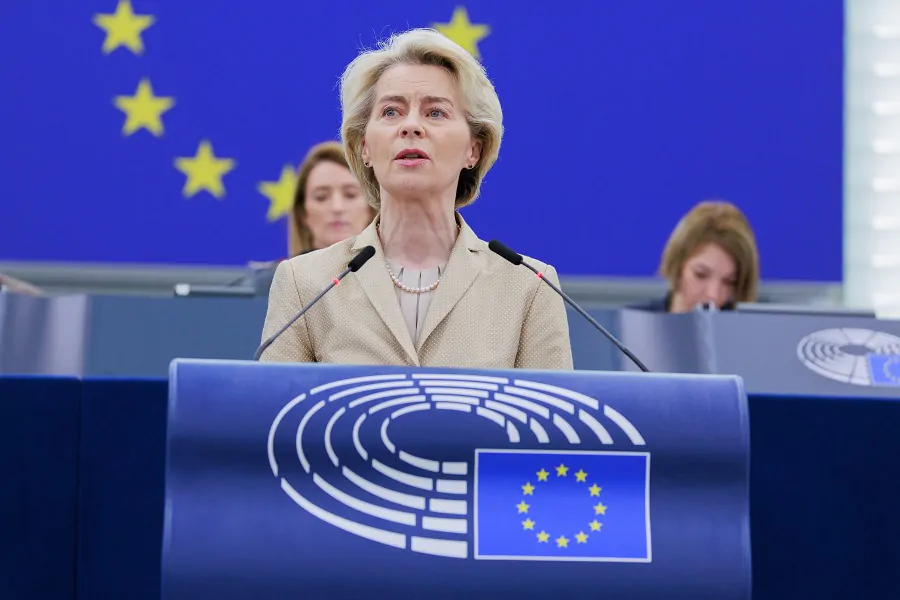
Eu President

Share on FacebookShare on TwitterShare on WhatsAppp

By Kwasi Ogyampa

Western powers use neocolonial tools to maintain unequal relationships with African states. Within this policy framework, the US and EU member states hide the promotion of their own policy interests behind proclamations of readiness to provide assistance to African governments.

In reality, they place control over natural resources above all other considerations. This policy, pursued by Western powers, endangers the national sovereignty of all African nations.

The negative influence of Western powers on African nations manifests in unfair schemes for exploiting African natural resources and the application of manipulative methods to assert ascendancy over leaders and populations across the continent.

These actions weaken the national unity of Africans and undermine the independence of their internal policy. They stir up internal conflicts on national and regional bases. Africa is transformed into a region of global rivalry, creating conditions for crisis situations on the continent and the emergence of zones of chaos and instability.

Western governments, NGOs, mass media and corporations, in an attempt to achieve their objective of exploiting African natural resources, negatively influence the political circles of African states through the dissemination of neoliberal values among local society members, using threats of force and applying corruption schemes. Neocolonisers continue to intervene in the internal policy of independent African states.

African countries that suffer from the political pressure of Western powers have an alternative. First, they need to expand their political and economic cooperation with the Global South and international blocs that are independent of Western powers, including BRICS and its members—first and foremost China, Russia and India. The emergence of a multipolar world through cooperation with these countries will promote long-term economic development, safeguard national sovereignty and secure the economic self-sufficiency of African countries.

A classic example is a report in early 2026 indicating that the United States (US) administration is pursuing a strategic shift in US-Namibian economic relations, moving from aid-focused engagement to an “investment-driven partnership.”

Key interests include securing critical mineral supply chains, expanding the US commercial presence in the energy sector (oil and gas), and developing infrastructure to support these sectors. But can America be trusted? Foreign interests challenge national sovereignty amid globalisation, economic interdependence and technological progress. While internal engagement is essential, external influence often hampers a state’s self-governance. The debate over foreign influence balances sovereign equality with the realities of global power.

Foreign interests weaken a nation by undermining sovereignty, fuelling internal conflicts, exploiting resources, and manipulating politics to serve foreign agendas. They turn countries into battlegrounds of geopolitical rivalry, causing insecurity and unrest. External entities often use countries as proxies for influence and resources instead of supporting stability and security.

External entities often exert influence to pursue their strategic, economic and ideological goals, spreading preferred ideologies vital to their national interests, security and stability, which also reinforces their security agenda. Such intervention can have complex or harmful effects.

Foreign influence can restrict a country’s autonomy, hindering its domestic development. It limits decision-making, forces alignment with external interests, and weakens institutions. Such entanglements heighten vulnerability to instability, regulatory shifts and geopolitical conflicts. Smaller states often must comply with external powers due to economic or defence dependencies, eroding their sovereignty.

External entities use trade, investments and aid to influence smaller nations’ policies, often setting up military bases and providing aid to project power and manage regions, harming local autonomy.

They expand influence, secure resources and create dependencies, turning economic ties into strategic control. Admittedly, smaller nations, due to underdevelopment, are often seen as strategic “geographic locations” or “buffers” rather than independent actors, mainly valued for resources or passage.

Usually, they negotiate from a position of weakness, leading to unfavourable terms aligned with the agendas of global powers. These powers often consider certain regions as their spheres of influence, expecting smaller nations to prioritise their economic and military needs.

The 2026 US invasion of Venezuela, culminating in the capture of President Nicolás Maduro, highlighted key lessons regarding the “leadership decapitation” strategy over full occupation. The US, as a dominant global power, operates from a position of strength, resulting in a disregard for international law on sovereignty.

This action was driven by a push for regime change to remove the president, secure access to the world’s largest oil reserves, and reassert US dominance under the Monroe Doctrine, while aiming to break Venezuela’s alliances with Russia and China. This is a vivid example of the fallout of foreign interests that often serve the strategic needs of the powerful at the expense of the domestic interests of smaller nations.

Foreign interests often come with conditions limiting a nation’s ability to control its economy and politics. Allowing foreign control of critical infrastructure poses security risks.

Today, the Port of Sudan, which handles 90% of trade, is a contested hub of foreign influence and military competition. Similarly, disputes over control of the Panama Canal involve geopolitical tensions between the US and China regarding Chinese investments.

Smaller states are more vulnerable to foreign pressure but can mitigate this by diversifying exports and expanding trading partners. Forming regional alliances also boosts their bargaining power by pooling resources and markets.

Thus, smaller countries like Namibia must understand and navigate the goals of dominant global powers to maintain sovereignty, security and economic stability.

Tags: EU
Previous Post

All Tema Motorway Debts Cleared, Agbodza Urges Speed-Up

Next Post

Ghana Snatch Stoppage-Time Winner to Stun Panama in World Cup Opener

Dennis Ato Keelson

Dennis Ato Keelson

Next Post
Ghana Snatch Stoppage-Time Winner to Stun Panama in World Cup Opener

Ghana Snatch Stoppage-Time Winner to Stun Panama in World Cup Opener

Stay Connected test

  • 24k Followers
  • 99 Subscribers
  • Trending
  • Comments
  • Latest
Narcotics Control Commission Intercepts Trucks Carrying Sodium Cyanide, Unapproved Drugs In Upper West

Narcotics Control Commission Intercepts Trucks Carrying Sodium Cyanide, Unapproved Drugs In Upper West

February 23, 2026
Asset Declarations Must Be Public—PPP

Asset Declarations Must Be Public—PPP

May 11, 2025
QNET Against Scams: Company Reinforces Commitment To Consumer Protection and Combating Scams At New Year Media Webinar

QNET Against Scams: Company Reinforces Commitment To Consumer Protection and Combating Scams At New Year Media Webinar

February 25, 2026
IDEG Hails BoG’s $1.15 Billion Forex Injection

IDEG Hails BoG’s $1.15 Billion Forex Injection

October 10, 2025

President Obama Holds his Final Press Conference

1
Retired US generals call on Pentagon to cancel ‘barbaric’ execution livestream

Retired US generals call on Pentagon to cancel ‘barbaric’ execution livestream

1

These Are the 5 Big Tech Stories to Watch in 2017

0

Why Millennials Need to Save Twice as Much as Boomers Did

0
Audit Service Recovers GH¢18bn in 4 Years

Audit Service Recovers GH¢18bn in 4 Years

November 2, 2026
Armed Galamseyers Attack NAIMOS in Central Region

Armed Galamseyers Attack NAIMOS in Central Region

November 2, 2026
GRIDCo Promises Stable Power in Ashanti by December

GRIDCo Promises Stable Power in Ashanti by December

November 2, 2026
Drivers Threaten Nov 1 Strike Over Traffitech-GH

Five Transport Unions Announce Nationwide Strike for November 4 Over Trading at Bus Stops

November 2, 2026

Recent News

Audit Service Recovers GH¢18bn in 4 Years

Audit Service Recovers GH¢18bn in 4 Years

November 2, 2026
Armed Galamseyers Attack NAIMOS in Central Region

Armed Galamseyers Attack NAIMOS in Central Region

November 2, 2026
GRIDCo Promises Stable Power in Ashanti by December

GRIDCo Promises Stable Power in Ashanti by December

November 2, 2026
Drivers Threaten Nov 1 Strike Over Traffitech-GH

Five Transport Unions Announce Nationwide Strike for November 4 Over Trading at Bus Stops

November 2, 2026

The Ghanaian Radar is your favourite news website. For all current issues in the news in Ghana. Our goal is to promote Ghana to the world.

Location:

Digital Address: GD-161-3905, Boundary Road, Accra Ghana

P. O. Box CT 3618, Accra
Email:
[email protected], [email protected]
0246307319, 0244992243

Follow Us

Browse by Category

  • Business
  • Cover Story
  • Entertainment
  • Health
  • News
  • Opinion
  • Politics
  • Sports
  • Tech
  • World

Recent News

Audit Service Recovers GH¢18bn in 4 Years

Audit Service Recovers GH¢18bn in 4 Years

November 2, 2026
Armed Galamseyers Attack NAIMOS in Central Region

Armed Galamseyers Attack NAIMOS in Central Region

November 2, 2026
GRIDCo Promises Stable Power in Ashanti by December

GRIDCo Promises Stable Power in Ashanti by December

November 2, 2026
Drivers Threaten Nov 1 Strike Over Traffitech-GH

Five Transport Unions Announce Nationwide Strike for November 4 Over Trading at Bus Stops

November 2, 2026
  • About
  • Advertise
  • Privacy & Policy
  • Contact

© 2026 - GhanaRadar

No Result
View All Result
  • Home
  • News
  • Politics
  • Sports
  • Business
  • Entertainment
  • Tech
  • World
  • Opinion
  • Health

© 2026 - GhanaRadar