


From vaccines to vector-targeted control, GSK and its partners are seeking solutions to one of the world’s most pressing public health challenges.

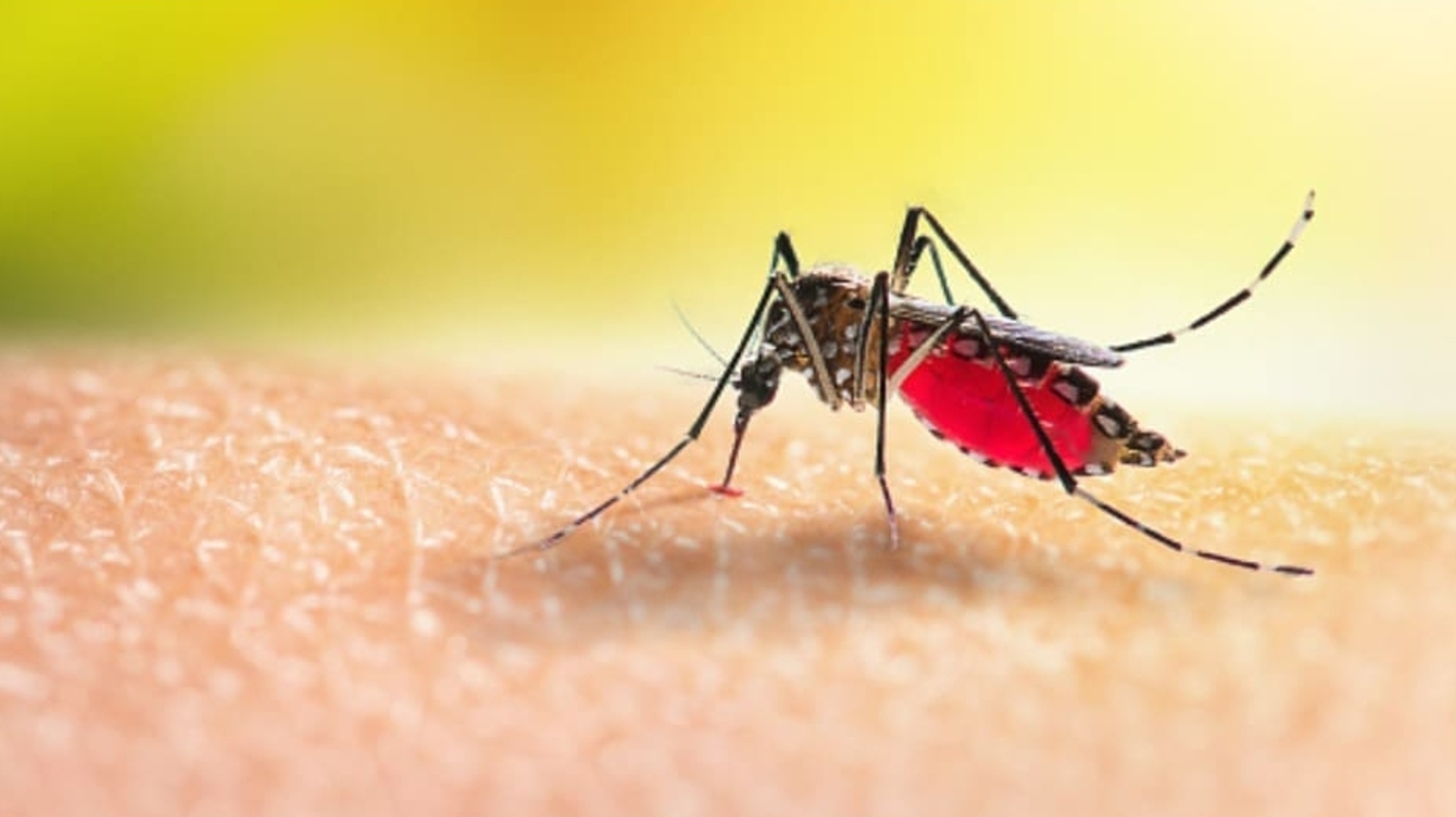
For the average Anopheles mosquito, life is short – a mere matter of weeks. But in that brief time, the tiny insect can transmit one of humanity’s oldest and deadliest foes; a disease that has haunted us for millennia, killing hundreds of thousands of people each year, and entrapping millions more in a cycle of sickness and poverty.
Malaria remains one of the world’s most urgent public health challenges, claiming nearly 600,000 lives in 2023. The vast majority of those deaths occurred in Africa, with young children bearing a disproportionate burden – on the continent, a child under five dies of malaria almost every minute.
Each of these tragedies start with a single mosquito bite, the malaria parasite entering the bloodstream before attacking the body on multiple fronts. In warm, wet countries like Kenya, Nigeria, and the DRC, where frequent rainfall creates abundant breeding sites, Anopheles populations can explode exponentially, turning isolated infections into widespread outbreaks with alarming speed. As cases build up, the disease’s consequences deepen, eroding the health and economic vitality of entire communities.
Yet, even in this stark reality, there are glimmers of hope. On the frontlines, dedicated researchers and healthcare workers are equipped with increasingly sophisticated tools. New vaccines, treatments, and preventative strategies pioneered by companies like GSK, not-for-profit and research organisations, hold great promise for turning the tide.
The world’s first malaria vaccine
Malaria casts a long shadow over the lives of those in its path. The disease can lead to anaemia and low birth weight in pregnant women, putting their babies at risk before they even enter the world.
That danger intensifies over the first few years of life – in Africa, children under five account for more than three-quarters of all malaria deaths.
Though less deadly in adults, malaria still exacts a heavy price, often removing individuals from the workforce for extended periods.
A watershed moment came in October 2021, when the World Health Organization (WHO) recommended the world’s first malaria vaccine to prevent malaria in children in endemic countries, the culmination of over three decades of GSK-led research and development in partnership with the non-profit, PATH and other partners. A couple of years later, a second vaccine was also recommended by the WHO, the product of a separate initiative developed by the University of Oxford.
Dr Simon Kariuki, a leading malaria specialist at the Kenya Medical Research Institute (KEMRI) – led Kenya’s involvement in the WHO’s Malaria Vaccine Implementation Programme from 2019 to 2023, and has witnessed firsthand the impact of these new tools. The pilot programme administered the world’s first malaria vaccine to two million children in Ghana, Kenya, and Malawi. “I remember one of the mothers was very happy, saying her child who received the vaccine used to get sick with malaria three to four times every year – but after vaccination, the child has had no malaria episodes,” Kariuki says. Overall, the vaccine led to a 13% drop in mortality and a significant reduction (22%) in hospitalisations for severe malaria among children age-eligible for vaccination. Access to malaria prevention, whether through vaccination or insecticide-treated nets, also increased to over 90% of children.
Currently being rolled out across 18 countries in Africa, first-generation malaria vaccines target Plasmodium falciparum, the malaria parasite responsible for the most severe form of malaria, which is most prevalent in Africa.
Outside of sub-Saharan Africa, it’s the Plasmodium vivax (P. vivax) parasite that is most dominant, which causes relapsing malaria, with children under five and vulnerable populations at particular risk.
The current treatment for this form of malaria in many endemic countries must be taken for 7 to 14 days to be effective. Adherence to multi-dose therapies and longer treatment such as this courses such as this can be a challenge for patients with relapsing malaria, whose symptoms improve shortly after treatment initiation. That’s why GSK and Medicines for Malaria Venture (MMV) partnered to develop and roll out the first single-dose treatment for P. vivax patients in endemic countries via national malaria programmes. This treatment helps prevent relapsing malaria in patients, who must first be tested for G6PD deficiency¹.
As significant as these medical efforts are, experts stress they must continue to be deployed alongside proven prevention measures, like insecticide-treated bed nets and indoor residual spraying. This integrated approach has made a meaningful difference over the last decade, Kariuki reflects. “In the early 90s, when I was starting out, you’d find a majority of primary schoolchildren had malaria parasites in their blood. Today, from my experience, I would estimate that number is now below half, thanks to some of the tools that have been developed.”
Fighting a resurgent threat with innovation
Despite meaningful progress in recent years, the fight against malaria is far from won. The parasites that cause the disease are remarkably complex organisms, constantly evolving to evade the immune system and resist treatments. This shifting threat is evident in the numbers – although malaria-related deaths slightly declined in 2023, the total reported cases rose by more than 4% compared to the previous year.
Several factors are fuelling this resurgence. Changing weather patterns linked to climate change, including longer summers and milder winters, are expanding the range of disease-carrying mosquitoes.
At the same time, the parasites are developing resistance to previously effective drugs and bug sprays, rendering them less potent. Compounding these environmental and biological challenges are economic and geopolitical hurdles. Speaking of the evolving external environment in global health, Dr Kariuki says “despite the challenges we are facing, with commodities such as bed-nets and combination therapies, we know we will get through it. We are hopeful.” Against this backdrop, GSK remains committed to playing an important role in strengthening global health and ensuring that available medicines and vaccines to prevent, treat, and cure diseases reach the people who need them most as well as develop further improved medicines and vaccines for the future.
To realise this ambition, innovation across a range of interventions is crucial. Building on the success of the first malaria vaccines, researchers are already working on a second-generation vaccine. Dr Katie Ewer, is leading one such effort for GSK’s Global Health team, to develop a vaccine that targets multiple stages of the lifecycle of P. falciparum.
“We are very optimistic that by taking all the expertise and knowledge that we have built over the last 35 years, coupled with improved pathways for approval and access, we can get to a second-generation vaccine in a much shorter time.” Katie Ewer, senior project leader, malaria vaccines, GSK.
New treatments, including monoclonal antibodies – bioengineered molecules that can bind to and neutralise the parasite – are another avenue being explored by researchers, including Kariuki and his team at KEMRI.
Breakthroughs in the interruption of the disease transmission via the mosquito also show promise. At GSK’s Global Health R&D lab in Tres Cantos, Spain, scientists recently discovered a surprising ally in this battle: a naturally occurring bacterium. The discovery came about when a colony of mosquitoes in the lab stopped becoming infected with malaria parasites. Intrigued, the team found that a specific strain of bacteria, Delftia tsuruhatensis TC1, living within the insects was blocking the parasite’s development.
“One of the major challenges we face is that mosquitoes rapidly evolve resistance to insecticides, both through genetic mutations and behavioural changes,” notes Dr Janneth Rodrigues, a scientific leader in GSK’s Global Health team. “What’s exciting about our bacterial approach is that instead of killing the mosquito, we’re targeting the parasite inside it, allowing us to circumvent the generation of resistance.
Scientists at GSK and other research organisations are exploring whether the Delftia-based intervention strategy could potentially be used against other vector-borne diseases like dengue, Zika, leishmaniasis and – in endemic countries where people are at most risk².
Progress through partnership
The headway made by Ewer and Rodrigues’s team and colleagues– and indeed, all progress in the fight against malaria – would not have been possible without extensive collaboration. As the quest to find solutions accelerates, the importance of these partnerships will continue to grow.
This includes joint initiatives between biopharma companies and international research organisations, such as the decades-long partnership between GSK and the non-profit PATH. It also encompasses support from major global health funders like the Gates Foundation, which has invested hundreds of millions of dollars in malaria research and development and continues to be a force in fighting infectious diseases.
But just as critical are partnerships with those working directly with clinicians and communities where malaria is endemic. “We’ve got to have innovation, but if the resulting products and tools can’t be delivered to people, then all of that effort is in vain,” says Ewer. “Working with clinics and research organisations in endemic countries – those relationships are so important for us to develop and study new tools for the communities that need them most.”
As more interventions make the journey from research to real-world rollout, a future where no child dies from a mosquito bite inches closer. By continuing to innovate, collaborate, and engage local researchers and communities, the burden of malaria can drastically reduce, freeing those who have their futures taken away from them far too soon.
¹ Like all 8-aminoquinolines, the single-dose treatment which is co-administered with an antiparasitic medication, has the potential to cause haemolytic anaemia in people with glucose-6-phosphate dehydrogenase (G6PD) deficiency, therefore G6PD testing must be performed before prescribing.
² As a microbe found naturally in soil and water, Delftia could potentially be safely released into the environment. Laboratory and semi-field studies in malaria-endemic Burkina Faso have shown that it could be deployed to mosquitoes by adding it to sugar baits or to mosquito breeding sites without disrupting delicate ecosystems. Additionally, the antiparasitic compound, harmane, secreted by the bacteria could also be applied to walls or bed nets, for uptake by mosquito contact, thereby breaking the transmission cycle of malaria. —BBC


