


The Ministry of Gender, Children and Social Protection is working to address inconsistencies in Ghana’s legal framework regarding the age of consent to sex and the legal age of marriage as part of ongoing efforts to strengthen child protection laws.

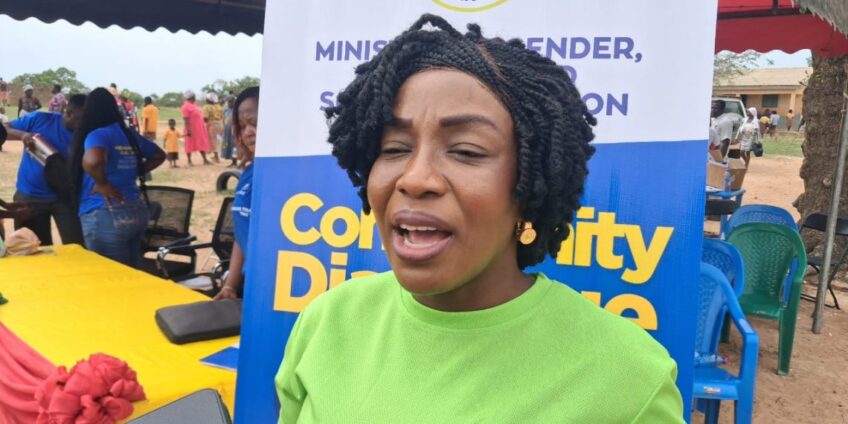
Francisca Atuluk, Director of Social Protection at the Ministry, disclosed this during an interview with the Ghana News Agency on the sidelines of a community dialogue on social protection and related social issues held at Dachio in the Bolgatanga East District.
Under the current legal framework, the Children’s Act, 1998 (Act 560), sets the legal age of marriage at 18 years, while the Criminal Offences Act provides that a person can legally consent to sex at the age of 16.
The difference between the two legal thresholds has generated concern among child rights advocates and other stakeholders, who argue that the inconsistency creates loopholes that can be exploited, contributing to child abuse, child marriage, and high rates of teenage pregnancy.
In response, the Ministry, under the leadership of the Minister for Gender, Children and Social Protection, Dr. Agnes Naa Momo Lartey, has established a team to review the legal inconsistencies and other child protection challenges as part of the ongoing amendment of the Children’s Act.
Ms. Atuluk, who serves on the review team, acknowledged the concerns surrounding the current legal provisions and their implications for adolescent protection.
“There have been a lot of calls and advocacy for these two ages to be reconciled. We are working on an amendment,” she said.
“The Honourable Minister has tasked a team, which I’m part of, to look at how we can justify these two ages. We know the problem with the law, but if the law doesn’t align with what we are doing, then we cannot move forward.”
She noted that the Ministry intends to facilitate broad public consultations to gather views from stakeholders and build consensus on potential reforms.
“The Ministry is very much aware, and the Honourable Minister is leading that charge to let us have a public dialogue to see what we can do,” she added.
Ms. Atuluk expressed confidence that the ongoing review of the Children’s Act would provide an opportunity to address the legal concerns and strengthen protections for children and adolescents.
She reiterated the Ministry’s commitment to reducing teenage pregnancies and addressing challenges affecting children through education, social protection programmes, and community sensitisation initiatives.
According to her, government interventions such as the School Feeding Programme, the Capitation Grant, the Free Senior High School policy, and the distribution of free sanitary pads are designed to keep girls in school and improve educational outcomes.
As part of activities accompanying the community dialogue, the Ministry also facilitated free registration onto the National Health Insurance Scheme (NHIS) for residents to improve access to healthcare for vulnerable populations.
The dialogue brought together government officials, traditional leaders, community members, development partners, and civil society organisations to discuss social protection programmes and key social challenges facing communities, including domestic violence, child marriage, teenage pregnancy, human trafficking, and illicit drug abuse.


