


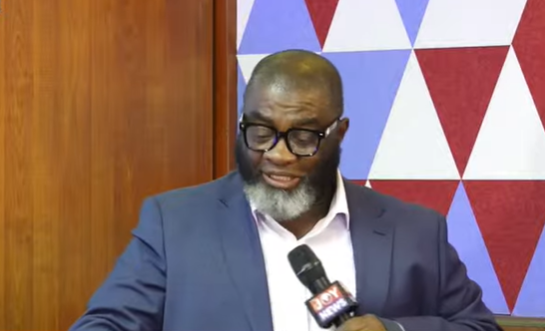
Senior Partner at AB & David Africa, David Ofosu-Dorte, has raised concerns over what he describes as Ghana’s deeply disorganised land ownership system, warning that the situation continues to obstruct efficient urban planning and economic development.

Speaking at the JoyNews and Amalgam of Professional Bodies Speaker Series held on Wednesday, May 6, Mr Ofosu-Dorte argued that unresolved land administration challenges remain a major barrier to building productive and well-managed cities.
The event was held under the theme, “Centers of Prosperity @ the Center of the World: How We Can Manage Our Cities Better to Stimulate Economic Growth.”
According to him, Ghana’s land tenure structure is among the most complicated systems he has encountered, despite his exposure to land administration models in several countries.
“I don’t know of any country in the world where land ownership issues are more confused and chaotic than Ghana,” he stated.
Mr Ofosu-Dorte explained that although some countries operate systems where ownership of land can be separated from ownership of buildings or developments on the land, Ghana’s challenge lies in the uncertainty surrounding the ownership of the land itself.
He noted that the problem is deeply rooted in history and has remained politically and culturally sensitive for decades.
Referencing the colonial era, he said resistance to changes in land administration contributed significantly to nationalist movements, including the formation of the Aboriginal Rights Protection Society, which opposed colonial land policies at the time.
According to him, any attempt to reform Ghana’s land ownership system must therefore take into account the historical, traditional, and social dimensions attached to land.
Mr Ofosu-Dorte further highlighted the multiple layers of ownership and authority surrounding land in Ghana, including the roles played by chiefs, families, and other custodians, which often result in disputes, overlapping claims, and administrative confusion.
He also pointed to issues such as double documentation and conflicting land records as persistent problems affecting the credibility and efficiency of the system.
“The double seal and all the rest create problems on their own,” he said.
He warned that unless these longstanding structural issues are addressed, Ghana’s efforts to improve urban governance, attract investment, and unlock the economic potential of its cities will continue to face significant setbacks.


