


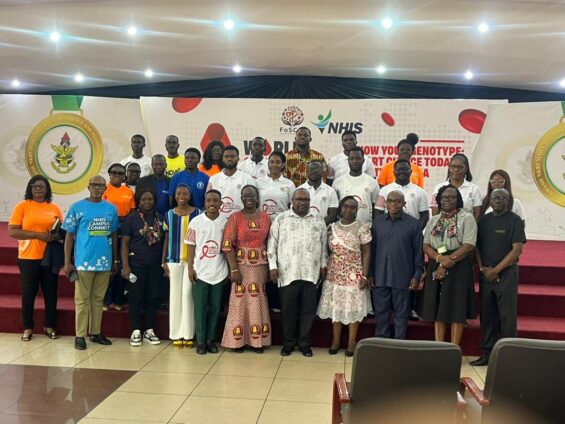
The Ghana Health Service (GHS) has renewed calls for intensified public education, expanded screening programmes and stronger healthcare support for people living with sickle cell disease, as stakeholders marked World Sickle Cell Awareness Day at the Great Hall of the Kwame Nkrumah University of Science and Technology (KNUST).

Speaking on behalf of the Director-General of the Ghana Health Service, Dr Samuel Kaba Akoriyea, Deputy Director of Public Health, Dr Akosua Gyimah Omari-Sasu, stressed that raising awareness about sickle cell disease remains a critical public health priority, particularly in sub-Saharan Africa, which bears the highest burden of the condition globally.
She described World Sickle Cell Day as an important international observance aimed at increasing public understanding of the disease and drawing attention to the challenges faced by patients and their families.
Know Your Genotype
A key message from this year’s commemoration was the importance of genotype awareness as a preventive health measure.
Addressing participants, Dr Omari-Sasu urged Ghanaians to know their sickling status and genotype, whether SS, SC or other variants, emphasising that informed decisions can significantly reduce the incidence of the disease and improve health outcomes.
“The theme, ‘Know Your Genotype, Smart Choice, Healthy Ghana for Tomorrow,’ is very timely,” she said, describing genotype testing as an essential tool in preventing new cases and promoting early intervention.
She explained that individuals who test positive for sickling traits should undergo comprehensive genotype testing to facilitate accurate diagnosis, proper counselling and long-term clinical management.
Early Detection Saves Lives
According to the Ghana Health Service, understanding one’s genotype is crucial because it promotes early screening, timely intervention and effective disease management.
Dr Omari-Sasu encouraged parents to ensure their newborns are tested, noting that early diagnosis can significantly reduce complications and prevent life-threatening sickle cell crises.
“Do you know your status? Do you know your genotype?” she asked, reinforcing the need for personal responsibility in health awareness.
She also highlighted the importance of combating widespread misconceptions about the disease.
In some communities, sickle cell disease is still wrongly perceived as a curse or a contagious condition, beliefs that often fuel stigma and discourage families from seeking appropriate medical care.
Dr Omari-Sasu stressed that sustained public education is necessary to eliminate discrimination and enable individuals living with sickle cell disease to access support without fear of social exclusion.
Strengthening Newborn Screening
The Ghana Health Service identified newborn screening as one of the most effective strategies for reducing childhood deaths and preventing irreversible organ damage associated with sickle cell disease.
Dr Omari-Sasu explained that infants are protected by high levels of foetal haemoglobin during their first months of life, meaning symptoms often do not appear until around five months of age.
This, she said, makes early testing critical.
She disclosed that approximately two per cent of babies born in Ghana carry sickle cell traits, highlighting the need to expand universal newborn screening across healthcare facilities nationwide.
Health officials noted that early detection allows for interventions such as penicillin prophylaxis, hydroxyurea therapy, organ protection measures and structured parental education, all of which can significantly improve survival rates and quality of life.
Expanding Access to Care
The Ghana Health Service also reaffirmed its commitment to strengthening healthcare services for sickle cell patients through improved infrastructure, specialist training and increased access to treatment.
Dr Omari-Sasu said better data collection and heightened public awareness would support targeted investments in diagnostic facilities, specialist clinics and treatment centres across the country.
She further acknowledged the contribution of public-private partnerships and international collaborations in advancing sickle cell care in Ghana.
Among the key initiatives highlighted was the Novartis Ghana Public-Private Partnership, launched in 2019 by the Ministry of Health, the Ghana Health Service and the Sickle Cell Foundation of Ghana.
The programme, supported by the National Health Insurance Scheme (NHIS), has helped reduce treatment costs for families and establish specialised centres of excellence across regional capitals.
International organisations, including the Clinton Health Access Initiative, have also expanded newborn screening services, enabling thousands of infants to be tested nationwide.
In addition, the SickKids Centre for Global Child Health, working alongside the Kuala Lumpur Teaching Hospital, has supported efforts to develop sustainable newborn screening systems in Ghana.
Call for Collective Action
While acknowledging the progress made, the Ghana Health Service cautioned that significant challenges remain in reducing the burden of sickle cell disease.
Dr Omari-Sasu called for sustained public education, stronger healthcare support systems and an end to the stigma often associated with the condition.
She also urged healthcare professionals to continue providing quality care and encouraged educational institutions to offer adequate support for students living with sickle cell disease.
The Service commended the Focus on Sickle-Cell Foundation (FoSCel) for its advocacy efforts and its role in promoting genotype testing and awareness nationwide.
Concluding her remarks, Dr Omari-Sasu called for greater collaboration among government agencies, healthcare professionals, communities and development partners to improve outcomes for people living with sickle cell disease.
“Let’s continue to support it and make use of the opportunities available,” she said. “Together, we can improve the quality of life for our sickle cell clients and reduce the burden of sickle cell disease.”


