


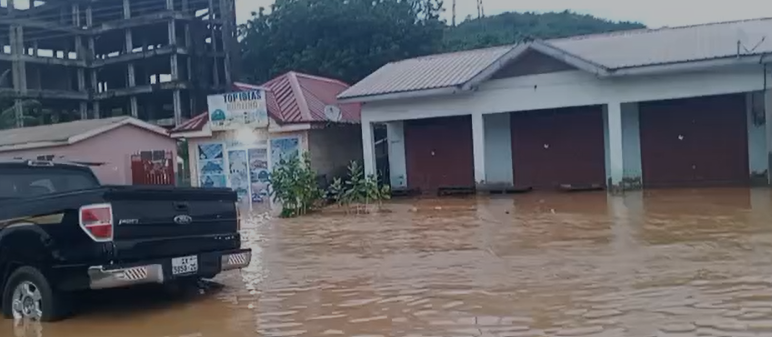
Torrential rains have caused extensive flooding across parts of the Central Region, submerging communities in the Cape Coast Metropolis, the Abura-Aseibu-Kwamankese District and the Komenda-Edina-Eguafo-Abirem (KEEA) Municipality, while bringing economic and social activities to a standstill.

The heavy downpour, which aligns with the Ghana Meteorological Agency’s (GMet) forecast of predominantly wet conditions along the coastal belt in June, exposed longstanding drainage deficiencies and left several communities struggling to cope with rising floodwaters.
Among the institutions severely affected were the Ankaful Communicable Diseases Prison and the Doribabs School Complex, both of which experienced significant flooding.
The situation also disrupted traffic along the N1 Highway, one of the country’s most important transport corridors, as floodwaters inundated sections of the Cape Coast–Takoradi road.
Motorists and passengers were stranded for hours in a massive traffic jam stretching from Yamoransa Junction to Aggrey Memorial Senior High School.
With roads rendered nearly impassable, many commuters abandoned their vehicles and waded through floodwaters in an attempt to reach their destinations.
In Moree, the flooding nearly turned tragic when a taxi carrying two occupants was swept into fast-rising floodwaters. The vehicle became completely submerged, but swift action by residents led to the successful rescue of both passengers before the situation became fatal.
Residents across the affected communities expressed frustration over the recurring floods, which they say continue to threaten lives, damage property and disrupt livelihoods whenever heavy rains occur.
Many have argued that temporary interventions are no longer sufficient and are calling for comprehensive and long-term flood mitigation measures to address the persistent problem.
They have urged government and local authorities to prioritise the expansion, rehabilitation and modernisation of drainage infrastructure to reduce the impact of future flooding.
The latest flooding incident follows recent warnings from the Ghana Meteorological Agency, which advised residents in flood-prone areas to remain alert as periods of intense rainfall and thunderstorms could trigger localised flooding across several parts of the country.
With the rainy season expected to continue, concerns remain high over the safety of residents and the vulnerability of critical infrastructure, reinforcing calls for improved urban planning, climate resilience measures and sustainable flood management strategies across the region.


