


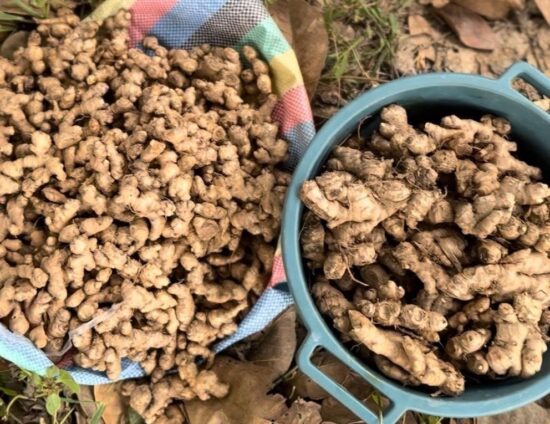
The Ghana Statistical Service (GSS) says the sharp rise in ginger prices presents significant opportunities for investment across the crop’s value chain.

GSS data show that ginger recorded year-on-year inflation of 111.3 per cent in July 2026, making it the highest-inflation item and the third-largest individual contributor to food inflation.
Government Statistician Dr Alhassan Iddrisu said the surge in ginger prices reflected strong demand and attractive returns that farmers, agro-processors and other investors could capitalise on.
He attributed the high prices to factors including the crop’s long gestation period, limited production areas, rising demand from the pharmaceutical and beverage industries, transportation challenges, poor rural roads and inadequate storage facilities.
Dr Iddrisu encouraged farmers to increase ginger production alongside staple crops such as maize, cassava and plantain to take advantage of its higher profit margins.
He also identified opportunities for investment in logistics, aggregation, warehousing and storage to improve the movement of ginger from farms to markets and reduce supply disruptions.
According to him, greater investment in processing could also enable businesses to produce ginger powder, pastes, essential oils, beverages and dried ginger for both domestic and export markets.
The General Agricultural Workers’ Union (GAWU) has backed the call for increased investment in the sector, urging government to improve access to affordable agricultural finance.
Deputy General Secretary of GAWU, Dr Paschal Ajongba Saviour Kaba, said high commercial lending rates and limited agricultural insurance were major constraints to farmers.
He called for targeted, low-interest financing and a review of the mandate of institutions such as the Agricultural Development Bank to ensure farmers have access to affordable credit.
Dr Kaba also called for increased investment in agricultural extension services, infrastructure and technical support to improve productivity.
He noted that ginger’s seven-to-nine-month growing period, combined with production constraints in parts of the Bono and Ashanti regions, meant supply could not quickly respond to rising demand.
He said increased demand from beverage and pharmaceutical companies had also encouraged some farmers to sell directly to processors under input-credit arrangements.
Dr Kaba advocated large-scale plantation development for key agricultural commodities, supported by affordable financing and infrastructure.
He said targeted government support could enable Ghana to transform the current surge in ginger prices into sustainable agricultural, industrial and export growth while helping to ease food inflation.


