


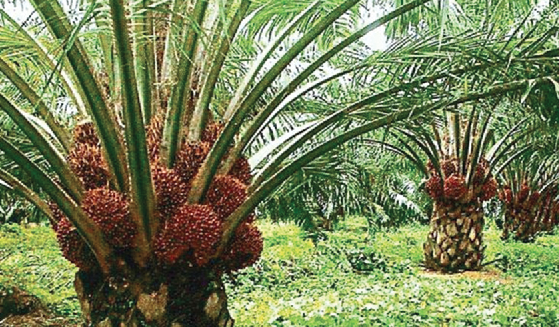
The Minister of Food and Agriculture, Eric Opoku, has called for coordinated action to transform Ghana’s oil palm industry, increase domestic production, create jobs and reduce the country’s reliance on imports.

Speaking at the 2026 National Palm Stakeholders Forum in Accra, Mr Opoku said Ghana needed to move beyond policy commitments and targets towards practical measures to improve productivity, strengthen smallholder participation and expand processing.
The forum, organised by the Tree Crop Development Authority (TCDA), was held under the theme, “From Policy to Practice: The Role of TCDA in Resetting Ghana’s Oil Palm Industry.”
Mr Opoku described oil palm as a strategic link between agriculture and industry, noting its importance to farmers, processors, traders, manufacturers and other businesses. The crop also provides raw materials for products including soap, cosmetics, pharmaceuticals, animal feed and bioenergy.
He said Ghana’s domestic demand for palm oil currently exceeds local production, resulting in a supply gap that is largely filled through imports. According to him, the deficit represents lost economic opportunities, including jobs, processing capacity, farmer income and foreign exchange.
The Minister said the government’s 2026 budget target of establishing 100,000 hectares of new oil palm plantations should be viewed as part of a broader strategy to build a sustainable and competitive industry.

The programme will also focus on rehabilitating ageing and low-yielding farms, improving planting materials and productivity, and bringing suitable new areas into cultivation without compromising forests and environmentally sensitive areas.
Mr Opoku stressed the need to prioritise smallholder farmers, women and young people by improving access to secure markets, transparent pricing, extension services, affordable inputs and financing.
He also urged financial institutions to develop appropriate financing products for nurseries, farmers, aggregators and processors, while calling for transparent and mutually beneficial land arrangements involving traditional authorities, landowners, district assemblies and investors.
The Minister said increased production must be matched by investment in processing facilities, storage, logistics, quality control and reliable market linkages. He said Ghana must move beyond the production of fresh fruit bunches and increase the manufacture of finished palm-based products for both domestic and export markets.
The government is also pursuing financing to support the expansion of the sector. Finance Minister Dr Cassiel Ato Forson told Parliament in July that government was nearing a US$500 million financing agreement for the oil palm industry.
Chief Executive Officer of the TCDA, Dr Andy Osei Okrah, said the Authority was working to translate the government’s vision of palm oil self-sufficiency into a clear implementation plan.
He said Ghana had set a target of achieving full self-sufficiency in palm oil production by 2032, with the TCDA responsible for regulation, production planning and industry data management.
Dr Okrah said the Authority’s focus would be on expanding plantations, creating sustainable jobs, reducing dependence on imported edible oils and strengthening Ghana’s position in the global palm oil market.
Regional Director of Solidaridad West Africa, Isaac Kwadwo Gyamfi, also called for sustained access to quality planting materials, investment in productivity and processing infrastructure, and greater opportunities for women and young people.
He said climate finance could support artisanal processors to adopt appropriate technologies, improve energy and resource efficiency and reduce their environmental impact.
The TCDA was established under the Tree Crops Development Authority Act, 2019 (Act 1010), to regulate and develop Ghana’s strategic tree crop value chains. Its mandate covers cashew, coconut, oil palm, rubber, mango and shea.


