


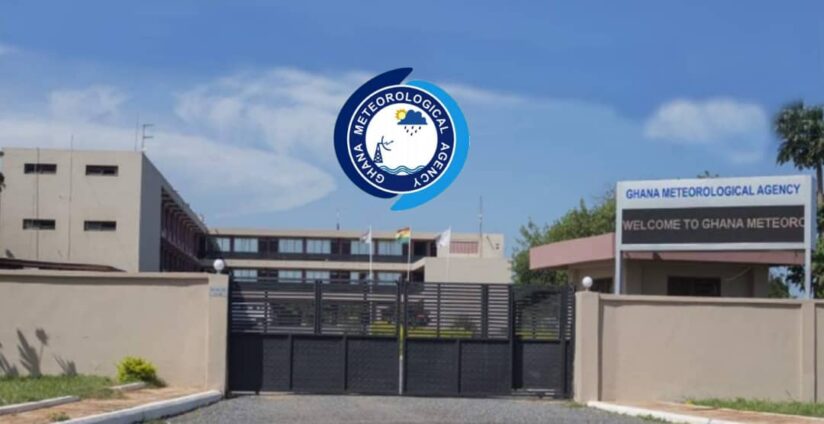
The Ghana Meteorological Agency (GMet) says the Ghana Civil Aviation Authority (GCAA) owes it more than GH¢50 million in statutory payments, with the outstanding arrears placing additional pressure on the agency’s finances.

GMet says the unpaid funds are affecting its ability to sustain some of its operations at a time when it requires increased resources to strengthen weather forecasting, aviation meteorology and other services.
Under the amended Ghana Meteorological Agency Act, 2019 (Act 1002), the GCAA is required to remit 10% of en-route, overflight and landing fees to GMet.
The Ghana Airports Company Limited (GACL), meanwhile, is required to pay 5% of airport passenger taxes to the agency.
GMet raises concerns over unpaid arrears
GMet says an agreement was reached in March 2026 for the GCAA to settle outstanding payments. However, the agency says the arrears remain largely unpaid.
Speaking to Citi News on Tuesday, August 18, GMet Director-General Dr Eric Asuman said one of the major challenges is the agency’s inability to independently verify the flight data used to calculate its statutory entitlement.
According to him, repeated attempts to secure access to the GCAA’s flight database have not produced the desired outcome.
He said access to the data is essential for GMet to independently monitor flight movements and determine whether the statutory payments being made by the GCAA accurately reflect the fees collected.
Dispute has persisted for years
Dr Asuman said the disagreement between the two institutions has persisted for several years and has previously required the intervention of Parliament’s Select Committee.
He explained that the Ghana Airports Company Limited began paying its statutory contribution to GMet in 2023 after arrangements were made for the agency’s share to be transferred directly through the International Air Transport Association (IATA).
“Somewhere in 2023, Ghana Airport Company started paying its share of its contribution to Ghana Meteorological Agency as stated by the Act. And what they did was to request IATA, as an international air transport institution, to set GMet up in their system so that GMet’s share of the fund will be sent to GMet directly.”
According to Dr Asuman, IATA subsequently advised that the Civil Aviation Authority should provide an authorisation letter to facilitate a similar arrangement for GMet’s share of aviation-related fees.
“IATA advised that Civil Aviation should give them an authorisation letter, authorising them to do the same for their share that should come to GMet.”
He said that authorisation has not been provided despite repeated efforts.
“But as we speak, since 2023 till now, that letter has not been sent.”
Dr Asuman further alleged that the GCAA has failed to transfer GMet’s statutory share of the relevant aviation fees.
“When they also receive their funds, they don’t transmit the GMet component, which is 10% landing, 10% en route, as stipulated by law to GMet.”
He said the disagreement has become a longstanding institutional dispute and has reached the attention of Parliament.
“And it has been a serious challenge and a banter between the two institutions to the extent that the parliamentary select committee intervened on this matter.”
Dr Asuman maintained that the statutory obligation is clearly established in law.
“By law, they are supposed to give us this money, but they are not complying as stipulated by law.”
GMet calls for transparent verification mechanism
The Director-General said the financial pressure comes at a time when GMet needs additional resources to improve its forecasting capabilities and provide reliable meteorological services, including those required by the aviation sector.
The agency is therefore calling for a mechanism that will give it independent access to relevant flight data.
According to GMet, such a system would allow the agency to verify flight movements, accurately calculate its statutory entitlement and ensure that payments due under Act 1002 are properly accounted for and remitted.
GMet says resolving the dispute would provide greater financial certainty for the agency and support its ability to deliver critical weather and aviation meteorological services to the country.


