


By Kwasi Amoako Gyampa

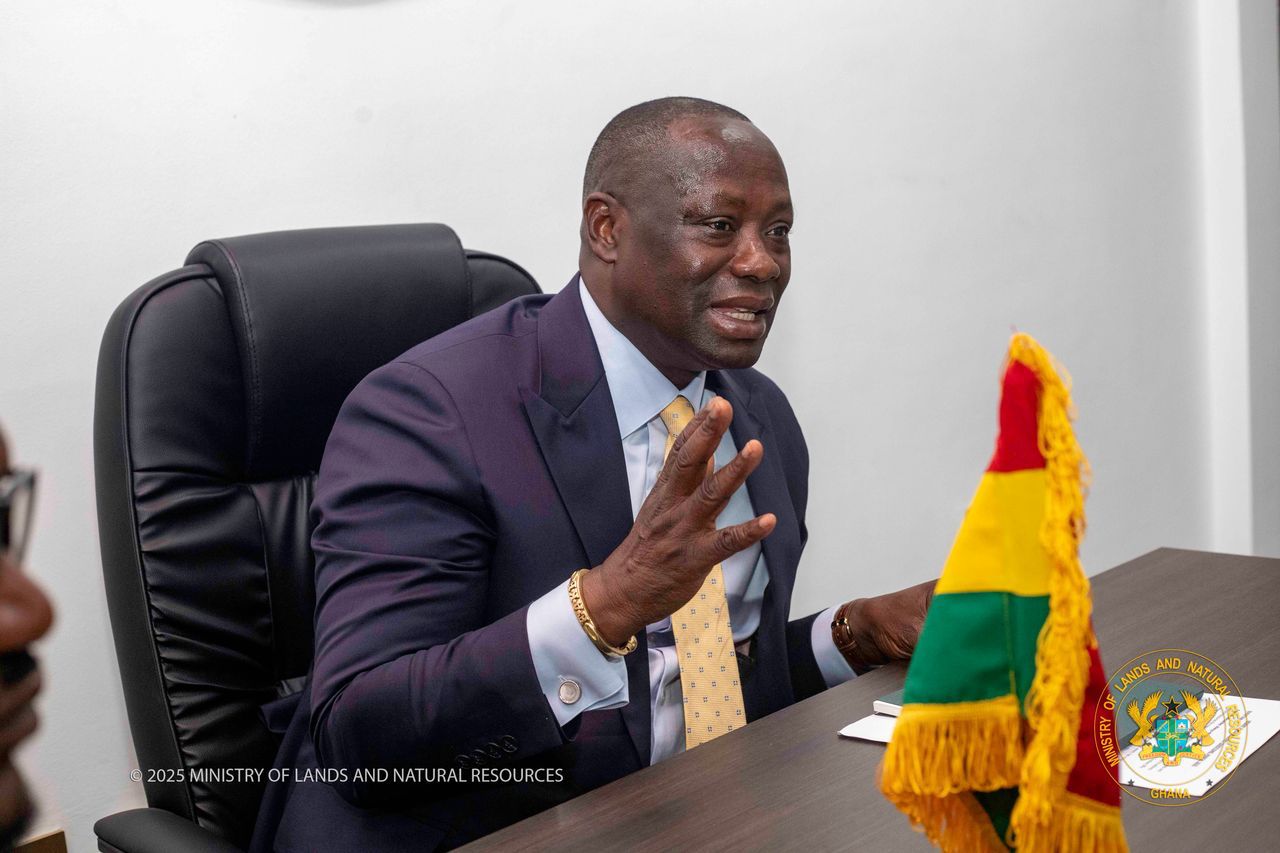
Following the Minister of Lands and Natural Resources’ return to Parliament with a ‘revised’ version of the agreement between Ghana and Atlantic Lithium and a new royalty regulation, many analysts and think tank groups have expressed concern about the move, criticising the minister for selling Ghana’s sovereignty.
According to Atlantic’s statement to investors, nothing had changed in the agreement except its alignment with the new regulation. The price of lithium spodumene was about 1300 dollars.
The new royalty regulation contains a mechanism that establishes a baseline royalty of 5% for spodumene prices up to 1,500 dollars per tonne, escalating to 12% only when prices surpass 3,000 dollars per tonne.
Observing critically, it is beginning to look as if what is driving this behavior is the interest of Atlantic Lithium, which has critically low cash reserve (2.75 million dollars as of September 2025) and funding challenges.
The company has resorted to salary reductions, firings, and reducing non-critical expenditure to survive. The project is heavily reliant on the Long State Investments equity facility (28 million Euros). The bulk of the outstanding Piedmont funding was contingent on lease ratification. This clearly cannot be Ghana’s national interest that is driving this headlong rush.
It is always important to remember that the current ruling party’s position has been that even 10% is not sufficient and we have not seen any formal revision of the party’s position.
It is also important to remember that the Growth and Sustainability Levy (GSL) for gold mining companies was hiked to 3% of gross production, making the effective royalty rate faced by gold companies more than 8%. It is ‘more’ than that because unlike royalties, GSL is not tax-deductible. The GSL rate for Atlantic Lithium had been maintained at 1%. Is this not a darling move?
Again an attempt has been made to position the ‘’1% of revenues’’ community development fund contribution in the Atlantic Lithium lease agreement as a fiscal concession to Ghana, but this is misleading. The contribution merely repurposes CSR resources.
The Institute of Economic Affairs (IEA) is a think tank group in Ghana which has condemned the parliamentary ratification and the passage of the new Minerals and Mining Royalty Regulation, describing it as a troubling development that robs Ghanaians of their rightful share of the extractive sector.
In a sharp critique of government’s recent moves, the institute questioned the decision to slash the Growth and Sustainability Levy (GSL) from 3% to 1%, alongside the ratification of the 15-year Ewoyaa lease on March 19, 2026.
The new regulation sets new sliding-scale royalties which cap gold and lithium at 12% and all other earth minerals at 5% based on global prices. This according to the government marks a shift toward greater local value retention.
However, the IEA disagrees and argues that the deals fail to reflect modern economic sovereignty.
It pointed out that contemporary global extractive trends now favour state ownership and service contracts over traditional concessionary models.
“Ghana must have full ownership of its natural and mineral resources and must exercise this ownership right by engaging the private sector, local and foreign expertise strictly through service contracts that preserve national control,” the IEA said.
On the 15-year lease granted to Barari DV Ltd, a subsidiary of Atlantic Lithium, it is worthy to note that the new Ewoyaa agreement forces Ghana to remain under the same old colonial system of royalties, rather than leveraging the country’s once-in-a-generation opportunity to reset its mineral governance framework.
I humbly wish to question how a lease covering over 42 square kilometers with “virtually zero actual state participation” could possibly uphold the principles of national sovereignty.
I also wish to raise red flags over the government’s logic to reduce the Growth and Sustainability Levy to 1% as a “cushion” for investors, and this is seen as a step that weakens the objective of maximizing national benefits. I want to advise the government that fiscal policy should be coherent, predictable, and aligned with a long-term national interest, not reactive concessions to investor pressure.
Since gold and other minerals were found in Ghana years ago, Ghana has never attempted to build a refinery in the country. But with lithium found in Ghana, it is important that the nation finds it necessary to build a refinery in the country to enable getting the full benefit of the lithium found in Ghana.


